Counting the wavesβ¦
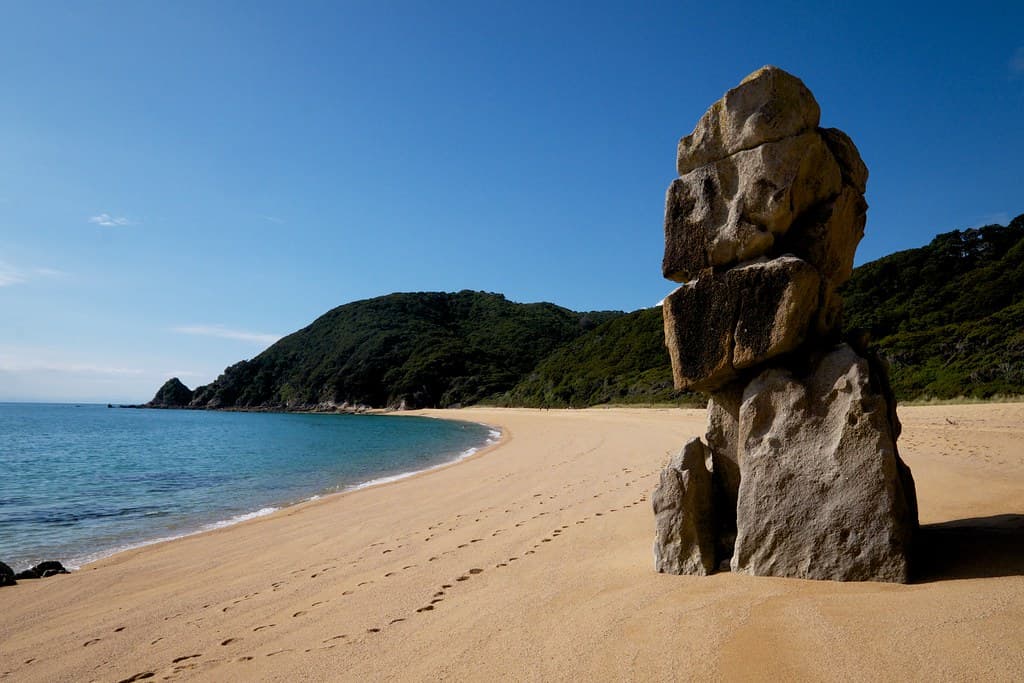
Taupo Point Beach spreads itself along the inner curve of the headland, where offshore rocks break the northern swell into white plumes visible from the sand. The beach itself runs with coarse golden grains mixed with shell fragments, backed by low dunes that give way to scrubby paddocks. You'll park at a farm gate and walk the final stretch on a clay path that turns slick after rain, emerging onto a shore that stretches empty in both directions. The western view extends across Golden Bay to the Kahurangi ranges, their ridgelines sharp against afternoon sky. Wading in, the water temperature shocks for the first thirty seconds before your skin adjusts to the Tasman Sea's bite. Shallow channels run parallel to shore, warm enough by midsummer to make swimming comfortable if you pick your moment between tides. Pied shags work the offshore reefs, diving in tight formations, while variable oystercatchers patrol the wrack line for sandhoppers. The sand above the tide holds the morning's footprints until the afternoon breeze erases them. Sunset turns the whole western sweep into molten copper, the light bouncing off wet sand and making silhouettes of the few pieces of driftwood substantial enough to anchor against winter storms. The walk back to your car happens in near-darkness if you stay too long, guided by the sound of waves and the occasional farmhouse light across the paddocks.
Places, rentals, tours and events within walking and driving distance of Taupo Point Beach.
Photos
Swimming conditions at Taupo Point Beach vary with weather and tides. Golden Bay's western coastline can experience strong currents and variable conditions, so always check conditions before entering the water. The remote location means no lifeguard patrols, so swim cautiously and never alone. The beach is sheltered by the headland but exposed to prevailing winds. Check local forecasts and tide times, and be aware that help is not immediately available due to the isolated setting.
The best time to visit is during New Zealand's summer months (December to February) for warmest weather and calmer seas, though Golden Bay enjoys relatively mild conditions year-round. Visiting during shoulder seasons (November or March) offers fewer crowds while maintaining pleasant weather. Early mornings and late afternoons provide excellent light for photography and the beach is known for beautiful sunsets. Avoid winter months when weather can be unpredictable and road access more challenging.
Access Taupo Point Beach via Wainui Bay, which requires driving along winding coastal roads from either Takaka or Collingwood in Golden Bay. The final approach involves a walking track from the Wainui Bay area. The journey requires a reliable vehicle as roads can be narrow and unsealed in sections. Allow plenty of time for the drive as conditions vary seasonally. Check road conditions locally before departing, particularly after heavy rain. The remote location means limited public transport options.
Due to its remote location, Taupo Point Beach has no facilities on-site. The nearest services are in Takaka, approximately 30-40 minutes away, which offers cafes, restaurants, and supermarkets. Accommodation options include holiday parks, motels, and lodges in Takaka or Collingwood. Some visitors choose to camp at nearby Department of Conservation sites, though not directly at the beach. Pack all food, water, and supplies before your visit, and carry out all rubbish as there are no bins.
Taupo Point Beach stands out for its dramatic headland views and genuine sense of remoteness that few other Golden Bay beaches offer. The journey from Wainui Bay creates a natural barrier to crowds, ensuring a peaceful experience. The beach provides panoramic coastal vistas across Golden Bay and toward Abel Tasman National Park in the distance. Its position makes it particularly special for sunset viewing as the sun sets over the Tasman Sea. The combination of seclusion and scenic beauty creates an intimate coastal experience.