Counting the waves…
Counting the waves…
A refined fusion of water purity, environmental stability, and communal vibrancy for Honeymoon Bay.
View MethodologyAnalyzed via live sensors and environmental data.
Wave height, wind, and atmospheric stability.
Live footfall and crowd balance metrics.
Community reviews and curated sentiment.
“You'll find Honeymoon Bay tucked behind a granite headland, where pohutukawa branches lean toward amber sand and the water holds the color of pale jade. The shore curves tight, barely fifty meters across, and the…”
Limited recent visitor reports — live OBI telemetry is your best guide for current conditions.
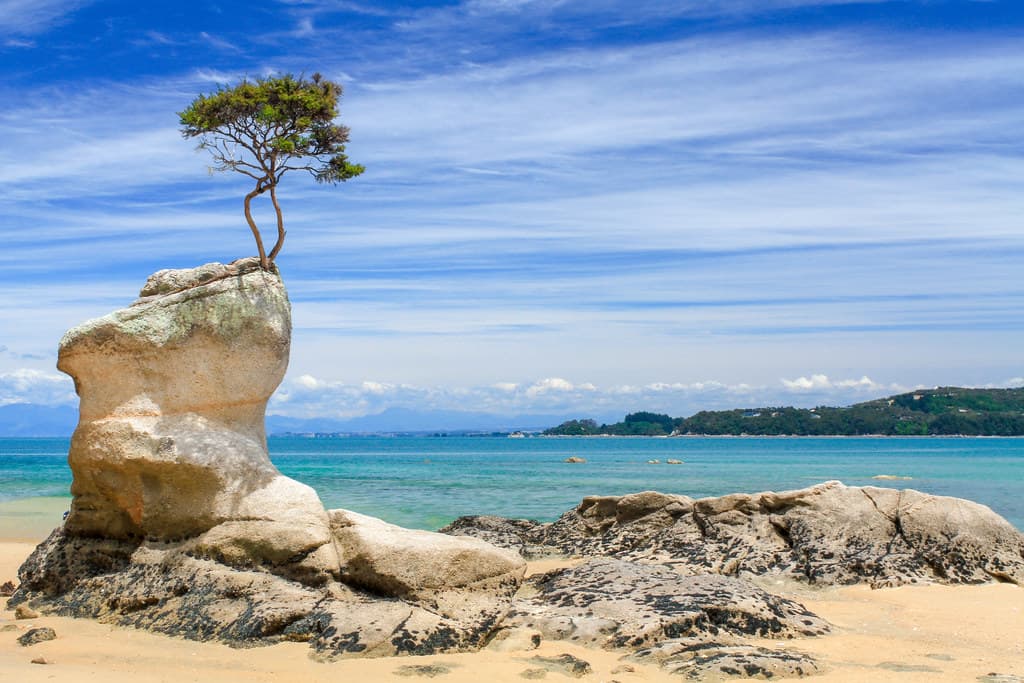
The track from Kaiteriteri drops you onto sand that squeaks underfoot, fine grains compressed by the tide. Water laps at the shore with the rhythm of a clock, barely disturbing the surface. You can count the stones on the seabed three meters down, rounded granite and schist that look close enough to touch.
Pohutukawa roots grip the rock face behind the beach, their trunks twisted from decades of coastal wind. In December, crimson flowers drop onto the sand and float in tidal pools trapped between boulders. The bay faces northeast, catching morning sun that warms the granite and fills the cove with reflected light by nine.
 Credit: Unsplash
a sandy beach next to the ocean under a blue sky
 Credit: Unsplash
a beach with boats on it
Calm water, visible seabed
Light reflects off granite
Smooth granite warms fast
Prime Visitation
Best Weather|Less Crowds
Where it is
Honeymoon Bay
Kaiteriteri, Tasman, New Zealand
-41.032800°, 173.019900°
Weather
Loading…
Swell
—
Temp
Warm · Restorative
UV Index
Moderate
Wind
—
Tidal State
Last known
Max Sunlight
—
Ideal Shade
—
Jan - Dec (Peak)
Mar - Nov (Off-season)
Best Weather|Less Crowds
Select a category to load nearby places.
Unlock restaurants, luxury stays and curated maritime experiences within 2km
Honeymoon Bay is generally safe for swimming due to its sheltered cove location and calm waters. The protected position means less wave action and currents compared to open beaches. However, always check local conditions before entering the water, as weather can affect sea state. There are no lifeguards on duty, so swim at your own risk and supervise children closely. The rocky surrounds mean water shoes can be helpful for entry and exit points.
The best time to visit Honeymoon Bay is during New Zealand's summer months (December to February) for warm weather and calm seas, though this also brings more visitors. For fewer crowds while still enjoying pleasant conditions, visit during shoulder seasons (November or March). Early morning or weekdays tend to be quieter. The bay's sheltered nature makes it accessible in many weather conditions, but winter months (June-August) can be chilly for swimming despite the scenic beauty year-round.
Honeymoon Bay is accessed via a short walking track from Kaiteriteri Beach. Park at the main Kaiteriteri car park and follow the coastal walkway south for approximately 10-15 minutes. The track is well-maintained but includes some steps and uneven terrain. Alternatively, you can reach it by kayak or water taxi from Kaiteriteri during summer months. The main access road to Kaiteriteri is via Sandy Bay-Marahau Road from State Highway 60, approximately 45 minutes from Nelson.
Honeymoon Bay itself has no facilities, so bring all supplies with you. Nearby Kaiteriteri village (10-minute walk) offers cafes, restaurants, a general store, and takeaway options during summer months. For accommodation, Kaiteriteri provides holiday parks, motels, rental homes, and the upscale Kaiteriteri Reserve apartment complex. Many visitors also base themselves in Motueka (20 minutes away) or Nelson (50 minutes) which offer wider dining and lodging choices. Pack a picnic to enjoy the bay's tranquil setting.
Honeymoon Bay offers a more intimate, secluded experience compared to the larger, busier Kaiteriteri Beach. Its small cove setting creates a tucked-away atmosphere perfect for couples seeking privacy or those wanting to escape crowds. The calm, turquoise waters are ideal for relaxed swimming and snorkeling. While Kaiteriteri has full facilities and amenities, Honeymoon Bay is pristine and undeveloped, requiring visitors to be self-sufficient. The scenic beauty and peaceful ambiance make it feel like a hidden gem despite its proximity to the main beach.
Photos