Counting the waves…
Counting the waves…
A refined fusion of water purity, environmental stability, and communal vibrancy for Stephens Bay.
View MethodologyAnalyzed via live sensors and environmental data.
Wave height, wind, and atmospheric stability.
Live footfall and crowd balance metrics.
Community reviews and curated sentiment.
“Drive past Kaiteriteri's turnoff and continue until the road narrows to a single lane. Stephens Bay sits at the end, a compact crescent where sand meets boat ramp and the hills press close enough to feel the bush's…”
Limited recent visitor reports — live OBI telemetry is your best guide for current conditions.
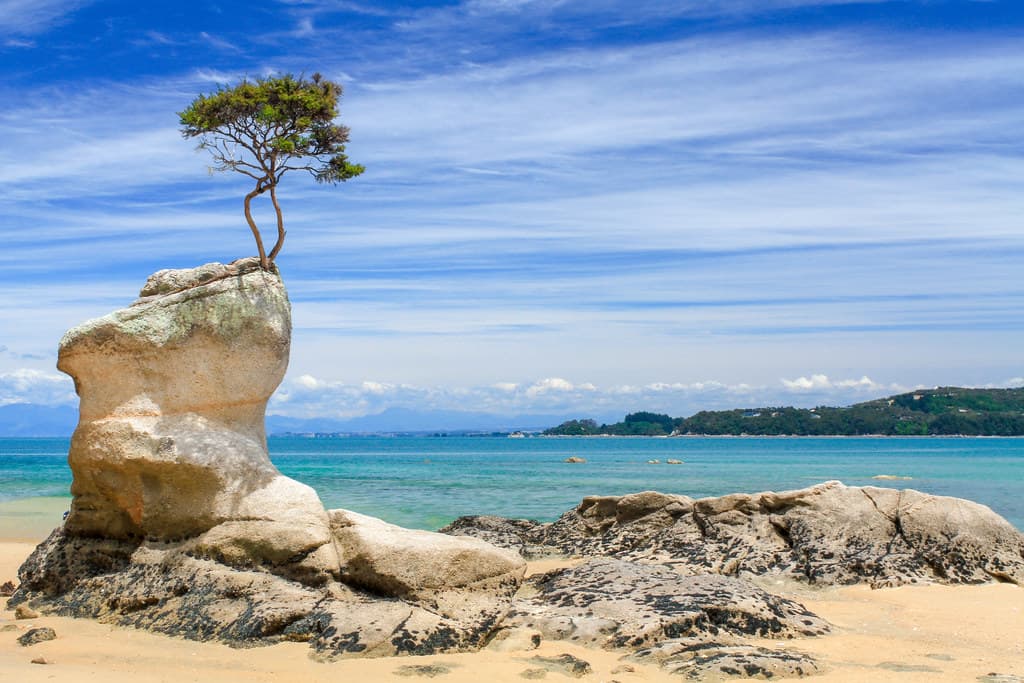
The beach occupies a fold in the coastline, its sand darker than Kaiteriteri's—more gold than honey. A concrete boat ramp bisects the bay, dividing the swimming area from a small grassy reserve where locals park their trailers. You'll see aluminum dinghies lined above the high-tide mark, their hulls sun-bleached and salt-stained from seasons of crayfishing.
Kanuka and manuka grow thick on the slopes behind the beach, their branches reaching over the sand at the cove's southern end. The water here shows the same clarity as the tourist beaches but moves differently—micro-currents shift around the headlands, carrying cooler water from deeper channels offshore. At high tide, the bay fills completely, erasing the ramp under a meter of water and creating a circular swimming basin.
 Credit: Unsplash
a sandy beach next to the ocean under a blue sky
 Credit: Unsplash
a beach with boats on it
Circular basin at high
Authentic coastal life captured
Quick climb above bay
Prime Visitation
Best Weather|Less Crowds
Where it is
Stephens Bay
Kaiteriteri, Tasman, New Zealand
-41.027100°, 173.014600°
Weather
Loading…
Swell
—
Temp
Warm · Restorative
UV Index
Moderate
Wind
—
Tidal State
Last known
Max Sunlight
—
Ideal Shade
—
Jan - Dec (Peak)
Mar - Nov (Off-season)
Best Weather|Less Crowds
Near Stephens Bay
Explore dining, stays, nightlife, and activities near Stephens Bay in Kaiteriteri, New Zealand. Every listing below is a real place linked to this beach — open a card for reviews, maps, and booking options.
Food, cafés, and dining close to Stephens Bay — curated from places linked to this beach.
Stays and lodging options near Stephens Bay for your beach trip.
Activities, tours, and attractions near Stephens Bay.
Select a category to load nearby places.
Unlock restaurants, luxury stays and curated maritime experiences within 2km
Stephens Bay is suitable for swimming, particularly for families, due to its sheltered cove location which creates calmer conditions than more exposed beaches. The compact size makes it easy to supervise children. Water clarity is generally good, and the bay's protection from prevailing winds reduces wave action. However, there are no lifeguards, so swim within your abilities and watch children at all times. Rocky areas around the cove edges require care when entering or exiting the water. Check conditions before swimming as weather can affect sea state.
The best time to visit Stephens Bay is during New Zealand summer (December-February) for warm, sunny beach weather, though this period sees more visitors. For a quieter experience with still-pleasant conditions, consider the shoulder months of November or March. The bay's local character is most evident on weekdays or outside school holidays when fewer tourists are present. Early mornings offer peaceful conditions and good light for photography. The sheltered cove provides some protection year-round, but winter swimming requires a hardy disposition.
Stephens Bay is located very close to Kaiteriteri village. From the main Kaiteriteri Beach area, walk along the coastal track heading north—the bay is just a few minutes away. Limited roadside parking may be available near the bay itself. Most visitors park in Kaiteriteri's main car park and walk. To reach Kaiteriteri from Nelson, drive approximately 45 minutes via State Highway 60 and Sandy Bay-Marahau Road. The bay is easily accessible for families, though the path may have some uneven sections.
Stephens Bay itself has minimal facilities, so come prepared with supplies. Nearby Kaiteriteri village (short walk away) offers cafes, restaurants, a general store, and takeaway food options, particularly during the summer season. Public toilets are available in Kaiteriteri. For accommodation, Kaiteriteri provides various options including holiday parks, motels, and rental properties. The compact cove is perfect for picnics—bring your own food and enjoy the scenic, quieter setting. Always take rubbish with you to keep the bay pristine.
Stephens Bay offers a more local, low-key alternative to the busier main Kaiteriteri Beach. Its compact cove creates an intimate atmosphere that appeals to couples and families seeking a quieter spot. You'll encounter fewer tourists and beach vendors, giving it a more authentic, unhurried feel. The scenic setting still delivers beautiful coastal views and clear water typical of the area. It's ideal for those who want easy access to Kaiteriteri's services while enjoying a more secluded beach experience just minutes away from the main crowds.
Photos