Counting the waves…
Counting the waves…
A refined fusion of water purity, environmental stability, and communal vibrancy for Matarangi Beach.
View MethodologyAnalyzed via live sensors and environmental data.
Wave height, wind, and atmospheric stability.
Live footfall and crowd balance metrics.
Community reviews and curated sentiment.
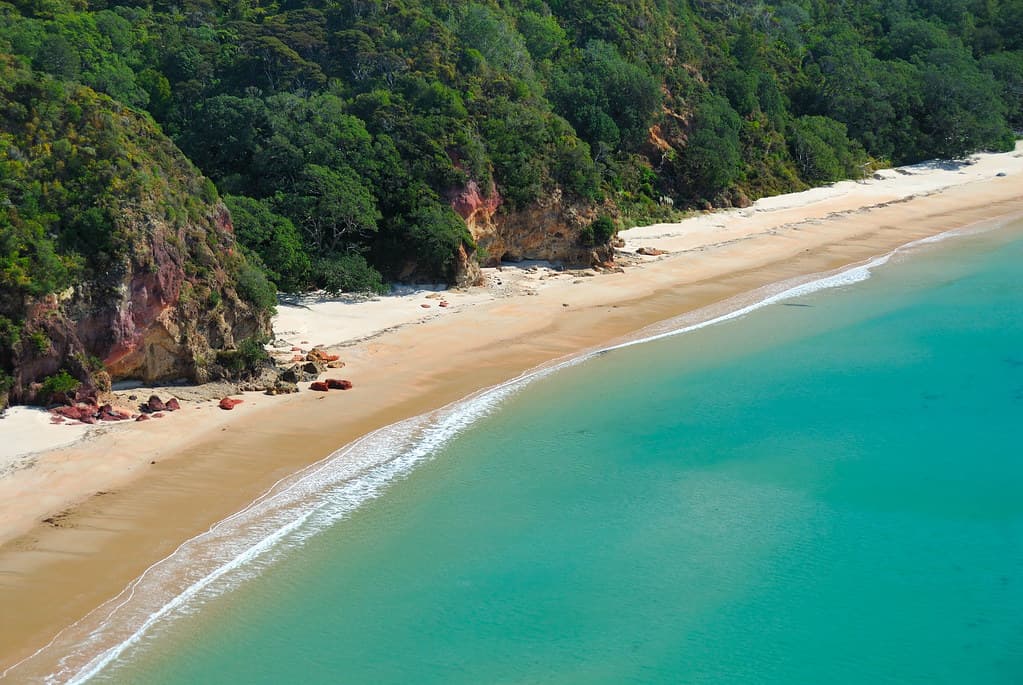
“You'll spread your towel on sand so blonde it photographs white, wade into water that builds slowly rather than dumping, and hear more laughter than shouting. This is the peninsula's family sanctuary.”
Limited recent visitor reports — live OBI telemetry is your best guide for current conditions.
Matarangi arcs gently between Rings Beach to the south and the golf-course headland northward, a crescent of fine quartz sand that compacts smoothly when wet and stays brilliantly pale even after rain. The waves here lack Whangamatā's punch—swells refract around offshore islands and arrive softened, creating low-energy rollers that please novice bodyboarders and parents with toddlers. You'll walk a hundred metres out at low tide before water reaches your waist, the bottom staying sandy and slope gradual enough that five-year-olds build confidence between the flags.
The township maintains a manicured restraint: architectural holiday homes tucked behind natives, an eighteen-hole links course whose fairways reach the northern beach, a small commercial centre with a dairy, café, and seasonal fish-and-chip caravan. Matarangi developed later and more carefully than nearby resorts, prioritizing green space and beach access over density. Pohutukawa frame views at both ends, their gnarled trunks leaning seaward, roots exposed where winter storms have carved the dunes.
 Credit: Unsplash
coastal dunes and beach at sunset
 Credit: Unsplash
a body of water with a hill in the background
Shallow gradient suits nervous swimmers
Two kilometres of uncrowded beach
Offshore rocks shelter marine life
Prime Visitation
Best Weather
Where it is
Matarangi Beach
Matarangi, Waikato Region, New Zealand
-36.722300°, 175.673600°
Weather
Loading…
Swell
—
Temp
Warm · Restorative
UV Index
Moderate
Wind
—
Tidal State
Last known
Max Sunlight
—
Ideal Shade
—
Jan - Dec (Peak)
Mar - Nov (Off-season)
Historical data suggests peak visibility and stable sea temperatures occur during the prime visitation window.
Select a category to load nearby places.
Unlock restaurants, luxury stays and curated maritime experiences within 2km
Matarangi Beach is generally considered family-friendly with its long stretch of white sand and relatively gentle beach break. The beach is patrolled by lifeguards during summer holidays, and families should swim between the flags when patrols are active. As with any ocean beach, conditions vary with swell and tide, so always assess water conditions before swimming. The sandy bottom and gradual slope make it suitable for children in calm conditions. The beach's popularity with families speaks to its generally safe conditions, though ocean awareness is always important.
Summer (December-February) offers the warmest weather and full beach services, though this is peak holiday season when the beach and town are busiest. School holiday periods, especially Christmas-New Year, see maximum crowds. For pleasant weather with more space, consider visiting in November or March during shoulder season. The beach can be enjoyed year-round for walks and scenery, though swimming is most comfortable in warmer months. Weekdays outside school holidays provide a more peaceful experience. Early mornings tend to be quieter and offer beautiful light on the white sand.
Matarangi is located on the Coromandel Peninsula's east coast, approximately 3 hours' drive from Auckland. Take State Highway 25 to Whitianga, then continue north on SH25 before turning onto Matarangi Road. The beach runs along the town's oceanfront with several access points. Parking areas are available along the beachfront and nearby streets, though spaces become limited during peak summer season. The town is relatively compact, so most holiday accommodation is within walking or short driving distance of the beach. No public transport serves Matarangi.
Matarangi is primarily a holiday home destination with numerous rental properties (baches) available, plus a motor camp for more budget-friendly stays. The small town centre has a general store, cafe, and a couple of dining options, but facilities are limited compared to larger Coromandel towns. A supermarket and takeaways provide basics for self-catering, which most visitors do. For more extensive dining and shopping, Whitianga is about 20 minutes away. Book accommodation well ahead for summer, as this popular holiday spot fills up quickly during peak season.
Matarangi Beach is distinguished by its stunning white sand that stretches for several kilometres, creating a pristine, picture-perfect setting. The beach has a particularly relaxed, family-oriented holiday atmosphere, attracting return visitors year after year. Unlike more built-up resort areas, Matarangi maintains a quiet, residential feel focused on traditional Kiwi beach holidays. The beach's sweeping curve and white sand contrast beautifully with the blue Pacific waters. Its position offers excellent views toward nearby islands, and the beach remains less commercialized than some neighbouring coastal towns.
Photos