Counting the waves…
Counting the waves…
A refined fusion of water purity, environmental stability, and communal vibrancy for Crayfish Bay.
View MethodologyAnalyzed via live sensors and environmental data.
Wave height, wind, and atmospheric stability.
Live footfall and crowd balance metrics.
Community reviews and curated sentiment.
“You'll motor past Opito's eastern headland to find this pocket cove tucked beneath pohutukawa canopy. Anchor in three meters of visibility so clear you'll count spines on kina clinging to volcanic rock below your hull.”
Limited recent visitor reports — live OBI telemetry is your best guide for current conditions.
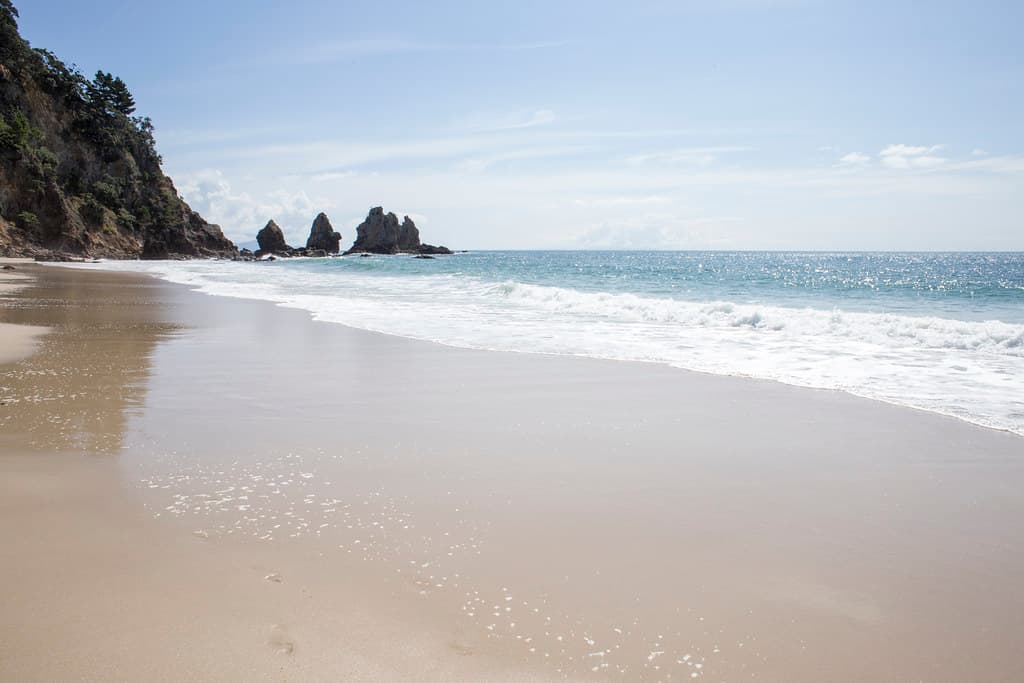
The only hum you'll hear is your boat engine cutting through the Hauraki Gulf, then silence as you drop anchor in water the color of bluestone. Crayfish Bay hides behind a pohutukawa-fringed headland, accessible only by sea—a natural filter that keeps the cove empty even on New Year's Day. You'll step from the bow onto coarse sand mixed with shell fragments, the kind that crunches beneath bare feet and holds the warmth of the Coromandel sun.
Pull on your mask and fins. Below the surface, granite boulders descend in jagged terraces draped with bull kelp that sways in the tidal push. Crayfish—real ones, red-speckled and prehistoric—patrol the crevices alongside schools of snapper that scatter when your shadow crosses them. The underwater landscape mirrors the peninsula's volcanic bones: sharp drop-offs, cathedral-like overhangs, and shafts of light that pierce the water column in shifting columns.
 Credit: Unsplash
coastal dunes and beach at sunset
 Credit: Unsplash
a body of water with a hill in the background
Swim with crayfish and snapper
Capture volcanic rock formations below
Paddle the sheltered cove perimeter
Prime Visitation
Less Crowds|Best Weather
Where it is
Crayfish Bay
Opito Bay, Waikato Region, New Zealand
-36.714500°, 175.815400°
Weather
Loading…
Swell
—
Temp
Warm · Restorative
UV Index
Moderate
Wind
—
Tidal State
Last known
Max Sunlight
—
Ideal Shade
—
Jan - Dec (Peak)
Mar - Nov (Off-season)
Less Crowds|Best Weather
Select a category to load nearby places.
Unlock restaurants, luxury stays and curated maritime experiences within 2km
Crayfish Bay can be suitable for swimming and snorkeling when conditions are calm, but it requires caution and experience. As a small cove best accessed by boat, there are no lifeguard services or easily accessible emergency assistance. The bay can offer excellent snorkeling opportunities around rocky areas when water is clear and settled. However, conditions can change quickly, and currents may be present. Only confident swimmers should attempt to swim here, and always check weather and sea conditions beforehand. Snorkeling is best during calm weather with good visibility. Never swim or snorkel alone in this remote location.
The best time to visit Crayfish Bay is during settled summer weather from December to March when seas are typically calmer for boat access and water activities. Early morning often provides the calmest conditions and best underwater visibility for snorkeling. Because the bay is suited to adventurous visitors, choosing days with favorable marine forecasts is essential. Spring and autumn can also offer good conditions with fewer boaters in the area. Avoid visiting during rough weather, high winds, or poor sea conditions as access becomes dangerous. Check local marine weather forecasts and tide times before planning your visit.
Crayfish Bay is primarily accessed by boat, as indicated by its boat access designation. You can launch from nearby boat ramps in the Opito Bay or wider Coromandel area, then navigate to the cove. Small kayaks or paddleboards may also be used by experienced paddlers in calm conditions. There may be limited land access via private property or challenging coastal tracks, but boat access is the most practical and commonly used method. Ensure you have appropriate boating equipment, navigation tools, and safety gear. Always inform someone of your plans and expected return time when visiting this remote location.
Crayfish Bay itself is remote with no facilities, so all supplies and accommodation must be arranged elsewhere. The nearby Opito Bay area offers some holiday home rentals and private accommodation options. For more choices, consider staying in Kūaotunu or Whitianga, which are within reasonable boating distance and offer various accommodation types. Stock up on all food, water, and supplies before heading to Crayfish Bay as there are no shops or services at the location. Bring everything you need for your visit including safety equipment, sun protection, and adequate drinking water. Plan to be completely self-sufficient.
Crayfish Bay appeals to adventurous beach seekers precisely because of its remote, boat-access nature that keeps it pristine and uncrowded. The challenge of reaching the bay adds to the sense of discovery and exclusivity. The cove's rocky areas and clear waters can offer excellent snorkeling opportunities for exploring marine life in a largely undisturbed environment. Its small size and secluded location create an intimate connection with nature away from developed beaches. The bay rewards those willing to make the effort with a genuine wilderness coastal experience, beautiful scenery, and the satisfaction of discovering a hidden gem off the beaten path.
Photos