Counting the waves…
Counting the waves…
A refined fusion of water purity, environmental stability, and communal vibrancy for Fletcher Bay Beach.
View MethodologyAnalyzed via live sensors and environmental data.
Wave height, wind, and atmospheric stability.
Live footfall and crowd balance metrics.
Community reviews and curated sentiment.
“The gravel beneath your boots announces your arrival long before you see the water. This is where New Zealand's thumb meets the Pacific, a wind-scraped amphitheater of stone where the only sounds are waves sorting…”
Limited recent visitor reports — live OBI telemetry is your best guide for current conditions.
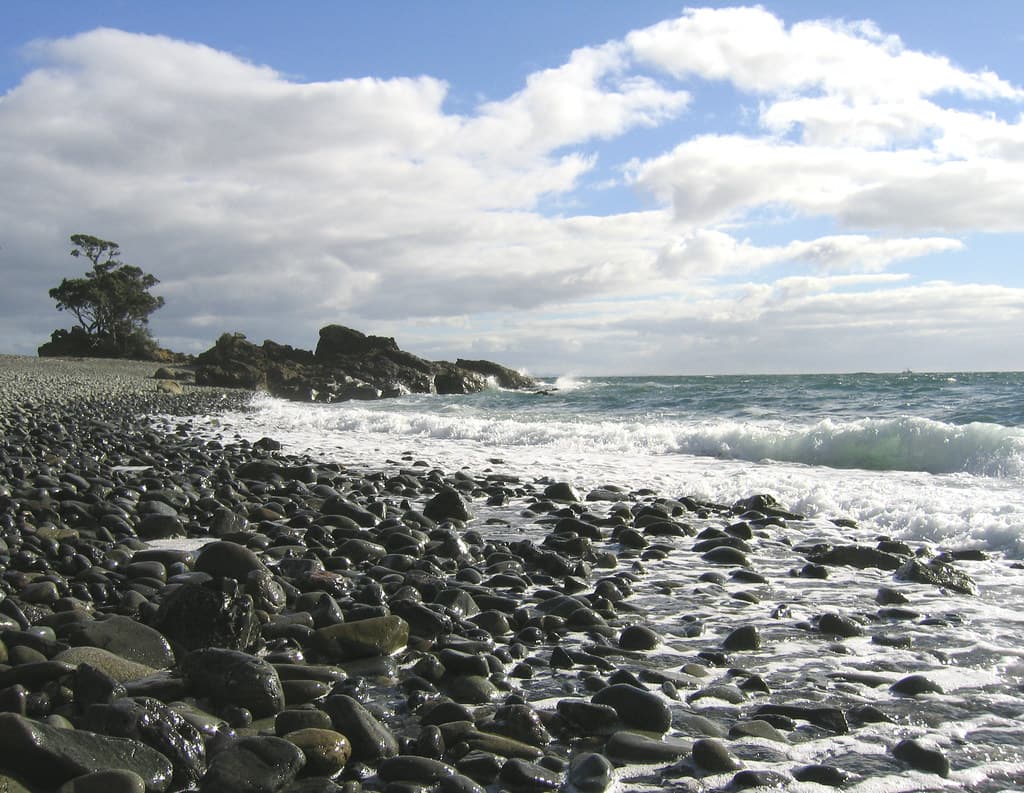
The Department of Conservation campground sits behind you as you navigate the slope toward the waterline, each footfall on smooth, egg-shaped stones producing that distinctive Coromandel clatter. Pohutukawa trees lean inland, permanently shaped by the northwesterlies that funnel through this gap between peninsula and islands. A handful of yachts swing on their moorings, their skippers having motored in from Kennedy Bay or sailed across from Waiheke.
Low tide exposes kelp-draped boulders and rock pools where periwinkles cluster in the shade. The beach curves gently, framed by steep hillsides covered in regenerating bush—mostly kanuka and five-finger, with the occasional totara rising above the scrub. Fishermen cast from the eastern point where the water deepens quickly, their lines searching for snapper and kahawai.
 Credit: Unsplash
coastal dunes and beach at sunset
 Credit: Unsplash
a body of water with a hill in the background
Track to Stony Bay
Great Barrier on horizon
Launch from pebble beach
Prime Visitation
Less Crowds|Best Weather
Where it is
Fletcher Bay Beach
Port Charles, Waikato Region, New Zealand
-36.441900°, 175.367900°
Weather
Loading…
Swell
—
Temp
Warm · Restorative
UV Index
Moderate
Wind
—
Tidal State
Last known
Max Sunlight
—
Ideal Shade
—
Jan - Dec (Peak)
Mar - Nov (Off-season)
Less Crowds|Best Weather
Near Fletcher Bay Beach
Explore dining, stays, nightlife, and activities near Fletcher Bay Beach in Port Charles, New Zealand. Every listing below is a real place linked to this beach — open a card for reviews, maps, and booking options.
Stays and lodging options near Fletcher Bay Beach for your beach trip.
Select a category to load nearby places.
Unlock restaurants, luxury stays and curated maritime experiences within 2km
Fletcher Bay Beach has a pebble shoreline and can experience variable sea conditions typical of remote northern Coromandel locations. Swimming is possible but conditions should be carefully assessed before entering the water, as there are no lifeguards or rescue services nearby. The beach is quite exposed and can have currents, waves, and changing tides. The remote location means help is far away in emergencies. It's better suited for experienced swimmers who can assess ocean conditions. The beach is often more popular for launching boats, fishing, and enjoying scenery than swimming.
The optimal time to visit Fletcher Bay Beach is during summer (December-March) when weather is most reliable and the unsealed access road is in better condition. However, this remote beach sees relatively few visitors year-round due to its end-of-road location. Early morning or late afternoon visits offer the best light for photography and typically calmer seas. The beach faces northwest, providing beautiful sunset opportunities. Consider visiting midweek to avoid the small weekend increase in visitors. Check weather and road conditions before traveling, especially after heavy rain which can affect the final access roads.
Fletcher Bay Beach is located at the absolute northern tip of the Coromandel Peninsula, literally at the end of the road beyond Port Charles. From Coromandel town, drive north through Colville on Port Charles Road, which becomes increasingly narrow and winding. The final sections are unsealed gravel roads requiring careful driving and a suitable vehicle. The journey takes approximately 1.5-2 hours from Coromandel town. The beach also marks the start or end of the popular Coromandel Coastal Walkway. Some visitors arrive by boat. Ensure adequate fuel as there are no services along this remote route.
Fletcher Bay has very limited facilities befitting its remote location. There is a basic DOC (Department of Conservation) campground nearby that provides simple camping facilities for trampers and beach visitors. No shops, restaurants, or commercial accommodation exist at Fletcher Bay itself. The nearest very limited supplies might be found back toward Colville, but serious provisioning should be done in Coromandel town or Thames before heading north. Visitors should bring all necessary food, water, and supplies. The remoteness is part of the appeal for those seeking wilderness experiences and solitude.
Fletcher Bay attracts visitors specifically because of its extreme remoteness and wild, untouched character at the peninsula's northern tip. It serves as the northern trailhead for the renowned Coromandel Coastal Walkway, making it popular with trampers and hikers. Boaters use the bay as a destination and anchorage point. The dramatic scenery, rugged coastline, and sense of reaching the end of the road appeal to adventurous travelers seeking authentic wilderness experiences away from tourist crowds. The journey itself through increasingly remote landscapes is part of the destination's unique appeal.
Photos