Counting the waves…
Counting the waves…
A refined fusion of water purity, environmental stability, and communal vibrancy for Te Puru Beach.
View MethodologyAnalyzed via live sensors and environmental data.
Wave height, wind, and atmospheric stability.
Live footfall and crowd balance metrics.
Community reviews and curated sentiment.
“You'll hear the clatter of wave-smoothed pebbles shifting underfoot before you see the broad estuary waters stretching toward Coromandel's eastern ranges. This is a shore where locals cast lines from the rocks and…”
Limited recent visitor reports — live OBI telemetry is your best guide for current conditions.
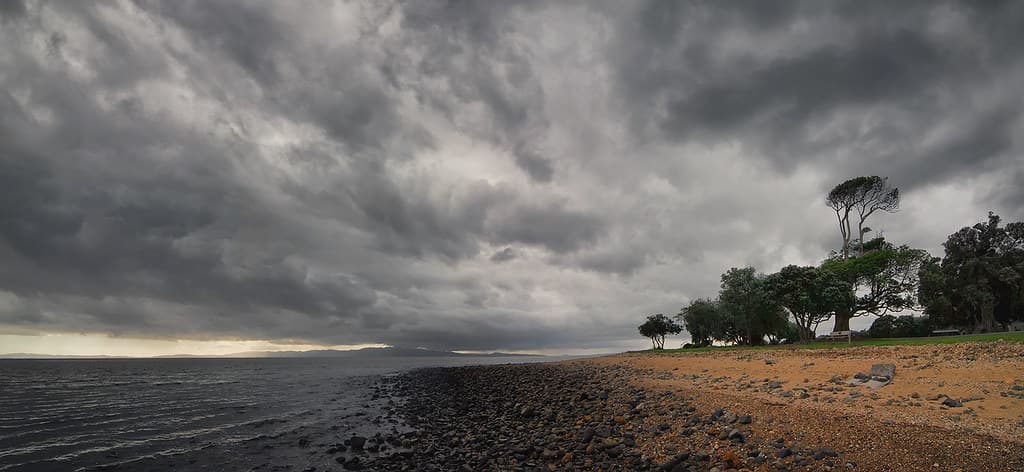
Te Puru's shoreline announces itself with the rattle of grey and ochre stones tumbling in the surf. The beach runs in a gentle arc beneath the road that traces the Thames Coast, where pohutukawa trees lean seaward and the Firth of Thames spreads in silver-blue bands toward the horizon. At low tide, the water retreats to expose barnacled rocks and tidal pools; at high tide, waves slap against the larger boulders that punctuate the strand.
Fishing culture runs deep here—you'll spot rod holders mounted on car bumpers and locals checking baited lines for flounder and kahawai. The lack of sand means no beach towel crowds, just the occasional family skimming stones or walking the waterline. Evening brings burnt orange sunsets that silhouette the ranges across the firth, the sky streaked in violet and rose.
 Credit: Unsplash
coastal dunes and beach at sunset
 Credit: Unsplash
a body of water with a hill in the background
Flounder and kahawai runs
Scenic Thames Coast route
Firth views across ranges
Prime Visitation
Anytime|Budget Travel
Where it is
Te Puru Beach
Te Puru, Waikato Region, New Zealand
-37.047300°, 175.537000°
Weather
Loading…
Swell
—
Temp
Warm · Restorative
UV Index
Moderate
Wind
—
Tidal State
Last known
Max Sunlight
—
Ideal Shade
—
Jan - Dec (Peak)
Mar - Nov (Off-season)
Anytime|Budget Travel
Near Te Puru Beach
Explore dining, stays, nightlife, and activities near Te Puru Beach in Te Puru, New Zealand. Every listing below is a real place linked to this beach — open a card for reviews, maps, and booking options.
Food, cafés, and dining close to Te Puru Beach — curated from places linked to this beach.
Stays and lodging options near Te Puru Beach for your beach trip.
Activities, tours, and attractions near Te Puru Beach.
Select a category to load nearby places.
Unlock restaurants, luxury stays and curated maritime experiences within 2km
Te Puru Beach is a pebble beach on the sheltered Firth of Thames, offering calmer conditions than ocean-facing beaches. Swimming is generally safe, though the pebble composition means no lifeguard patrol. The gradual slope and protected location make it suitable for families, but supervision is essential. Water quality can vary after rainfall due to coastal runoff. Many visitors use the beach more for fishing and coastal activities rather than swimming. Wear water shoes for comfort on pebbles, check tide times, and assess conditions before entering the water.
Te Puru Beach is accessible year-round and particularly appealing for budget travelers during off-peak seasons when accommodation rates are lower. Summer (December-February) provides warmest conditions, though the beach remains uncrowded even then. The western aspect makes it excellent for sunset viewing throughout the year. Fishing enthusiasts visit year-round based on seasonal catches. Quieter months offer peaceful coastal drives and authentic local experiences. The beach's value lies in its tranquility rather than peak-season activities, making any time suitable for those seeking a low-key coastal experience.
Te Puru Beach is located along State Highway 25 (Thames Coast Road) on the western Coromandel Peninsula, approximately 15-20 minutes north of Thames. The beach is accessible directly from the main road with roadside parking available. From Auckland, it's about a 2-hour drive via SH2 and SH25. The coastal road itself is scenic, making the journey part of the experience. Public transport is very limited in this rural area, so a private vehicle is essential. The beach is clearly visible from the highway.
Te Puru is a small coastal settlement with minimal commercial facilities. The nearest town with full services is Thames, approximately 15 minutes south, offering supermarkets, restaurants, cafes, and various accommodation options including motels, holiday parks, and B&Bs. Some holiday homes and coastal cottages are available for rent in the Te Puru area for visitors seeking quieter, self-contained stays. Bringing supplies for beach visits is recommended as there are no shops or food outlets directly at the beach. Thames provides the most convenient access to amenities.
Te Puru Beach is valued for its authentic, uncommercialized character and popularity with fishing enthusiasts who appreciate the coastal access and local catches. The location makes it ideal for scenic coastal drives along the Thames Coast Road, offering beautiful Firth of Thames views. It provides a genuinely quiet alternative to busier Coromandel beaches, perfect for those seeking peace and a slower pace. The pebble beach and rural setting attract visitors wanting to experience the western Coromandel's natural character without crowds or tourist development, ideal for contemplative coastal stays.
Photos