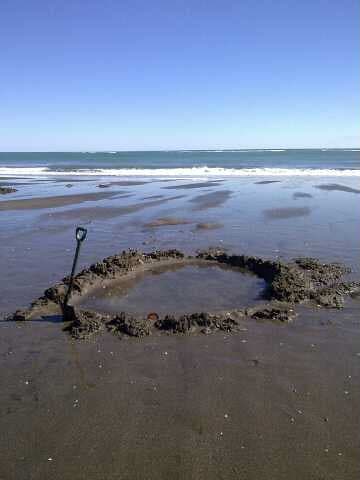
Counting the waves…
Counting the waves…

You park beside the community hall and walk past macrocarpa trees leaning eastward from decades of westerly wind. The beach unfolds as a gentle crescent, its dark volcanic sand cool underfoot even at midday. At high tide the harbour fills to the grassy edge; at low, it becomes a vast flat where children dig for cockles and leave trails of footprints that the sea erases twice daily. The water here refuses drama. Protected by the harbour mouth, it lies smooth as hammered pewter, warm in summer from long hours of shallow sunlight. You wade out twenty metres and the water barely reaches your knees. Flounder dart away in puffs of silt. A dinghy bobs at anchor, its painter trailing weed. The only sounds are oystercatchers piping and the distant hum of a tractor on the farm across the inlet. This is where Aotea locals come when they want water without effort—no surf to battle, no rips to watch for, just the harbour's patient rise and fall. You spread a towel on the grass above the tideline, crack open a thermos, and let the afternoon pass in increments measured by the waterline creeping up the sand. By evening the inlet glows amber, the hills across the harbour going purple, and you understand why no one here talks about leaving.
Places, rentals, tours and events within walking and driving distance of Aotea Harbour Beach.
Photos
Aotea Harbour Beach is generally safer for swimming than open ocean beaches due to its sheltered harbour location, which creates calmer water conditions. The protection from ocean swells makes it suitable for families with children and less confident swimmers. However, always supervise children closely and be aware of tides, which can affect water depth significantly. There are no lifeguard services. The calm conditions also make it appropriate for kayaking and stand-up paddleboarding. Check tide times to ensure adequate water depth for your activities, especially during low tide.
Aotea Harbour Beach can be visited year-round thanks to its sheltered position, though summer (December-February) offers the warmest water and most pleasant weather. The beach remains relatively uncrowded throughout the year, providing a peaceful experience even during holiday periods. Spring and autumn offer mild conditions ideal for walking, fishing, and birdwatching. Winter visits can be atmospheric but dress warmly. Tide levels are more important than seasons here; check local tide charts to plan your visit when water conditions suit your intended activities, whether swimming, fishing, or exploring.
Aotea is located on the Waikato's west coast, accessed via Aotea Road off State Highway 31, approximately 45 minutes southwest of Kawhia. The roads are mostly sealed but narrow and winding in sections, requiring careful driving. From Hamilton, the journey takes roughly 90 minutes. There is no public transport service to Aotea. The harbour beach areas are near the small settlement, with some access points requiring short walks. Ensure you have fuel before leaving main centres, as services are limited in the area. A standard vehicle is suitable in normal conditions.
Aotea is a very small settlement with minimal commercial services. Visitors should bring all necessary food and supplies from larger towns like Kawhia, Otorohanga, or Te Awamutu. Accommodation options are limited to holiday homes and bach rentals, which should be booked in advance. Some properties offer stunning harbour views. The nearest town with shops and cafes is Kawhia, about 30 minutes away, known for its hot water beach and seafood. For a wider range of dining and lodging options, base yourself in Kawhia and make Aotea a day trip destination.
Aotea Harbour offers a quintessentially peaceful New Zealand harbour experience away from tourist crowds. The sheltered waters create ideal conditions for fishing, particularly flounder and kahawai, making it popular with local anglers. The harbour's calm nature allows for relaxed family activities like kayaking and exploring tidal areas. Birdwatching opportunities abound, with various wading birds and seabirds frequenting the shores. The area retains an authentic, undeveloped character with traditional bach culture still prominent. It's an excellent destination for those seeking tranquility, natural beauty, and a genuine slice of rural coastal New Zealand life.