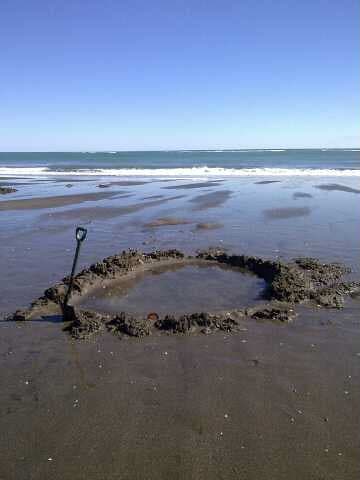
Counting the waves…
Counting the waves…
The cliffs rear up behind you in horizontal strata—60 million years of compressed seabed lifted and tilted, now crumbling back into the ocean that made them. Wave-cut platforms extend at low tide, tide pools thick with Neptune's necklace and purple sea urchins. The shore break hits hard here, swells marching unimpeded across the Tasman before detonating on the steep beach face. Seabirds work the cliff ledges—shags drying their wings like heraldic figures, gulls wheeling in the updrafts. The point itself juts into deep water, a favorite of locals who know the swell patterns well enough to read approaching sets. Driftwood tangles at the high-tide mark, some pieces smooth as bone from years of tumbling. Isolation defines the experience. The nearest settlement, Kāwhia, sits an hour north over unsealed roads. You'll share this beach with perhaps a handful of others—fishermen casting for kahawai, the occasional surfer checking a distant break. Wind thrums through the coastal scrub, carrying the iodine smell of exposed rockweed. At your feet, black sand glitters with magnetite that pools around your boots like iron filings.
Places, rentals, tours and events within walking and driving distance of Albatross Point Beach.
Photos
Swimming at Albatross Point Beach is generally not recommended due to its exposed nature and unpredictable surf conditions typical of New Zealand's west coast. Strong rips, powerful waves, and sudden ocean swells make it hazardous for swimmers. There are no lifeguard patrols at this remote location. The beach is better suited for experienced surfers who understand ocean conditions. If you do enter the water, never swim alone, stay close to shore, and be extremely cautious. Always check local conditions before visiting and respect warning signs.
The best time to visit Albatross Point Beach is during summer months (December to February) for the most stable weather, though conditions can still be unpredictable on the west coast. Autumn (March-May) offers fewer crowds and beautiful sunset light. Winter brings dramatic storm watching opportunities but harsher conditions. Early mornings and late afternoons provide the best light for photography of the coastal cliffs. Weekdays are quieter than weekends. Check weather forecasts before traveling as the remote location and gravel roads can become challenging in rain.
Albatross Point Beach is accessed via gravel roads from Kāwhia township, approximately 60km southwest of Otorohanga. From Kāwhia, follow the south coast road, which becomes unsealed and can be rough in places. The journey requires a vehicle suitable for gravel roads, and conditions worsen after rain. Allow extra travel time as speeds will be slower than sealed roads. There is no public transport to this remote area. Ensure you have a full tank of fuel before leaving main towns, as services are limited in Kāwhia and nonexistent beyond.
Albatross Point Beach itself has no facilities, so you must be completely self-sufficient. The nearest services are in Kāwhia township, about 30-40 minutes' drive away, where you'll find a general store, café, and limited accommodation including holiday homes and a motor camp. For wider choices, Otorohanga (approximately one hour away) offers supermarkets, restaurants, and motels. Pack all food, water, and supplies before heading to the beach. There are no toilets or fresh water at the beach itself. Many visitors stay in Kāwhia and make day trips.
Albatross Point Beach stands out for its dramatic coastal cliffs and genuinely remote, rugged character rarely found so close to the Waikato region. Unlike more accessible west coast beaches, it requires commitment to reach via gravel roads, ensuring solitude and unspoiled scenery. The striking rock formations and cliff faces create a wild, photogenic landscape particularly stunning at sunset. Its exposed position offers powerful surf and raw coastal energy. The beach represents authentic New Zealand backcountry coastal experience, with minimal development and few visitors, providing a true escape from tourist trails and modern infrastructure.