Counting the waves…
Counting the waves…
A refined fusion of water purity, environmental stability, and communal vibrancy for Ruapuke Beach.
View MethodologyAnalyzed via live sensors and environmental data.
Wave height, wind, and atmospheric stability.
Live footfall and crowd balance metrics.
Community reviews and curated sentiment.
“The corrugated road into Ruapuke crosses farmland for eight kilometers, rattling your suspension and testing your commitment. Your reward: an untamed surf beach where pohutukawa-topped cliffs frame sets that march in…”
Limited recent visitor reports — live OBI telemetry is your best guide for current conditions.
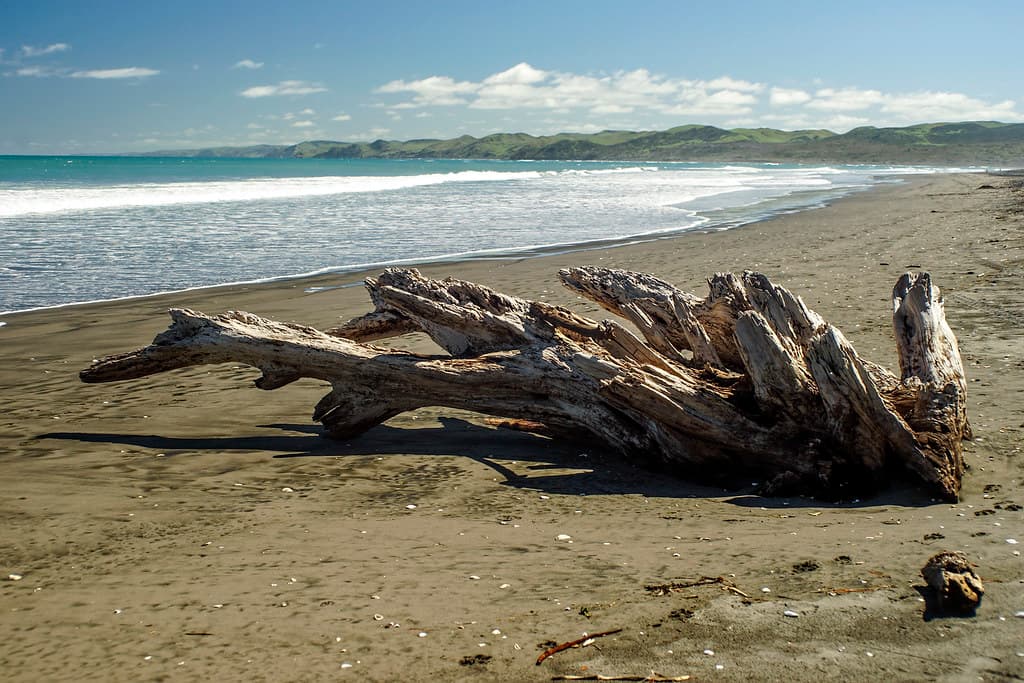
Ruapuke exists in Raglan's shadow by design. While the famous harbor breaks host lineups thirty deep, this remote southern beach rarely sees more than a handful of surfers, even when three-meter swells light up the reefs. The black iron sand stretches from Te Akau in the north to Ruapuke Stream in the south, backed by farmland and native bush that climbs toward Pirongia's volcanic slopes. The beach shifts character with every kilometer—wide and flat near the access point, narrowing to steep banks near the stream, punctuated by lava rock platforms that create defined peaks and serious consequences.
The surf here demands respect and skill. The bars shift constantly, creating peaks that work brilliantly for a month then close out entirely after a single storm. Rips pulse along the rock margins, strong enough to pull you a hundred meters south before you realize you're moving. Local surfers read the conditions instantly, paddling straight to the temporary bank they know will hold shape, while visitors flounder in the shore pound wondering where the rideable waves hide.
 Credit: Unsplash
man and woman sitting on grass field near lake during daytime
 Credit: Unsplash
bird's eye view of body of water near mountain
Shifting peaks demand local knowledge
Iron sand to Ruapuke Stream
Lava platforms and tide pools
Prime Visitation
Best Weather|Less Crowds
Where it is
Ruapuke Beach
Raglan, Waikato, New Zealand
-37.897500°, 174.739500°
Weather
Loading…
Swell
—
Temp
Warm · Restorative
UV Index
Moderate
Wind
—
Tidal State
Last known
Max Sunlight
—
Ideal Shade
—
Jan - Dec (Peak)
Mar - Nov (Off-season)
Best Weather|Less Crowds
Near Ruapuke Beach
Explore dining, stays, nightlife, and activities near Ruapuke Beach in Raglan, New Zealand. Every listing below is a real place linked to this beach — open a card for reviews, maps, and booking options.
Stays and lodging options near Ruapuke Beach for your beach trip.
Select a category to load nearby places.
Unlock restaurants, luxury stays and curated maritime experiences within 2km
Ruapuke Beach is not ideal for swimming due to strong west coast currents, powerful surf, and the absence of lifeguard patrols. The beach primarily attracts surfers who understand ocean conditions and risks. The black sand and rocky areas can create unpredictable wave patterns and rips. Casual swimmers, especially families with children, should exercise extreme caution or avoid entering the water altogether. If you do swim, never go alone, stay close to shore, and be aware that help is far away in this remote location.
Ruapuke Beach can be visited year-round, though conditions vary significantly by season. Summer (December-February) offers milder weather and is best for non-surfers wanting to explore the dramatic scenery. For surfing, autumn through spring brings more consistent swells. Visiting during weekdays or shoulder seasons ensures fewer crowds compared to nearby Manu Bay. Early morning and late afternoon provide beautiful light for photography and potential wildlife sightings. Always check weather and surf forecasts, as conditions can change rapidly on the west coast.
Ruapuke Beach is located approximately 15-20 kilometers south of Raglan via Whaanga Road. The journey requires careful driving on narrow, winding, and partly unsealed roads through farmland and native bush. The route takes 30-40 minutes depending on conditions. A standard car can usually make the trip in dry weather, but high-clearance vehicles are preferable. Some sections pass through private farmland where gates may need opening and closing. The remote access is part of what keeps crowds away, making it an adventure to reach.
Ruapuke Beach has no facilities, so all supplies must come from elsewhere. Raglan town, the nearest service center, offers supermarkets, cafes, restaurants, and various accommodation including motels, campgrounds, and holiday rentals. Visitors typically stay in Raglan and make Ruapuke a day trip, bringing food, water, and any necessary equipment. The beach's remoteness means no cell coverage in many areas, so plan accordingly. Pack out all rubbish as there are no bins or services at the beach itself.
Ruapuke offers a wilder, more isolated alternative to Raglan's famous and often-crowded surf breaks like Manu Bay. The remote location means fewer surfers and a more pristine, untouched atmosphere. The dramatic black-sand beach is framed by rugged coastline, native bush, and volcanic rock formations creating stunning scenery. Surfers appreciate the uncrowded waves and challenging conditions. The journey itself through rural Waikato adds to the adventure. This beach rewards those willing to venture further for a more authentic, solitary west coast experience.
Photos