Counting the waves…
Counting the waves…
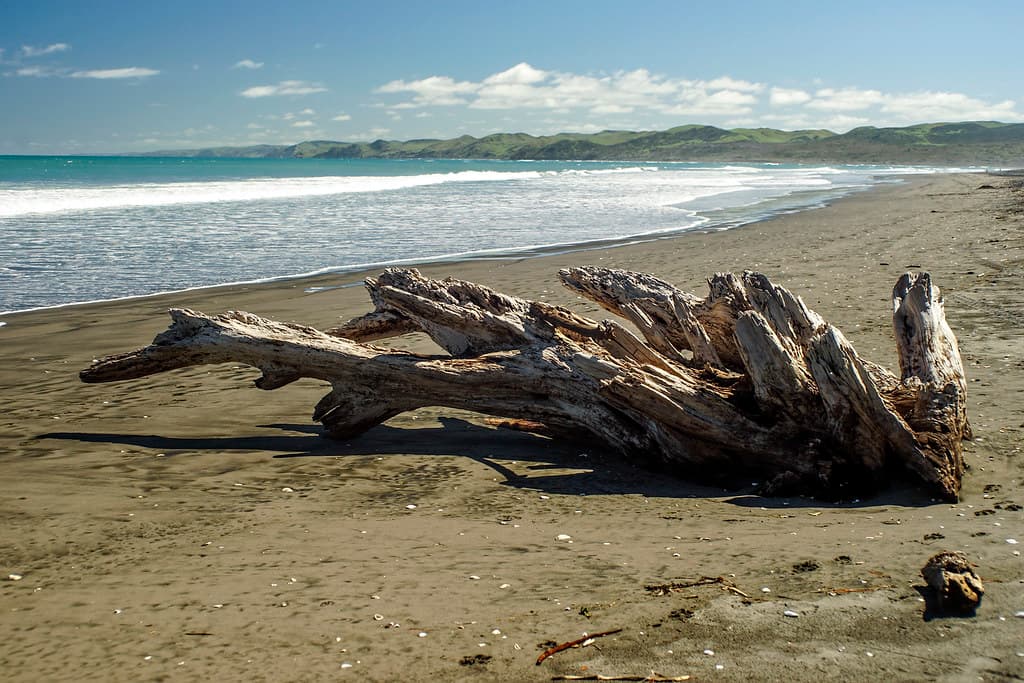
Iron-rich sand crunches beneath your feet, each grain a magnetic fragment of volcanic eruptions that built the Tasman landscape millennia ago. The beach runs north in a near-perfect line, swells marching in with metronomic regularity to detonate in white water that hisses across the steep face. Prevailing westerlies have shaped the dune grasses into permanent lean, and salt crusts everything. A handful of baches hunker behind the dunes, weathered fibrolite and corrugated iron painted in faded blues and greens. This is where fishing families have gathered for generations, launching kontiki rigs into the surf or simply casting from the beach for kahawai and gurnard. The settlement—if you can call a dozen structures a settlement—has no shop, no café, just private dwellings and the elemental coast. Walk north and the beach empties completely, human presence reduced to tire tracks from 4WDs and the occasional footprint. Toheroa once thrived in these sands, large surf clams harvested by Māori for generations until overfishing collapsed the population. Now the beach heals slowly, its black expanse a reminder of both abundance and depletion. Gannets plunge offshore, white missiles hitting the water with percussive force, while closer in, shags ride the swells like patient fishermen.
Places, rentals, tours and events within walking and driving distance of Te Akau Beach.
Photos
Te Akau Beach is not recommended for swimming due to strong currents, rips, and powerful surf typical of New Zealand's west coast. The beach is unpatrolled and conditions can be dangerous even for experienced swimmers. The black sand and remote location add to the hazards. However, the beach is popular with surf-casters and surfers who understand ocean conditions. Paddling in shallow water requires extreme caution. Always supervise children closely and never turn your back on the waves. The beach is better enjoyed for walking, fishing, and scenery rather than swimming.
Summer (December-February) offers the most settled weather for visiting Te Akau Beach, though west coast conditions remain changeable year-round. Late afternoon visits are particularly rewarding for sunset views over the Tasman Sea. Autumn (March-May) brings fewer visitors and pleasant temperatures for beach walks. Winter can be dramatic for storm watching but expect cold, windy conditions. Early mornings are ideal for photography and solitude. Visit during low tide for the most expansive beach experience. Weekdays are significantly quieter than weekends when locals visit for fishing and recreation.
Te Akau Beach is located approximately 30km north of Raglan via coastal roads. From Raglan, head north on Whaanga Road following signs toward Te Akau. The final section involves gravel roads that can be rough after rain. From Hamilton (about 70km), drive to Raglan first, then continue north. There is no public transport, so a private vehicle is essential. Roads are suitable for most vehicles in dry conditions but use caution on unsealed sections. Allow approximately 45 minutes from Raglan, longer if roads are wet. Ensure adequate fuel before departure.
Te Akau Beach has minimal facilities, with no shops or restaurants at the beach itself. The nearest services are in Raglan township, approximately 30km south, which offers cafés, restaurants, supermarkets, and various accommodation from backpackers to holiday rentals. There may be basic holiday homes available for rent near Te Akau through private listings. Visitors should bring all necessary supplies including food, drinking water, and sun protection. There are no public toilets or amenities directly at the beach. Most people base themselves in Raglan and make day trips to Te Akau.
Te Akau Beach holds special appeal for locals due to its authentic, uncommercialized character and excellent surf-casting opportunities. The long stretch of black sand offers solitude and natural beauty without tourist development. Fishing enthusiasts particularly value it for catching snapper, kahawai, and other species from the shore. The remote feel, despite relative proximity to Raglan, creates a true escape. Locals appreciate the wild coastal scenery, powerful surf, and sense of having the beach to themselves. Its position north of busier Raglan beaches means it remains a hidden gem known primarily to Waikato residents and dedicated anglers.