Counting the waves…
Counting the waves…
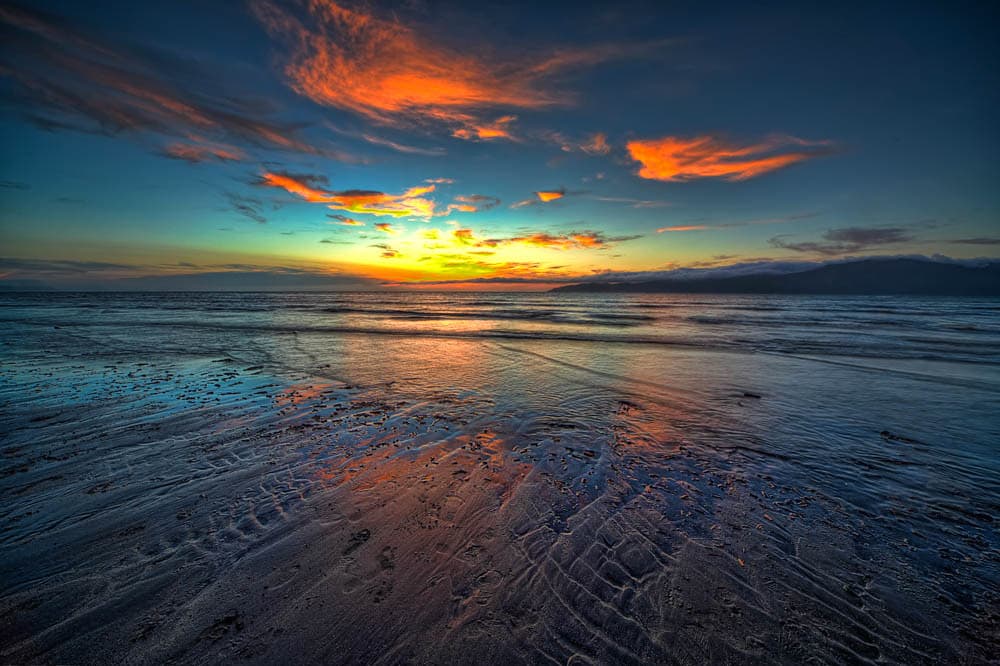
You park on a residential street where the houses thin to lifestyle blocks and the dunes rise higher, the marram grass left to grow rather than mowed into submission. The track to the beach crosses soft sand held together by roots, then drops you onto a shore that looks like its more famous southern neighbors but feels entirely different. Fewer footprints, fewer voices, more space to breathe. The sand is that same blonde-grey Kāpiti mix, firm enough near the water for easy walking, powdery higher up where wind builds it into ridges. Kapiti Island holds the western horizon, close enough to see the texture of its forest, far enough to remain unreachable without a boat and a permit. The island makes the whole coast feel sheltered even when southerlies blow, creating calmer conditions than beaches farther north. Small waves fold gently rather than crash, leaving foam lines that curve and overlap, the water clear enough to see your feet when you wade in, cold enough to make you suck air through your teeth. The settlement behind the dunes stays low and scattered—original baches from the 1950s mixed with newer architect-designed homes, but nothing approaching the density of Paraparaumu. You walk north toward Ōtaki and count the people on one hand. Families fly kites in steady wind, dogs sprint through shallows chasing sticks, and couples walk slowly, stopping to examine shells or just to turn and look at how the light's hitting the island. Sunset brings out a few more, but even then the beach absorbs everyone easily, leaving room for silence between the waves.
Places, rentals, tours and events within walking and driving distance of Te Horo Beach.
Photos
Te Horo Beach is an unpatrolled open-coast beach, so caution is essential. Swimming conditions vary with weather and swell, and rips can form along this coastline. It's generally better suited to experienced swimmers who can assess conditions themselves. Families should stay in shallow water and supervise children constantly. The beach is excellent for paddling and wading during calm conditions. Check marine forecasts before visiting, avoid swimming alone, and be aware that no lifeguard services are available at this quieter location.
Te Horo Beach is naturally quieter year-round compared to busier Kāpiti Coast beaches, making it ideal for those seeking solitude. Weekdays are significantly less busy than weekends, even in summer. Visiting outside school holidays (late January through November, excluding winter and spring breaks) guarantees the most peaceful experience. Early mornings and late afternoons offer beautiful light and fewer people regardless of season. Winter months provide dramatic coastal scenery with near-complete privacy, though weather is cooler and more unpredictable.
Te Horo Beach is located between Ōtaki and Waikanae on the Kāpiti Coast, approximately 60-70 kilometers north of Wellington. From State Highway 1, take the Te Horo turn-off and follow Te Horo Beach Road westward to the coast (approximately 3-4 kilometers). The route is well-marked but quieter than main beach access roads. Parking is available at beach access points. Public transport doesn't service the beach directly, so private vehicle is the most practical option. The drive offers rural coastal scenery.
Te Horo Beach is primarily a residential beach settlement with limited commercial facilities. There are no shops or restaurants directly at the beach itself. The small Te Horo village (inland) has basic services, while nearby Ōtaki and Waikanae (within 10-15 minutes' drive) offer supermarkets, cafés, and restaurants. Accommodation consists mainly of private holiday homes and baches, some available for rent through booking platforms. For hotels and more dining options, Waikanae and Paraparaumu provide better infrastructure while keeping Te Horo Beach accessible for day visits.
Te Horo Beach offers a notably quieter, more secluded experience than its busier neighbors Ōtaki Beach and Waikanae Beach. Its hidden character comes from less development and fewer access points, creating an uncommercialized coastal village atmosphere. The beach provides generous open coastal space without crowds, making it perfect for peaceful walks, sunset watching, and escaping tourist activity. Its location between two larger beach towns means many visitors overlook it entirely, preserving its tranquil character and appealing to those who value solitude and unspoiled coastal scenery over amenities.