Counting the waves…
Counting the waves…
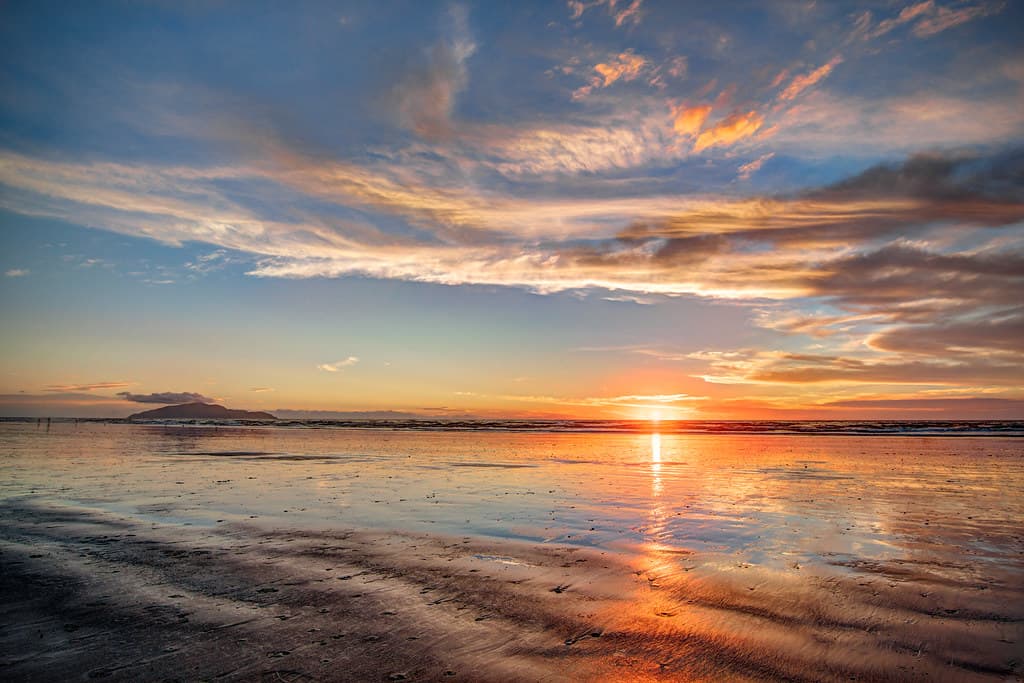
The beach here has room to breathe. It stretches for five kilometres, wide enough that even at its busiest—January afternoons, long weekends—you can find unclaimed territory. The sand is coarse-grained and blonde, squeaking underfoot when dry, packing firm when wet. Shells accumulate in tidal lines: toheroa, pipi, cockles polished smooth and bleached white. Children collect them in buckets, building temporary cities that the sea will erase by morning. Waves roll in with workmanlike consistency, nothing spectacular but perfectly adequate for hours of bodysurfing, boogie boarding, or simply diving through. The water temperature shocks initially—this is the Tasman, after all—but your skin adjusts, and soon you're numb enough to stay in for another set, another ten minutes, another half hour. Families plant themselves near the access points, where wooden walkways cross the low dunes, but walkers and runners use the full length, their footprints unspooling for kilometres. The town behind the beach operates on holiday time. Dairies sell ice creams and yesterday's newspapers. Fish and chip shops open when they open, closed when they're not. Nobody hurries. You sense this place exists primarily in summer, that its true population swells between December and February before retreating to a handful of permanent residents who endure the winter swells and westerly gales. It's a beach that asks little and gives much: space, simplicity, the reliable pleasure of sand meeting water meeting sky meeting island, repeating that geometry until distance softens everything to suggestion.
Places, rentals, tours and events within walking and driving distance of Ōtaki Beach.
Photos
Ōtaki Beach is generally suitable for families, with wide sandy stretches ideal for paddling and sandcastle building. However, it's an open coast beach with variable surf conditions and rips, so always swim between the flags when lifeguards are on patrol during summer. Check local conditions before entering the water, supervise children closely, and be aware that waves can be unpredictable. The shallow areas near the shoreline are typically safer for younger children during calm conditions.
Ōtaki Beach is enjoyable year-round, with each season offering different experiences. Summer (December–February) is warmest for swimming and draws holiday crowds. Autumn and spring provide mild weather with fewer visitors, perfect for walks and sunset viewing. Winter brings dramatic skies and peaceful solitude, though the water is cold. The beach's low-key holiday atmosphere peaks during New Zealand's summer school holidays, while off-peak months offer tranquil coastal experiences and excellent opportunities for beachcombing.
Ōtaki Beach is approximately 70 kilometers north of Wellington, about an hour's drive via State Highway 1. Exit at Ōtaki and follow local roads westward approximately 5 kilometers to the coast. The beach is well-signposted from the main highway. Public transport options are limited; train services run to Ōtaki township via the Kapiti Line, but you'll need private transport or taxi to cover the final distance to the beach. Parking is available near beach access points.
Ōtaki Beach has a small local store and café options within the beach settlement. For more dining variety, head to Ōtaki township (5km inland), which offers supermarkets, cafés, and restaurants. Accommodation ranges from holiday homes and baches (many available for rental) to motels and camping facilities in the area. Nearby Waikanae and Paraparaumu also provide additional lodging options. Booking ahead is recommended during peak summer holiday periods when beach houses fill quickly with Kiwi families.
Ōtaki Beach stands out for its particularly wide sandy expanse and relaxed, traditional Kiwi beach-town atmosphere. It's one of the larger northern Kāpiti beach settlements, offering more of a village feel compared to quieter neighbors. The beach provides expansive open space perfect for kite flying, beach cricket, and long walks. Its sunsets over Kapiti Island are spectacular, and the area maintains a low-key, family-oriented holiday vibe that feels authentically local rather than commercialized, attracting generations of returning visitors.