Counting the waves…
Counting the waves…
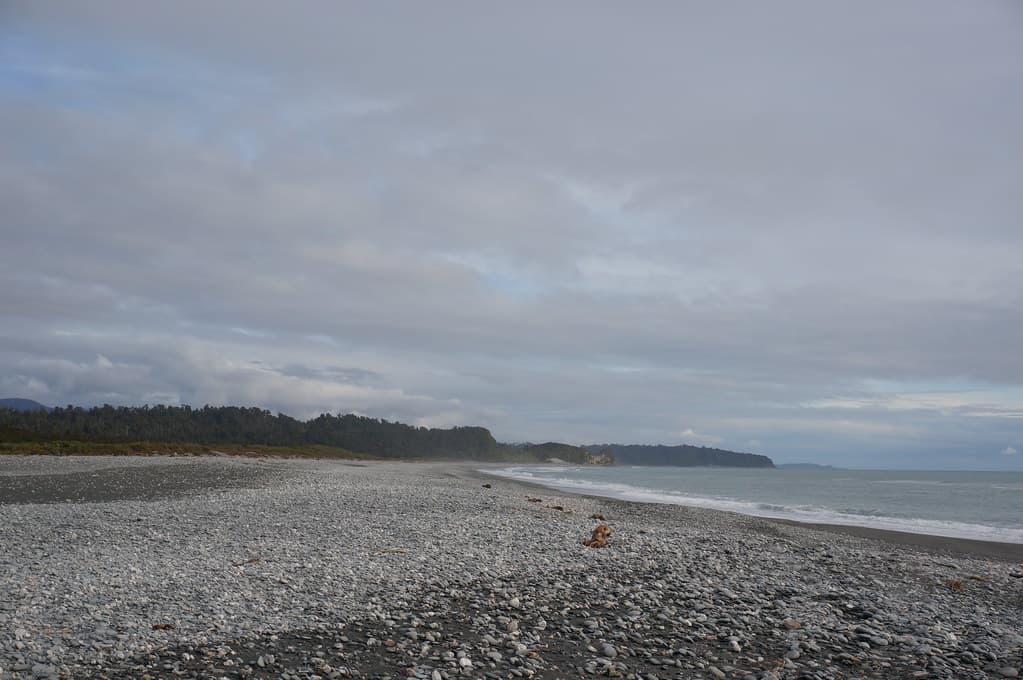
The road in tells you this beach won't be crowded. Twenty kilometers of gravel wind through lowland forest before emerging at a small settlement that feels end-of-the-world quiet. Park near the old mining equipment—rusted cable drums and collapsed sluice frames—and walk the track through coastal scrub to where the beach opens up. The first view stops you cold: Mount Cook and Mount Tasman dominate the eastern sky, their faces so close and massive they seem superimposed on the horizon. The beach itself is pure West Coast geology—grey and tan pebbles ranging from marble-size to fist-size, restlessly turned by waves that have traveled uninterrupted across the Tasman. Driftwood accumulates in the upper beach, silvered logs arranged by storm tides into natural barriers. You'll find black sand in patches where iron minerals concentrate, and on calm days, rock pools form near the southern headland where the Gillespies River meets salt water. The air carries the particular scent of glacier country: cold stone and snowmelt mixing with kelp and salt. Walk north and you'll encounter remnants of the Gillespies Beach gold rush—rusted cables emerging from banks, collapsed mine shafts gated off but still visible. The mining era ended nearly a century ago, but the landscape hasn't fully reclaimed the scars. Sunset here is a study in scale: the mountains turn purple and gold while the Tasman flattens into hammered steel. Oystercatchers work the tide line, their orange beaks flashing as they probe between stones. This is New Zealand's geological violence made visible—mountains rising, glaciers carving, ocean eroding, all compressed into a single sightline.
Places, rentals, tours and events within walking and driving distance of Gillespies Beach.
Photos
Swimming at Gillespies Beach is not recommended due to dangerous surf conditions, strong rips, and cold water temperatures typical of the West Coast. The beach is remote and completely unpatrolled, with no lifeguard services or rescue facilities nearby. The rugged, exposed coastline experiences powerful Tasman Sea swells that create hazardous conditions even for experienced swimmers. The beach is best enjoyed for walking, photography, and sightseeing rather than water activities. If you do wade in shallow water, exercise extreme caution, never turn your back on the waves, and stay close to shore.
Visit during settled weather periods (often in summer or autumn) and outside peak tourist times for the most enjoyable experience. Early morning or late afternoon provides the best lighting for photographing the Southern Alps backdrop. The 21-kilometre gravel access road can be challenging in wet conditions, so fine weather makes the journey more pleasant. Winter brings dramatic storms and moody atmospheres but requires more careful planning. Check weather forecasts before travelling, as the area can be foggy or rainy. Less crowded periods allow for a more peaceful, contemplative experience of this remote location.
Gillespies Beach is accessed via a 21-kilometre unsealed gravel road from the Fox Glacier village. The journey takes approximately 30-40 minutes in good conditions. Turn off State Highway 6 at Fox Glacier and follow signs toward Gillespies Beach. The road is suitable for most vehicles during dry weather but can be rough, with potholes and washouts after rain. Drive slowly and carefully. A 2WD vehicle is usually adequate in good conditions, but check locally about current road status. Allow extra time for the scenic drive and be prepared for the road to be bumpy and dusty or muddy depending on conditions.
Gillespies Beach has minimal facilities—there's a basic DOC campground with toilets but no other amenities. There are no shops, cafes, or food services at the beach itself. Visitors should bring all food, water, and supplies from Fox Glacier village (21km away) or other towns along the West Coast. The nearest petrol, restaurants, and accommodation are in Fox Glacier. Plan to be completely self-sufficient for your visit. If camping, bring all necessary gear and be prepared for changeable weather. The remote nature is part of the appeal, but requires proper preparation for a safe and enjoyable visit.
Gillespies Beach features a remarkable combination of glacier-carved landscape meeting the wild Tasman Sea, with stunning views of the Southern Alps and Mount Cook on clear days. The area has fascinating gold-mining history from the 1860s, with remnants still visible including old mining equipment and a historic cemetery. The dramatic contrast between snow-capped mountains and rugged coastline is exceptional. The beach's pebbles and driftwood, backed by dense coastal forest, create a distinctly wild West Coast atmosphere. Its remoteness and minimal development preserve an authentic, untouched character that's increasingly rare, offering a genuine wilderness coastal experience.