Counting the waves…
Counting the waves…

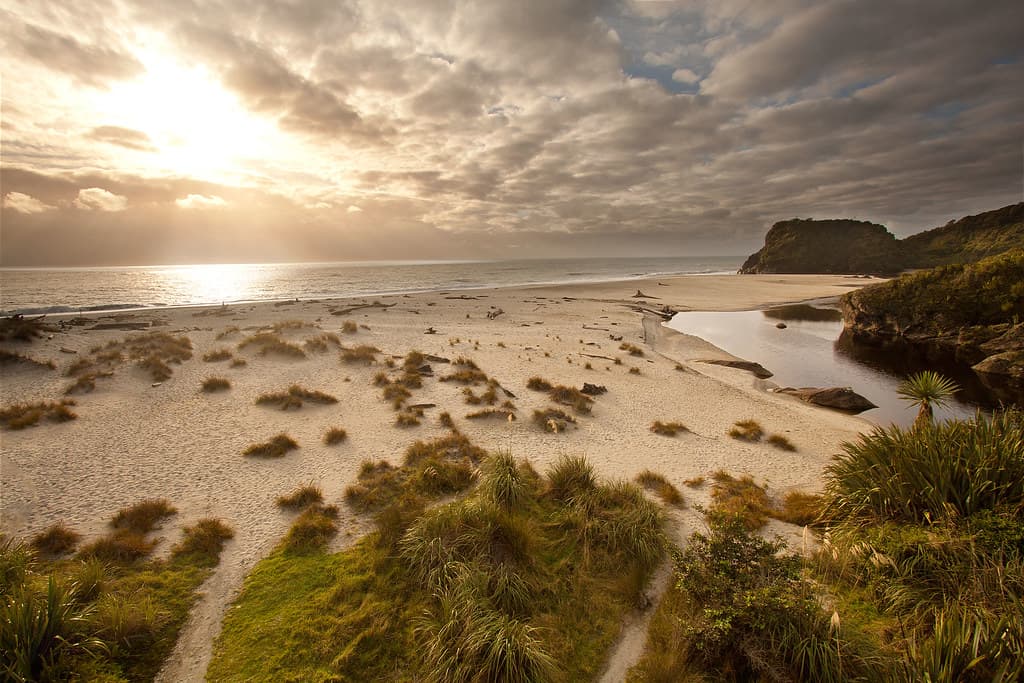
Access is via a farm track that ends at the dunes, and then you're walking. The sand stretches south until it blurs into haze, a featureless grey ribbon between ocean and sky. The Southern Alps rise inland, their peaks visible on mornings when the cloud lifts, but mostly the landscape is horizontal—low dunes, flat beach, the Tasman rolling in with methodical persistence. Driftwood lies scattered across the upper beach in bleached piles, some logs massive enough to provide windbreaks for lunch stops. The sand is firm and dark, mottled with shell fragments and kelp, and at low tide the beach widens to a hundred metres or more. Birds outnumber people by orders of magnitude: white-fronted terns, pied stilts, banded dotterels that race ahead of your footsteps, piping sharply. The isolation here is genuine. No cafés, no facilities, no cell signal—just the wind sculpting the dune grasses and the waves erasing your footprints as you walk. Sunset turns the wet sand to pewter and the sky to apricot, and the temperature drops fast enough that you'll want layers. This beach demands nothing of you and offers nothing but space—which, in a crowded world, is a rare currency.
Places, rentals, tours and events within walking and driving distance of Whataroa Beach.
Photos
Swimming at Whataroa Beach is generally not recommended due to the wild nature of the West Coast. The beach faces the Tasman Sea and typically has strong currents, cold water temperatures, and unpredictable surf conditions. There are no lifeguard services or safety facilities. The beach is better suited for walking, photography, and scenic appreciation rather than swimming. Always stay alert to changing conditions and never turn your back on the ocean along this coastline.
The best time to visit Whataroa Beach is during the warmer months from November to March when weather conditions are more stable, though rain can occur year-round on the West Coast. Visit during less crowded periods, particularly weekdays or shoulder seasons (October-November, March-April), for a more remote experience. Late afternoon offers spectacular sunset opportunities. Check weather forecasts before travelling, as heavy rain can affect road access and coastal conditions in this region.
Whataroa Beach is accessed from Whataroa township, located on State Highway 6 between Franz Josef and Hokitika. From the township, you'll need to take local roads toward the coast, which may be unsealed or gravel in sections. A sturdy vehicle is recommended as conditions can vary. The drive offers scenic views through typical West Coast farmland and river flats. Check locally for current road conditions and access permissions, as some routes may cross private property or be affected by weather.
Accommodation and dining options are limited in Whataroa, which is a small rural township. Basic services including a pub, café, and limited supplies are available in the township itself. Several farmstays and small lodges operate in the area, offering authentic rural West Coast experiences. For more comprehensive facilities, Franz Josef Glacier township (approximately 30 minutes north) or Hokitika (approximately 1.5 hours south) provide wider choices of hotels, motels, restaurants, and supermarkets for stocking up on supplies.
Whataroa Beach offers an authentic, remote South Westland coastal experience far from tourist crowds. The beach sits near the Whataroa River mouth in an area famous for its nearby white heron colony, New Zealand's only breeding site for these birds. The long, wild strand showcases raw West Coast character with driftwood-strewn sand, dramatic mountain backdrops, and powerful Tasman Sea conditions. Its isolation and surrounding wetland landscapes create exceptional photographic opportunities, particularly during sunset when the light illuminates the Southern Alps.