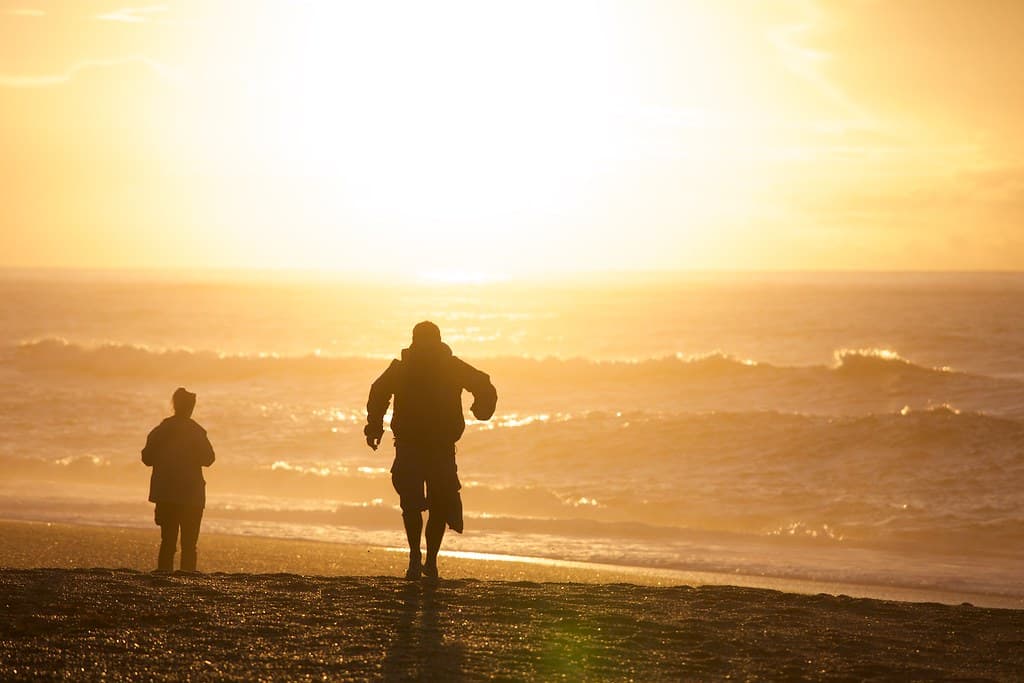
Counting the waves…
Counting the waves…
The beach is more stone than sand, rounded river cobbles polished smooth by the Tasman's relentless tumbling. Walking requires attention—the stones shift underfoot with each step, producing a distinctive clatter that drowns out conversation. The waterline is littered with bull kelp, blue mussel shells, and the occasional crayfish pot buoy torn loose in storms. Behind you, the Jackson Bay township consists of a fish shop, a few weatherboard houses, and the rusting remains of a settlement scheme that brought optimistic farmers here in the 1870s before the jungle claimed their clearings. The bay offers protection from southerly swells, but northwesterlies funnel straight in, pushing whitecaps across the anchorage where fishing boats strain at their moorings. On calm days, the water lies flat and grey-green, reflecting the snow peaks of the Olivine Range that march along the bay's northern rim. You can stand at the wharf and watch the commercial fishermen sort crayfish into crates, their hands moving with practiced efficiency while gulls circle overhead, screaming their demands. This is road's end in the most literal sense—beyond Jackson Bay, the coastline is accessible only by boat or multi-day tramp. The beach feels provisional, temporary, as if the rainforest might reclaim it at any moment. Mist drifts down from the mountains most afternoons, erasing the peaks and reducing visibility to fifty meters. When it clears, the views are alpine and oceanic simultaneously, ice and surf occupying the same frame.
Places, rentals, tours and events within walking and driving distance of Jackson Bay Beach.
Photos
Jackson Bay Beach is a pebble beach with typically calm bay waters compared to exposed ocean beaches, but swimming still requires caution. The bay can experience currents and cold water temperatures year-round. There are no lifeguard services at this remote location. The sheltered nature of the bay generally makes it safer than open coast beaches, and paddling in shallow water is often manageable in calm conditions. However, always assess conditions before entering the water, supervise children closely, and be aware that the nearest medical facilities are distant in this isolated coastal settlement.
Summer months (December-February) offer the best weather for visiting Jackson Bay Beach, with warmer temperatures and more stable conditions, though the West Coast receives rain throughout the year. The beach and surrounding scenery are spectacular in any season, with dramatic mountain backdrops often snow-capped in winter and spring. Visiting during shoulder seasons means fewer crowds while still providing good opportunities for photography and exploration. The road to Jackson Bay is accessible year-round, but weather can be unpredictable. Early morning visits often provide calmer conditions and excellent light for capturing the mountain and bay views.
Jackson Bay is located at the end of State Highway 6, approximately 50km south of Hāst township. The drive from Hāst takes about 45 minutes on a winding, scenic road through native forest. The route is sealed but narrow with some challenging sections, so drive carefully. From Wānaka or Queenstown, allow 3-4 hours via the Haast Pass. Jackson Bay is truly the end of the road—the highway terminates at this remote fishing village. Standard vehicles can make the journey, but concentrate on the winding road. The beach is easily accessed from the village center.
Jackson Bay has very limited facilities for such a remote location. The Craypot, a small seafood caravan, serves fresh local seafood when operating (seasonal and weather-dependent). There is a basic campground providing simple accommodation, but facilities are minimal. The nearest town with full services is Hāst, 50km north, which has motels, cafes, and a general store. Visitors should carry food and supplies, and not rely on finding services in Jackson Bay itself. Day trippers should bring picnic supplies. Book any accommodation in advance, and check if the Craypot is operating before expecting meals.
Jackson Bay Beach sits at the absolute end of New Zealand's road network, creating a genuine end-of-the-world atmosphere. The dramatic setting combines a working fishing village with stunning mountain scenery—the Southern Alps rise directly from the bay, creating spectacular views. This authentic fishing community offers a glimpse into remote coastal life, far from tourist development. The area is the starting point for the historic Hollyford Track and provides access to wild coastline. The combination of isolation, working harbor character, mountain views, and rugged natural beauty makes Jackson Bay a unique destination for adventurous travelers.