Counting the waves…
Counting the waves…
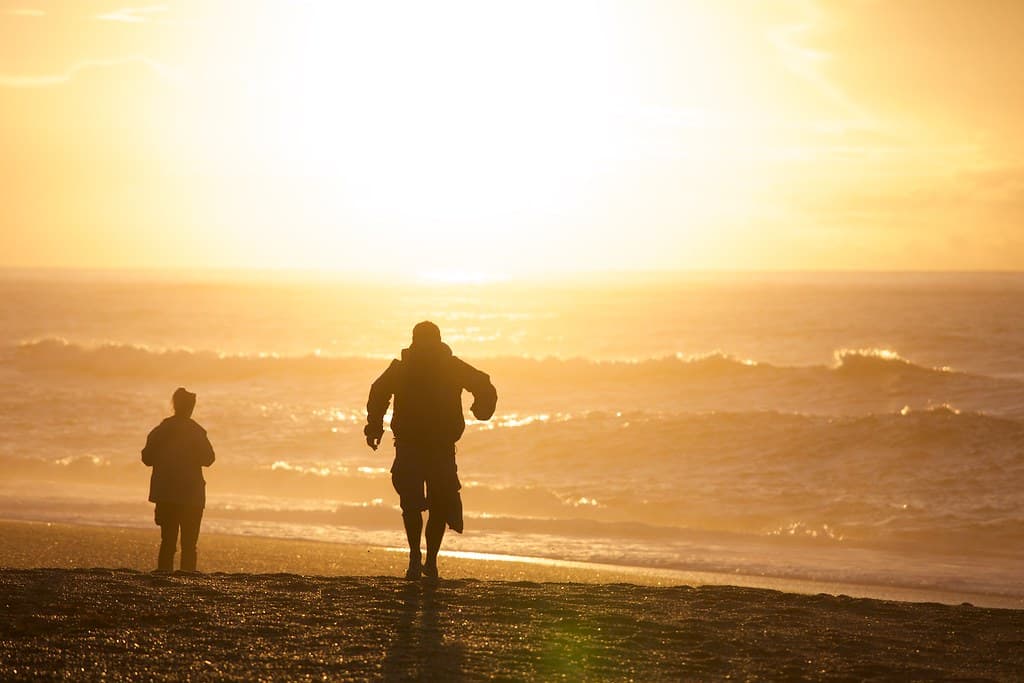
The path to the beach tunnels through rimu and kahikatea, tree roots gripping boulders slick with moss. Bellbirds call from the canopy, their song liquid and bright even in heavy mist. Then the forest opens abruptly onto a curve of grey pebbles where the river cuts through to the Tasman. The lagoon behind the beach is shallow and tea-coloured, warmed by sun on days when the cloud lifts. Whitebait run here in spring, and you'll see locals with nets standing thigh-deep in the current. The ocean side is all churn and roar—waves hit the pebble bar with enough force to shake the ground underfoot. White-fronted terns work the surf line, diving for sprats pushed shoreward by the turbulence. This is South Westland at its most compressed: rainforest within arm's reach, alpine peaks visible on rare clear mornings, and the Tasman stretching unbroken to Tasmania. The air smells of wet earth and kelp. At high tide the beach disappears entirely, and at low tide you can walk south for an hour on smooth stones that roll underfoot like ball bearings. Bring sandfly repellent—the bush margins are thick with them.
Places, rentals, tours and events within walking and driving distance of Okuru Beach.
Photos
Swimming at Okuru Beach is not recommended due to dangerous West Coast conditions. This remote pebble beach faces the exposed Tasman Sea with strong currents, cold water temperatures, and unpredictable waves. The proximity to the Okuru River mouth can create additional hazards including rips and river outflow currents. There are no lifeguards, facilities, or emergency services nearby. The beach is better suited for scenic walks, photography, and wildlife observation. Exercise extreme caution near the water's edge and never turn your back on the surf.
The best time to visit Okuru Beach is during the summer and shoulder seasons (November-April) when weather conditions are generally more favourable and road access is more reliable. Visit during less crowded weekdays for maximum solitude in this already remote location. Late afternoon offers spectacular sunset views over the Tasman Sea. Be prepared for changeable weather regardless of season, as the West Coast receives high rainfall year-round. Check weather and road conditions before travelling, especially in winter when conditions can be challenging.
Okuru Beach is accessed from the tiny settlement of Okuru on State Highway 6, located between Haast (approximately 40 km south) and Fox Glacier (approximately 50 km north). From the highway, take the unsealed road toward the coast near the Okuru River bridge. The final approach may involve gravel roads and potentially river crossings depending on conditions. A robust vehicle is recommended. Road conditions can deteriorate in wet weather, so check locally before attempting access. The journey offers stunning rainforest and river scenery.
Okuru itself has extremely limited facilities, typically just a few scattered private residences. The nearest towns with services are Haast to the south and Fox Glacier to the north, both offering accommodation ranging from motels and lodges to holiday parks, plus cafés, restaurants, and small stores. Bring all necessary supplies including food, water, and fuel, as there are no shops or services at Okuru Beach itself. Both Haast and Fox Glacier are approximately 45-60 minutes drive away, so plan accordingly for day visits.
Okuru Beach stands out for its pebble composition rather than sand, creating a distinct coastal character near the Okuru River mouth. This extremely remote location offers unparalleled wilderness isolation where temperate rainforest meets the wild Tasman Sea. The area is part of a UNESCO World Heritage region known for exceptional natural values. Wildlife such as seabirds and occasionally fur seals can be spotted. The beach provides dramatic views of the Southern Alps to the east and endless ocean to the west, embodying the raw, untamed essence of South Westland's coastline.