Counting the waves…
Counting the waves…

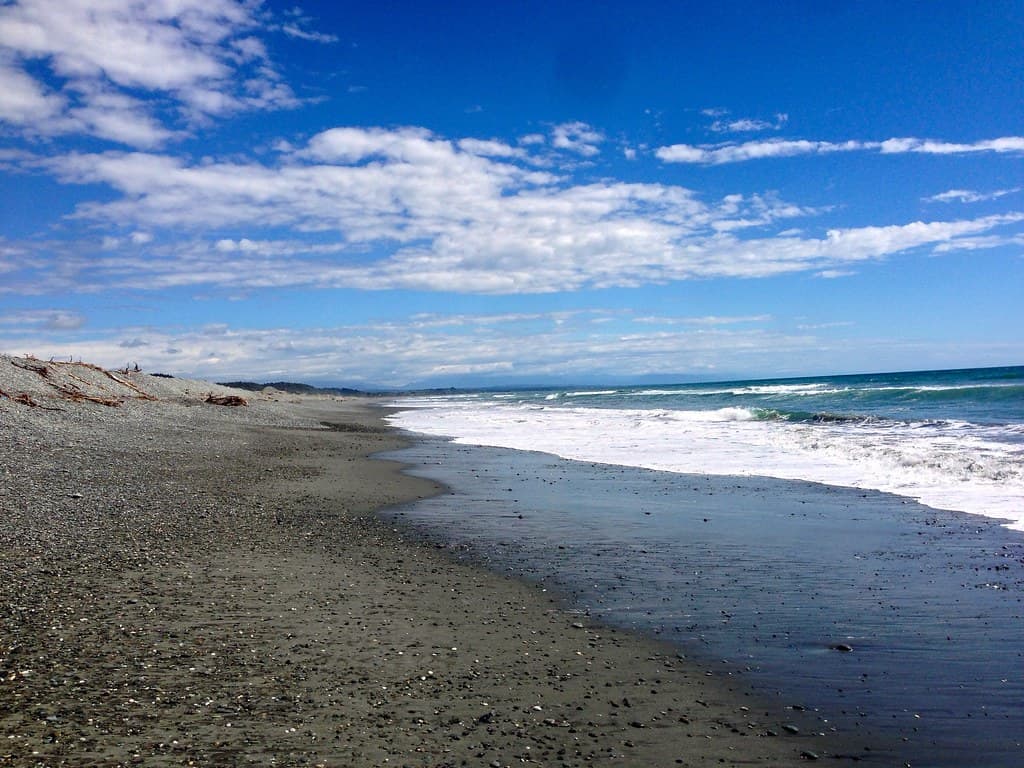
You'll drive south from Greymouth past the last cluster of houses, then find the beach access where Norfolk pines frame the ocean view. Paroa Beach spreads out in both directions, dark sand packed firm enough for walking, soft enough to cushion bare feet. The foreshore here has been shaped by plantings and some protection from the worst Tasman storms, creating a beach that feels marginally more forgiving than the wild stretches north and south. Families spread blankets in the lee of driftwood logs, kids dig moats and channels while parents watch from camp chairs, and the pines provide just enough shade on rare sunny days. The water remains cold and the waves still pack punch, but on calm days you can wade out beyond the shorebreak without fearing for your life. The sand contains the same volcanic minerals as every other West Coast beach—flecks of iron that glint in afternoon light, dark granules that stick to wet skin. The appeal here is accessibility paired with authenticity. Paroa hasn't been developed into a resort beach; it simply offers easier access and slightly calmer conditions than beaches designed by nature alone. You'll still hear the Tasman's constant roar, still taste salt on the wind, still feel the West Coast's elemental power. But you might also see a toddler collecting shells, a local reading a book in a folding chair, a couple flying a kite—ordinary pleasures on an extraordinary coast.
Places, rentals, tours and events within walking and driving distance of Paroa Beach.
Photos
Paroa Beach has typical West Coast surf conditions with no lifeguard patrol, so swimming requires caution. The beach is suitable for families who supervise children closely and stick to paddling in shallow areas. Waves can be powerful and currents unpredictable, so ocean swimming is best left to experienced swimmers. The sandy beach is ideal for beach games, walking, and sandcastle building. Always watch children near the water, avoid rips, and be mindful of cool water temperatures throughout the year.
Summer months (December-February) offer the best weather for Paroa Beach, with longer daylight hours and warmer temperatures, though rain is still possible. The West Coast is one of New Zealand's wettest regions, so pack rain gear regardless of season. Late summer and early autumn (February-April) can provide settled periods with stunning sunsets. Winter visits offer dramatic storm-watching and moody coastal scenes. Check the forecast before your visit, and plan outdoor activities around weather windows.
Paroa Beach is located approximately 10-15 minutes south of Greymouth via State Highway 6. Turn off the highway at Paroa and follow signage toward the beach. The final approach is typically via a sealed or well-maintained gravel road suitable for most vehicles. Parking is available near the beach access points. The beach is easily accessible as a day trip from Greymouth or as a stop while traveling the West Coast. No special vehicle requirements are needed in normal conditions.
Paroa village has limited services, but nearby Greymouth (10-15km north) offers comprehensive dining, supermarkets, cafés, and takeaway options. Accommodation ranges from backpackers and motels to holiday parks and hotels in Greymouth. Some local properties near Paroa may offer bed-and-breakfast or self-contained options. There are no facilities directly at the beach, so bring food, water, and any supplies you need. Greymouth is the main service center for this section of coast.
Paroa Beach offers a quieter, more local experience compared to busier tourist beaches on the West Coast. Its proximity to Greymouth makes it accessible yet it maintains a peaceful atmosphere. The beach is known for beautiful sunsets over the Tasman Sea and provides expansive sandy stretches good for walking. It serves as an alternative to more crowded spots while still offering classic West Coast scenery of wild surf, driftwood, and mountain backdrops, making it popular with locals seeking a relaxed coastal escape.