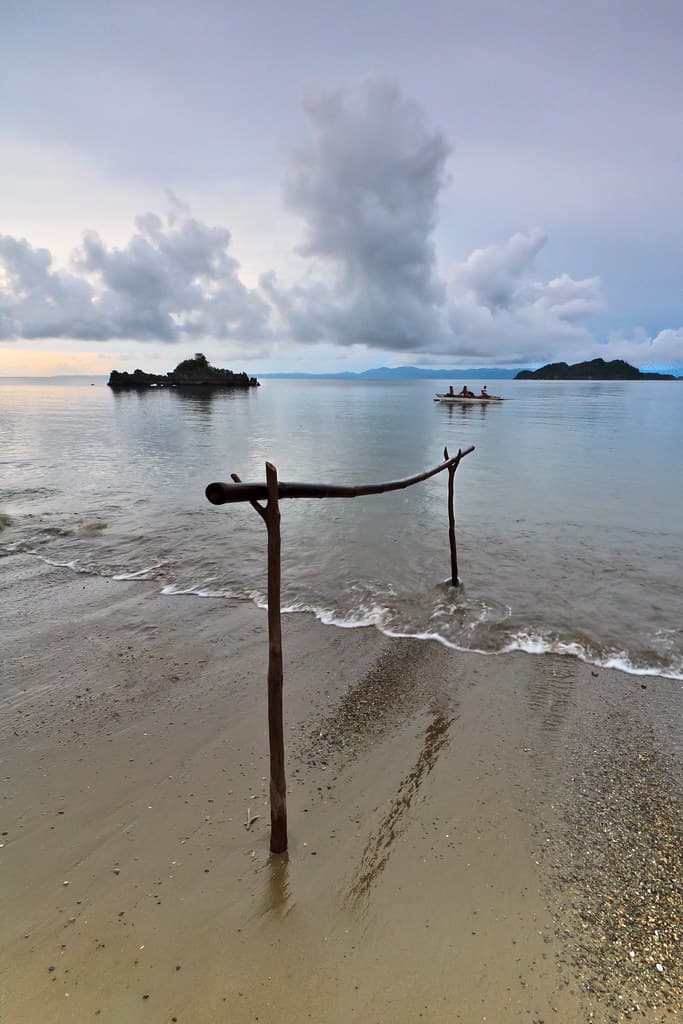
Counting the waves…
Counting the waves…
The banca ride from Mercedes takes forty minutes, long enough for the mainland to shrink into a gray-green smudge on the horizon. Your boatman throttles down as the water shifts from murky coastal brown to aquamarine, and you can see the sandy bottom rising in ridges beneath the hull. Caringo appears suddenly, a forested hump surrounded by a collar of blonde sand that glows almost white against the darker water beyond the shallows. The beach curves in a gentle arc on the island's protected side, backed by dense vegetation that rustles with unseen movement. Ghost crabs leave hieroglyphic trails across the sand, erased twice daily by the tide. The water temperature shocks for the first few seconds—cooler than you'd expect, fed by currents that sweep past the island's flanks. Snorkeling the dropoff reveals schools of fusiliers moving like synchronized silver ribbons, and you can hear the parrotfish crunching coral even with your head above water. There's no permanent settlement, no vendors, no infrastructure beyond what the occasional fishing family camps temporarily. You eat what you brought, drink from the containers you carried, and leave with everything you arrived with. By late afternoon, the light turns the surrounding water into hammered metal, reflective and almost painful to look at directly. The return journey to Mercedes cuts through this glare, the banca slapping against chop that builds as the day dies.
Places, rentals, tours and events within walking and driving distance of Caringo Island Beach.
Photos
Swimming conditions at Caringo Island Beach are generally calm and safe, particularly during the dry season when seas are calmer. As with any island beach, conditions depend on weather and tides. Check with local boatmen or guides about current conditions before swimming. The waters are typically clear with minimal currents near the shore. However, facilities are limited on this small island, so bring your own safety equipment if needed. Avoid swimming during rough weather or monsoon season. Always inform someone of your plans and avoid swimming alone in remote island locations.
The best time to visit Caringo Island is during the dry season from December to May, when seas are calmer and boat travel is safer and more comfortable. March to May offers the most sunshine, though temperatures can be quite hot. December to February provides pleasant weather with cooler temperatures. Avoid the monsoon season from June to November when rough seas can make boat trips difficult or impossible, and heavy rains may disrupt travel plans. Always check local weather forecasts before planning your island visit, as conditions can change quickly in coastal areas.
To reach Caringo Island, first get to Mercedes town in Camarines Norte. From Manila, take a bus to Daet (the provincial capital), then a jeepney or tricycle to Mercedes. From Mercedes proper or nearby coastal barangays, hire a local outrigger boat (banca) to Caringo Island. Boat travel time varies depending on departure point but typically takes 20-45 minutes. Boats are usually hired privately or as part of island-hopping tours. Negotiate rates in advance and confirm pickup times. Travel during calm weather and early morning for the smoothest journey.
Caringo Island is a small, largely undeveloped island with very limited or no permanent commercial accommodations and restaurants. Visitors typically come as day-trippers from Mercedes or nearby mainland areas. It's essential to bring your own food, water, and supplies for the day. Some island-hopping tours may include packed meals. For overnight stays, you would need to arrange camping (if permitted) or homestay arrangements with any local families, though options are extremely limited. Most visitors base themselves in Mercedes or Daet and visit Caringo Island as a day trip destination.
Caringo Island's primary appeal is its hidden, off-the-beaten-path character and relative isolation from tourist crowds. The island offers pristine natural beauty, clear waters, and white sand beaches in a peaceful setting. Its lesser-known status means visitors can enjoy a more authentic, uncommercialised island experience. The surrounding waters may offer good snorkeling opportunities depending on conditions. The journey itself provides scenic views of the Camarines Norte coastline. For travellers seeking solitude and unspoiled nature rather than resort amenities, Caringo Island delivers an escape from more developed tourist destinations in the Philippines.