
Counting the waves…
Counting the waves…
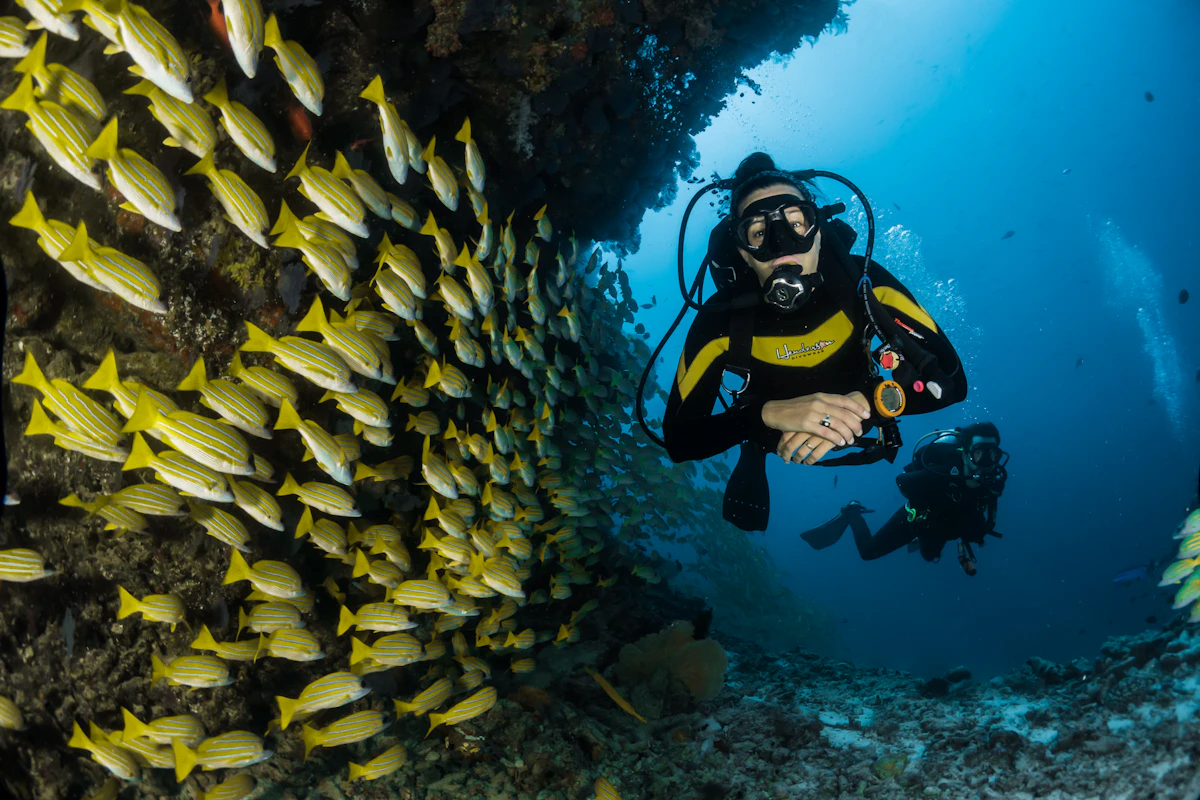
You anchor in a bay where the sand slopes gently into blue so saturated it looks dyed. The beach stretches perhaps two hundred meters, bookended by volcanic boulders and tidal shelves where hermit crabs scuttle between pools. Behind the treeline, caves open like empty eye sockets, their mouths cool and dripping, their interiors tangled with roots and bat guano. Snorkel out past the mooring buoys and the seabed turns theatrical: brain coral the size of truck tires, fields of staghorn, and schools of fusiliers that shift in unison like airborne murmurations. Deeper still, the freighter's skeleton emerges—rusted ribs, a collapsed deck, portholes curtained with sponges. Guides will tell you it went down in the forties, though no plaque commemorates the loss. You surface to the sound of waves clapping against hollow rock. On the beach, a handful of day-trippers spread towels under the almonds, but most visitors stay only an hour before motoring onward. The island itself is uninhabited, no vendor, no caretaker, just a composting toilet behind the palms and a trail that climbs to a ridgeline view of Busuanga's jagged coast. By late afternoon, shadows swallow the caves entirely, and the sand cools enough to walk barefoot without flinching.
Places, rentals, tours and events within walking and driving distance of Black Island Beach.
Photos
Black Island Beach is generally safe for swimming during calm weather, with clear waters suitable for snorkeling around the island's coral areas. The beach itself has gentle entry points, though some rocky areas require caution. The island features caves that can be explored, but visitors should take care as paths can be slippery and uneven. Always wear appropriate footwear when exploring beyond the sand. Snorkeling near the shipwreck area is popular, but currents can vary, so less experienced swimmers should stay close to shore and consider wearing life jackets.
The optimal time to visit Black Island is during the dry season from November to May, when seas are calmer and visibility for snorkeling is best. March to early May offers the most stable weather with minimal rain, though temperatures are warmer. December to February provides cooler, comfortable conditions with fewer tourists, making it ideal for a more secluded experience. Avoid the monsoon season from June to October when rough seas can make boat travel difficult or impossible. Weekday visits typically mean fewer tour groups.
Black Island is located in northern Busuanga and requires boat access from either Coron town or closer launch points in northern Busuanga. The journey from Coron town takes approximately 2-3 hours by bangka boat, making it one of the more remote island destinations. Most visitors join organized island-hopping tours that combine Black Island with other northern islands. Private boat charters are also available but more expensive. Tours typically depart early morning to maximize beach time. Due to distance and sea conditions, trips may be weather-dependent.
Black Island is an uninhabited island with no permanent facilities, restaurants, or accommodations. The beach is visited as a day-trip destination, and most organized tours include packed lunches served picnic-style on the beach. Occasionally, tour operators may set up temporary grills for fresh seafood. There are no shops or vendors on the island, so visitors must bring all necessary supplies including drinking water, snacks, and sun protection. All travelers stay in Coron town or other areas of Busuanga and visit Black Island as part of a day excursion.
Black Island stands out for its combination of natural features: white sand beaches, dramatic caves for exploration, and a nearby shipwreck that attracts snorkelers. The island's cave formations are particularly distinctive, offering adventurous visitors opportunities to explore beyond typical beach activities. Its remote location in northern Busuanga means fewer crowds compared to more accessible Coron islands. The surrounding waters feature diverse marine life and coral formations. The island's relatively untouched character and multi-activity appeal make it a favorite for those seeking adventure beyond standard beach lounging.