Counting the waves…
Counting the waves…
A refined fusion of water purity, environmental stability, and communal vibrancy for Sairung Beach.
View MethodologyAnalyzed via live sensors and environmental data.
Wave height, wind, and atmospheric stability.
Live footfall and crowd balance metrics.
Community reviews and curated sentiment.
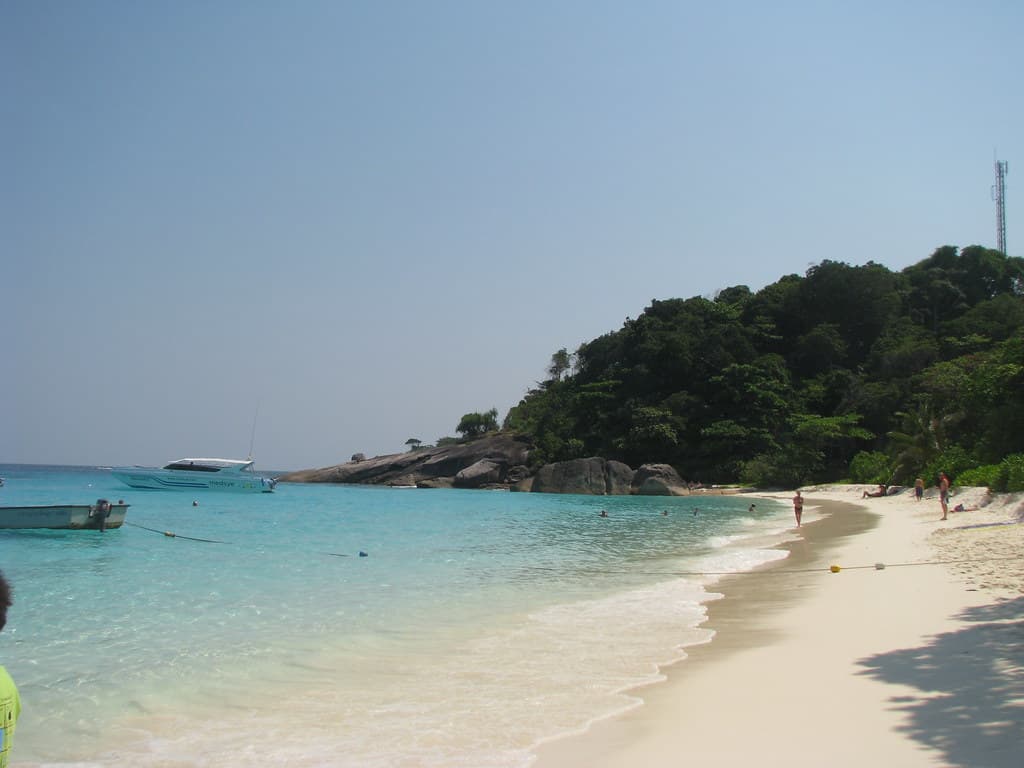
“You'll reach this beach by scrambling over a headland most visitors don't know exists. The reward: a cove maybe seventy meters across, protected by rock formations that turn the shallows into a natural aquarium.”
Limited recent visitor reports — live OBI telemetry is your best guide for current conditions.
The access path requires minor bouldering—nothing technical, but you'll use your hands to pull yourself over the granite outcrop that separates Sairung from its larger neighbor to the south. Once over the top, the cove reveals itself below: a perfect curve of sand hemmed by house-sized rocks rounded smooth by millennia of waves. The boulders create natural groins that trap sand and calm the water, leaving it gin-clear and barely rippled even when wind roughs up the beaches on either side.
You can wade out twenty meters and still see your toes clearly on the sandy bottom. Schools of fusiliers patrol the rocks at either end of the beach, their yellow backs flashing as they turn in unison. Bring a mask and fins—the snorkeling here rivals many offshore islands, with the boulders underwater creating caves and channels that hold sergeant majors, butterflyfish, and the occasional blue-spotted ray. The rock surfaces bloom with soft corals and sponges, unexpected color against the grey granite.
 Credit: Unsplash
body of water near green trees during daytime
 Credit: Unsplash
a large body of water surrounded by trees
Granite caves shelter tropical fish
Calm water even when windy
Natural windbreaks between boulders
Prime Visitation
Best Weather|Less Crowds
Where it is
Sairung Beach
Khao Lak, Phang Nga, Thailand
8.648200°, 98.347800°
Weather
Loading…
Swell
—
Temp
Warm · Restorative
UV Index
Moderate
Wind
—
Tidal State
Last known
Max Sunlight
—
Ideal Shade
—
Jan - Dec (Peak)
May - Nov (Off-season)
Best Weather|Less Crowds
Select a category to load nearby places.
Unlock restaurants, luxury stays and curated maritime experiences within 2km
Sairung Beach is generally safe for swimming during the dry season (November to April) when waters are calm and visibility is excellent. The beach is particularly good for snorkeling due to nearby coral formations, though snorkelers should be cautious of sharp coral and maintain safe distances. During monsoon season (May to October), strong currents and waves make swimming dangerous and snorkeling impossible. There are no lifeguards, so assess conditions independently. Water shoes are recommended for protection when entering over rocky areas near snorkeling spots.
The best time for snorkeling at Sairung Beach is December through March when seas are calmest, water visibility is highest, and marine life is most active. Morning hours typically offer the clearest water and best light for underwater viewing. November and April also provide good conditions with fewer visitors, ideal for those seeking quieter experiences. Avoid the monsoon season (May-October) when rough seas and poor visibility make snorkeling unsafe and unenjoyable. Check tide schedules, as certain tide levels may offer better access to snorkeling areas.
Sairung Beach is located within the greater Khao Lak area, accessible by scooter, car, or taxi from central Khao Lak accommodations. The exact distance varies depending on your starting point, but it's typically a 10-20 minute journey. Look for local signage or ask at your hotel for specific directions, as the beach is smaller and may not be prominently marked. Renting a scooter offers the most flexibility for exploring this and other nearby beaches. Some tour operators include Sairung Beach in snorkeling day trips from Khao Lak.
Sairung Beach has limited facilities due to its small, untouched nature. There may be occasional small beachside vendors or simple Thai food stalls, but options are minimal and inconsistent. Most visitors bring their own snacks and water or dine at nearby establishments. Accommodation is not directly on Sairung Beach itself, but the broader Khao Lak area offers extensive options from budget guesthouses to luxury resorts within a short drive. Many visitors stay elsewhere in Khao Lak and visit Sairung as a day trip for snorkeling.
Sairung Beach offers excellent snorkeling opportunities with easily accessible coral reefs close to shore, allowing snorkelers to explore diverse marine life without needing boat tours. The beach's small size and relative obscurity mean less crowding at snorkeling spots compared to popular Khao Lak locations. The untouched nature of the coastline has helped preserve healthy coral formations and fish populations. Calm, clear waters during high season provide excellent visibility, and the proximity of reefs to the beach makes it suitable for less experienced snorkelers seeking natural underwater beauty.
Photos