Counting the waves…
Counting the waves…
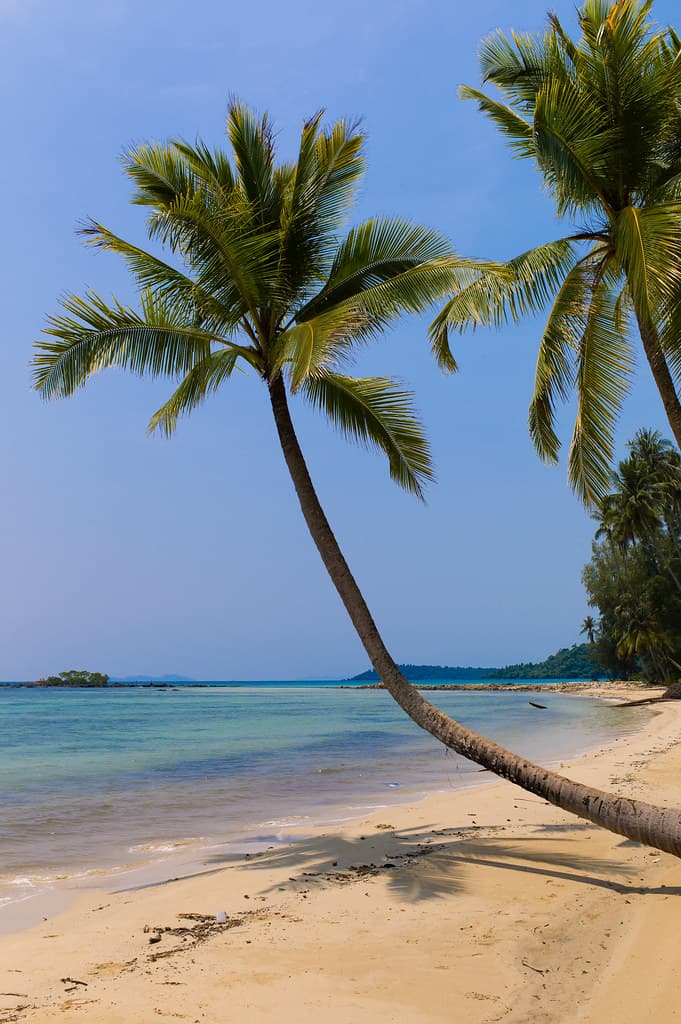
The approach to Ao Phrao reveals itself slowly: a dirt track descending through emerald foliage, then a sudden vista of white sand and turquoise shallows stretching toward uninhabited islets on the horizon. A handful of bungalows dot the tree line, their thatched roofs barely visible beneath the canopy. The beach itself runs nearly half a kilometer, wide enough that you can stake out solitude even when a few other travelers have made the journey. Mornings bring glassy conditions perfect for swimming out to where the sandy bottom gives way to scattered coral heads. By midday, the sun overhead turns the shallows into bands of jade and sapphire, while longtail boats rock gently at anchor offshore. The western exposure means afternoon light slants golden across the bay, and you'll want to stay for the finale: sunsets that stain the water copper and rose, best watched with your feet in the warm shallows. Unlike Koh Kut's more developed stretches, Ao Phrao retains the feel of discovery. A small beachfront restaurant serves grilled snapper and papaya salad beneath the trees, and the absence of jet skis or beach clubs means the loudest sounds are wavelets lapping sand and the occasional call of a hornbill in the forest behind you.
Places, rentals, tours and events within walking and driving distance of Ao Phrao Beach.
Photos
Swimming at Ao Phrao Beach is generally safe during the dry season from November to April, when the sea is calm and clear. The beach has a gradual sandy slope ideal for swimmers of varying abilities. During monsoon months (May-October), waves and currents can become stronger, and swimming may be unsafe. There are no lifeguards, so exercise personal judgment and caution. The remote location means medical facilities are limited on Koh Kut, so avoid taking unnecessary risks and never swim alone or during rough conditions.
Visit Ao Phrao Beach between November and April for optimal weather, calm seas, and the best beach experience. December through February offers the most comfortable temperatures and lowest rainfall. March and April are hotter but still excellent for swimming and sunbathing. The monsoon season from May to October brings heavy rain, rough seas, and most resorts close entirely. For fewer tourists and potentially lower prices, consider visiting in November or late April during shoulder season, though some facilities may have reduced hours or limited services.
Reach Ao Phrao Beach via ferry from Laem Sok pier in Trat province, with boats taking 60-90 minutes to Koh Kut. Some boats dock at different piers on the island. From your arrival pier, arrange a taxi truck or resort transfer to Ao Phrao on the southern coast—the journey takes 20-40 minutes depending on your starting point. Some upscale resorts offer private speedboat transfers from Trat or even Bangkok. Roads are basic but passable; motorbike rental is possible but distances are significant across Koh Kut's hilly terrain.
Ao Phrao Beach caters primarily to mid-range and upscale travelers with several resort properties offering beachfront bungalows and villas. Accommodation options are limited compared to more developed islands, emphasizing a quiet, destination-resort atmosphere. Most resorts have on-site restaurants serving Thai and international cuisine, often the primary dining option given the beach's remote location. Independent restaurants are few. Many properties operate on half-board or full-board packages. Book well ahead during high season, and confirm resort operating dates as many close during monsoon months.
Ao Phrao Beach stands out for its wide, sweeping bay of white sand and relative seclusion on Koh Kut's southern coast. Unlike the island's more accessible eastern beaches, Ao Phrao offers a genuine sense of remoteness and escape with beautiful sunset views. The beach appeals to travelers seeking a quiet, romantic retreat rather than activities or nightlife. Its destination-resort character means fewer day-trippers and a more exclusive atmosphere. The combination of pristine sand, clear water, and minimal development creates an idyllic tropical setting for those prioritizing peace and natural beauty.