Counting the waves…
Counting the waves…
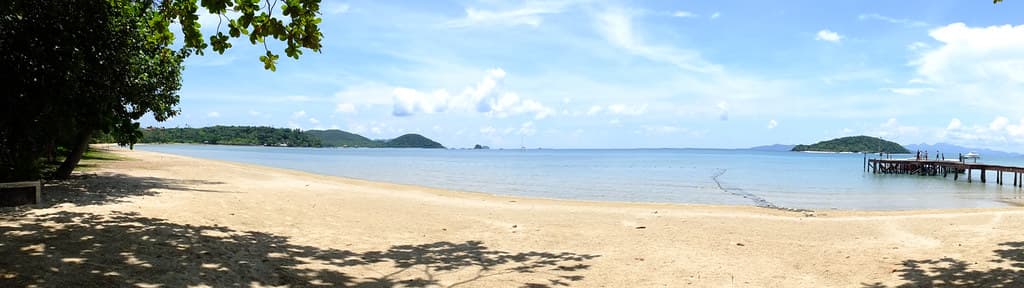
Koh Rayang Nai rises from the Gulf like an afterthought, a low green dome edged by a ribbon of sand so blonde it looks bleached. Your longtail beaches beside a driftwood log worn smooth by years of monsoon swells, and the captain points to a cluster of rocks marking the reef's edge. Ten fin-kicks from shore, you're floating above staghorn coral branching in every direction, cleaner wrasse darting between your fingers as you hover motionless. The beach itself runs barely two hundred meters, hemmed in by thorny scrub and the occasional coconut palm leaning at an improbable angle. You claim a spot in the thin shade, sand still damp from the receding tide, and watch a monitor lizard drag itself lazily from the underbrush to drink from a tidal pool. The silence is broken only by the occasional slap of a needlefish skipping across the surface and the low murmur of the captain sharing cigarettes with a passing fisherman. By the time the sun clears the scrub and heat becomes unbearable, you've already made three long snorkel transects, cataloging every anemone and angelfish. The return ride skims past Koh Kut's southern cape, and you lean over the gunwale to rinse the salt from your mask, already plotting which island in this scattered archipelago to visit next.
Places, rentals, tours and events within walking and driving distance of Koh Rayang Nai Beach.
Photos
Swimming conditions at Koh Rayang Nai are typically safe during the dry season (November-April) when waters are calm and clear. The beach's relatively sheltered position helps minimize strong currents, making it suitable for most swimmers. However, no lifeguards are stationed here, so exercise personal judgment and swim within your comfort level. Be mindful of the rocky areas and coral near the shore—water shoes are recommended. Monsoon season (May-October) brings unpredictable conditions with rougher seas that can make swimming hazardous. Always check with your boat operator about current conditions before entering the water.
The prime visiting window runs from November through February, offering dry weather, calm seas, and optimal snorkeling visibility. These months provide comfortable temperatures and the most reliable boat access. March and April remain good options but can be significantly hotter with occasional pre-monsoon showers. Avoid May through October when the southwest monsoon brings heavy rainfall and rough seas, often making boat trips impossible or unsafe. For the quietest experience, plan weekday visits, as weekends can see increased day-tripper activity from nearby Koh Chang, Koh Mak, and Koh Kut resorts.
Koh Rayang Nai requires boat access, with most visitors arriving via organized day tours from Koh Chang, Koh Mak, or Koh Kut. Snorkeling and island-hopping tours frequently include this island as part of multi-stop itineraries. Private longtail boats can be chartered from Bang Bao pier on Koh Chang or from resorts on neighboring islands, offering more flexibility in timing. Travel time varies from 20-50 minutes depending on your departure point and sea conditions. No scheduled ferry service exists, so arrangements must be made through tour operators, dive shops, or your hotel. Advance booking is recommended during high season.
Koh Rayang Nai is completely uninhabited with no restaurants, shops, restrooms, or accommodation. Visitors must bring all necessities including food, drinking water, sun protection, and snorkeling gear if not provided by your tour. Most organized day tours include a packed lunch, snacks, and beverages in their pricing. If arranging a private boat, prepare a cooler with meals and adequate water. The nearest facilities for dining and overnight stays are on Koh Chang, Koh Mak, or Koh Kut, all within 20-50 minutes by boat. Plan your visit as a day excursion only.
Koh Rayang Nai offers an authentic deserted-island experience with pristine natural beauty and minimal development. The beach features particularly inviting white-to-golden sand that's softer underfoot than many neighboring islands' rockier shores. Its coral reefs are accessible just meters from the beach, attracting diverse marine life ideal for snorkeling. The island's compact size means you can explore the entire shoreline in a short walk, discovering hidden rocky outcrops and tide pools. Because it's slightly less visited than mainstream day-trip destinations, you're more likely to enjoy extended periods of solitude and unspoiled island scenery.