
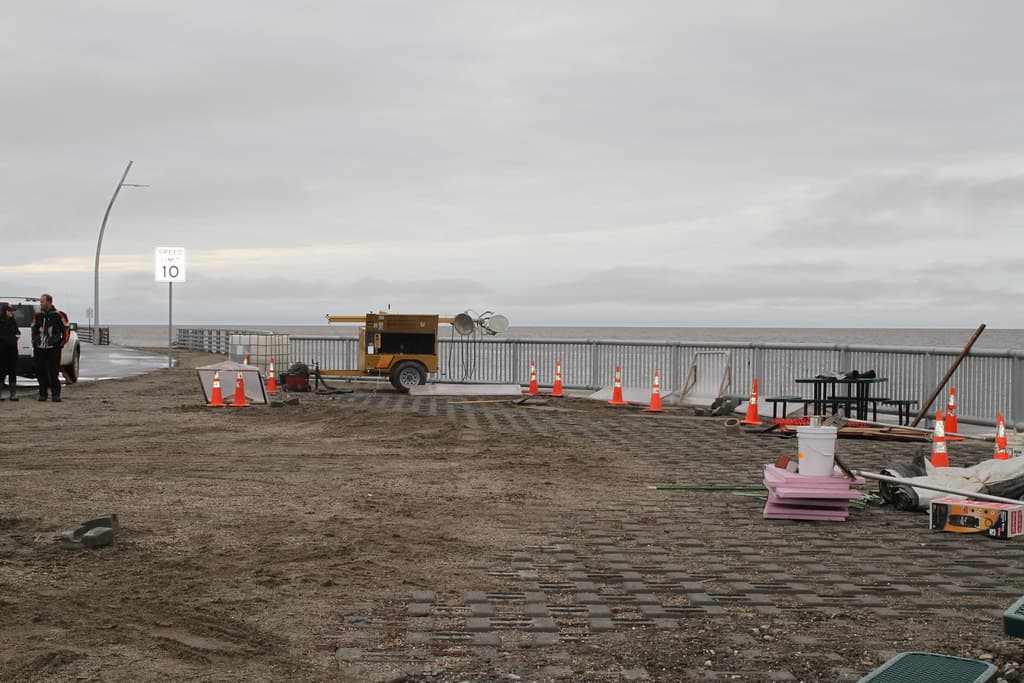
You arrive by air—there are no roads connecting Kotzebue to the rest of Alaska—and step onto a beach where the shoreline stretches flat and unadorned beneath an enormous sky. The gravel crunches under your boots as you walk toward water so cold it numbs your fingertips in seconds, even in July. Driftwood logs, bleached silver by sun and salt, lie scattered like ancient bones along the tideline, deposited by currents that flow from Siberia across the Chukchi Sea.
“This is the only Arctic beach where you can witness traditional Iñupiat subsistence culture unfolding against a backdrop of summer pack ice and midnight sun.”
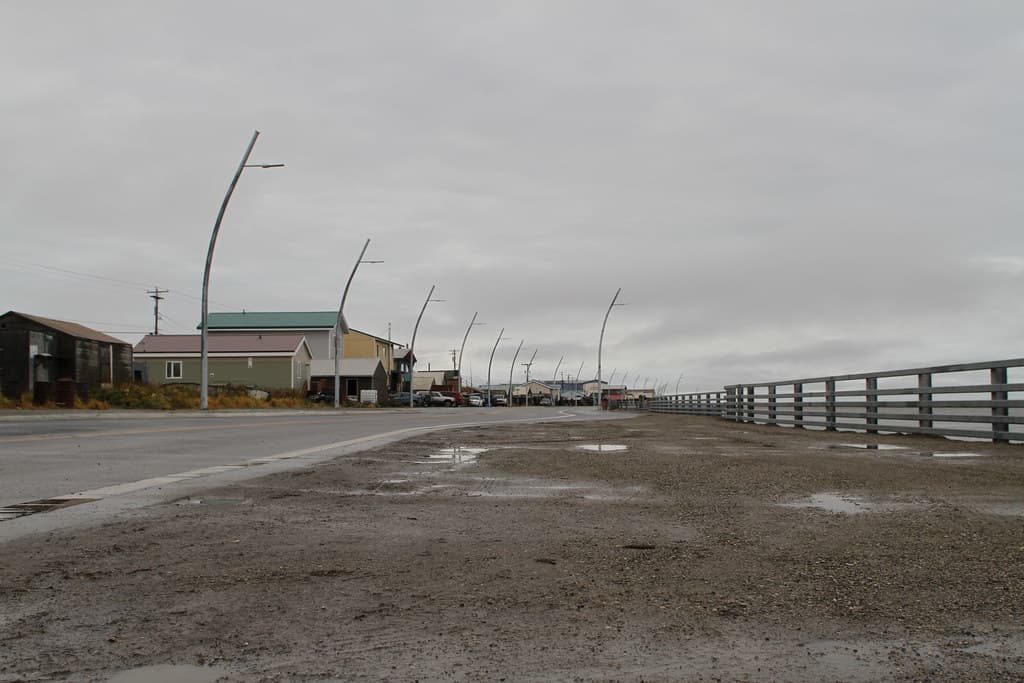 Credit: Flickr
Kotzebue Shore Avenue Ribbon Cutting Sept 20, 2012
This is Iñupiat country, home to one of the oldest continuously inhabited communities in North America. You'll see fishing nets drying on racks, boats pulled up against the wind, and locals checking subsistence catches of salmon and herring. In winter, the sea freezes into a white expanse stretching to the horizon; in summer, chunks of pack ice float past like slow-moving sculptures, their blue-white faces catching the light.
The beach offers no palm trees or warm swims, but what you gain is perspective—the kind that comes from standing where land ends and the Arctic begins. Scan the water long enough and you might spot the curved backs of beluga whales or the distant spout of a bowhead. The light here behaves differently: low and golden for months, then absent entirely, then relentless and refusing to fade.


