
Counting the waves…
Counting the waves…
A refined fusion of water purity, environmental stability, and communal vibrancy for Mekoryuk Beach.
View MethodologyAnalyzed via live sensors and environmental data.
Wave height, wind, and atmospheric stability.
Live footfall and crowd balance metrics.
Community reviews and curated sentiment.
“You step onto dark volcanic sand where the tundra rolls into the Bering Sea, and the wind carries the scent of kelp and salt across a landscape unchanged for millennia. This is Alaska's Yukon-Kuskokwim Delta coast,…”
Limited recent visitor reports — live OBI telemetry is your best guide for current conditions.
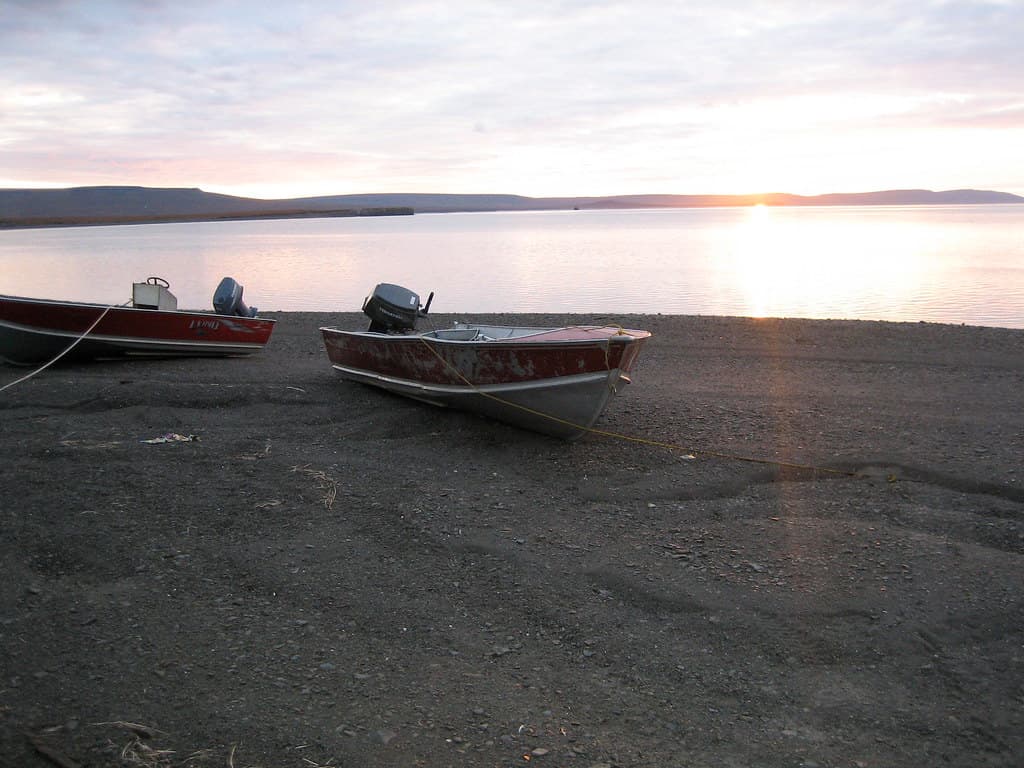
Mekoryuk Beach unfolds along Nunivak Island's southeastern shore, a strip of coarse sand and rounded stones where the Bering Sea churns against one of Alaska's most isolated coastlines. You reach this beach by air—small planes from Bethel are the only link—and the journey itself telegraphs the remoteness ahead. The village of Mekoryuk, home to Cup'ig Eskimo families who've lived here for generations, sits above the beach where traditional subsistence rhythms dictate the calendar more than tourist seasons ever could.
The beach itself offers none of the soft-sand comforts you expect from warmer latitudes. What you find instead: stretches of slate-gray sand littered with driftwood sculpted smooth by ice and current, the constant percussion of wind against your jacket, and views across the Bering Sea that hold nothing but water until Siberia. Summer brings midnight sun that glows amber across the surf; winter wraps everything in snow and darkness, punctuated by the aurora.
Crashing wave at sunset on the shoreline
Capture driftwood and dramatic skies
Scan for walrus ivory fragments
Spot seabirds and marine mammals
Where it is
Mekoryuk Beach
Mekoryuk, Alaska, USA
60.371600°, -166.271800°
Weather
Loading…
Swell
—
Temp
Warm · Restorative
UV Index
Moderate
Wind
—
Tidal State
Last known
Max Sunlight
—
Ideal Shade
—
May - Sep (Peak)
Jan - Dec (Off-season)
Historical data suggests peak visibility and stable sea temperatures occur during the prime visitation window.
Select a category to load nearby places.
Unlock restaurants, luxury stays and curated maritime experiences within 2km
Swimming at Mekoryuk Beach is generally not recommended due to extremely cold water temperatures year-round, typically ranging from 32-50°F. The Bering Sea waters pose significant hypothermia risks even in summer. Strong currents and unpredictable weather add to the hazards. Most visitors enjoy beachcombing, wildlife viewing, and photography rather than water activities. If you do wade near shore, wear appropriate cold-water gear and never go alone. Always check with locals about current conditions before approaching the water.
Summer months (June through August) offer the most accessible conditions, with temperatures reaching 45-55°F and longer daylight hours. However, weather remains unpredictable with frequent fog, wind, and rain year-round. Winter brings extreme cold, darkness, and potential isolation due to weather cancellations. Spring and fall offer wildlife viewing opportunities, particularly for migratory birds, though conditions are harsh. Pack layers and weatherproof gear regardless of season. Consider that accessibility depends entirely on flight schedules, which weather frequently disrupts throughout the year.
Mekoryuk is on Nunivak Island, accessible only by small plane from Bethel, Alaska, with limited weekly flights. There are no roads connecting to mainland Alaska. Once in the village of Mekoryuk (population under 200), the beach is within walking distance, as the community is small and walkable. There are no formal parking areas or paved roads. Transportation is primarily by foot or ATV. Flights are weather-dependent and frequently delayed or cancelled, so build flexibility into your travel plans.
Mekoryuk is a small, remote Yup'ik village with extremely limited visitor infrastructure. There are no hotels, restaurants, or tourist facilities. Visitors typically arrange homestays with local families or stay in community buildings through advance coordination with tribal offices. Bring your own food supplies, as the village has only a small store with basic goods at high prices. There are no public restrooms at the beach. All visits should be arranged well in advance with respect for the local community and their privacy.
Yes, Nunivak Island is famous for its muskox population, originally introduced in the 1930s. While muskoxen roam throughout the island, sightings near Mekoryuk Beach are possible but not guaranteed, as they move across their habitat. The island also hosts reindeer herds. Maintain safe distances from all wildlife—muskoxen can be dangerous despite their calm appearance. Bring binoculars for viewing. The beach area also offers excellent bird watching, with numerous seabird species and migratory birds depending on season. Always respect wildlife and observe from a distance.
Photos