
Counting the waves…
Counting the waves…
A refined fusion of water purity, environmental stability, and communal vibrancy for Point Hope Beach.
View MethodologyAnalyzed via live sensors and environmental data.
Wave height, wind, and atmospheric stability.
Live footfall and crowd balance metrics.
Community reviews and curated sentiment.
“You'll scan the horizon for bowhead whales from a gravel shore where Iñupiaq whalers have launched umiaqs for millennia. The wind off the Chukchi cuts through layers, carrying salt spray and the calls of murres nesting…”
Limited recent visitor reports — live OBI telemetry is your best guide for current conditions.
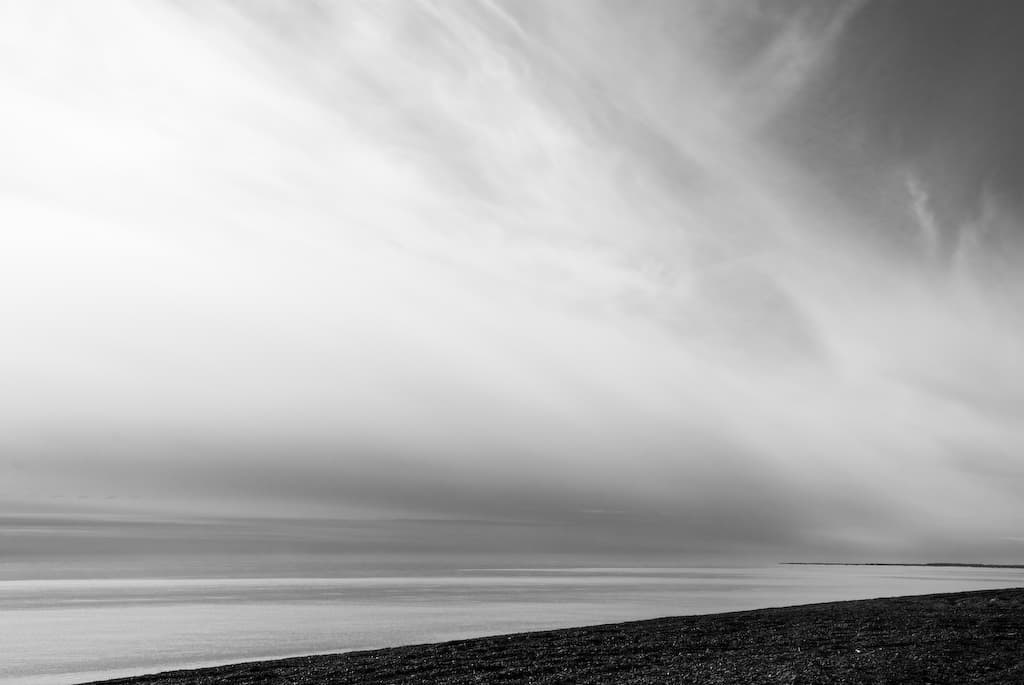
Stand on the dark gravel and you're perched on the tip of a spit that juts into the Chukchi Sea like a finger pointing toward Siberia. Point Hope Beach isn't groomed or soft—it's a scatter of basalt cobbles, driftwood logs bleached bone-white, and the occasional vertebra from a bowhead whale. The air smells of brine and tundra grass, and in summer the midnight sun hangs low, casting amber light across pack ice that drifts past in slow procession. Snowy owls sometimes perch on the bluffs; Arctic terns dive for sculpin in the shallows.
This is one of the oldest continuously inhabited sites in North America. The Iñupiaq people have called Tikigaq home for more than 2,500 years, and you'll see their heritage in the whalebone arches that frame the village, in the skin boats pulled onto the beach, in the racks of drying seal meat. Respect the land—this isn't a place to wander freely. Ask permission before photographing, and understand that subsistence hunting seasons shape the rhythm of life here.
Frame tundra and sea together
Wildflowers bloom late June
Murres nest on limestone cliffs
Where it is
Point Hope Beach
Point Hope, Alaska, USA
68.346600°, -166.808000°
Weather
Loading…
Swell
—
Temp
Warm · Restorative
UV Index
Moderate
Wind
—
Tidal State
Last known
Max Sunlight
—
Ideal Shade
—
May - Sep (Peak)
Jan - Dec (Off-season)
Historical data suggests peak visibility and stable sea temperatures occur during the prime visitation window.
Select a category to load nearby places.
Unlock restaurants, luxury stays and curated maritime experiences within 2km
Swimming at Point Hope Beach is not recommended and extremely dangerous. The Arctic Ocean waters here remain near-freezing year-round, typically between 28-40°F, making hypothermia a serious risk within minutes. Strong currents, unpredictable weather, and the remote location with limited emergency services add to the hazards. The beach is primarily valued for its scenic beauty, wildlife viewing, and cultural significance to the Iñupiat community rather than recreational swimming. Visitors should enjoy the coastline from shore and dress warmly even in summer months.
June through August offers the most accessible conditions, with 24-hour daylight and temperatures reaching 40-50°F. However, Point Hope experiences extreme Arctic conditions year-round. Winter (November-March) brings total darkness and temperatures plunging to -30°F or lower, though you might witness the Northern Lights. Spring and fall feature dramatic ice flows and wildlife migrations. Weather is unpredictable in any season, with sudden storms possible. Most visitors come in summer when the community is more accessible, though the beach's stark beauty can be appreciated year-round by prepared travelers.
Point Hope is one of Alaska's most remote locations, accessible only by air. Regular flights operate from Kotzebue on small aircraft (approximately 90 minutes). There are no roads connecting Point Hope to other communities. Once in the village, the beach is within walking distance, as Point Hope sits on a narrow spit of land. There are no formal parking facilities, but the small village (population around 700) is navigable on foot or by ATV. Visitors should arrange transportation and accommodation well in advance through local contacts.
Point Hope has extremely limited visitor amenities. There are no hotels or restaurants catering to tourists. Lodging typically requires pre-arranged homestays with local residents or booking through the Native Village of Point Hope. The community has one small store with basic supplies at very high prices due to remote location. Visitors should bring most food and supplies from Anchorage or Kotzebue. There are no restaurants, gas stations, or visitor centers. Cell service is limited. All arrangements should be made before arrival, ideally through local community contacts who can facilitate your visit.
Yes, Point Hope is one of Alaska's premier locations for observing bowhead whale migrations. The Iñupiat community has hunted whales here for over 2,000 years. Whales typically pass during spring (April-May) and fall (September-October) migrations. Spring is particularly significant, coinciding with traditional whaling season. However, visiting during whaling season requires cultural sensitivity and permission from the community, as this is a sacred subsistence activity. Visitors should never approach hunting areas or interfere with traditional practices. Other marine mammals like seals and walrus are also frequently spotted along the coastline.