Counting the waves…
Counting the waves…

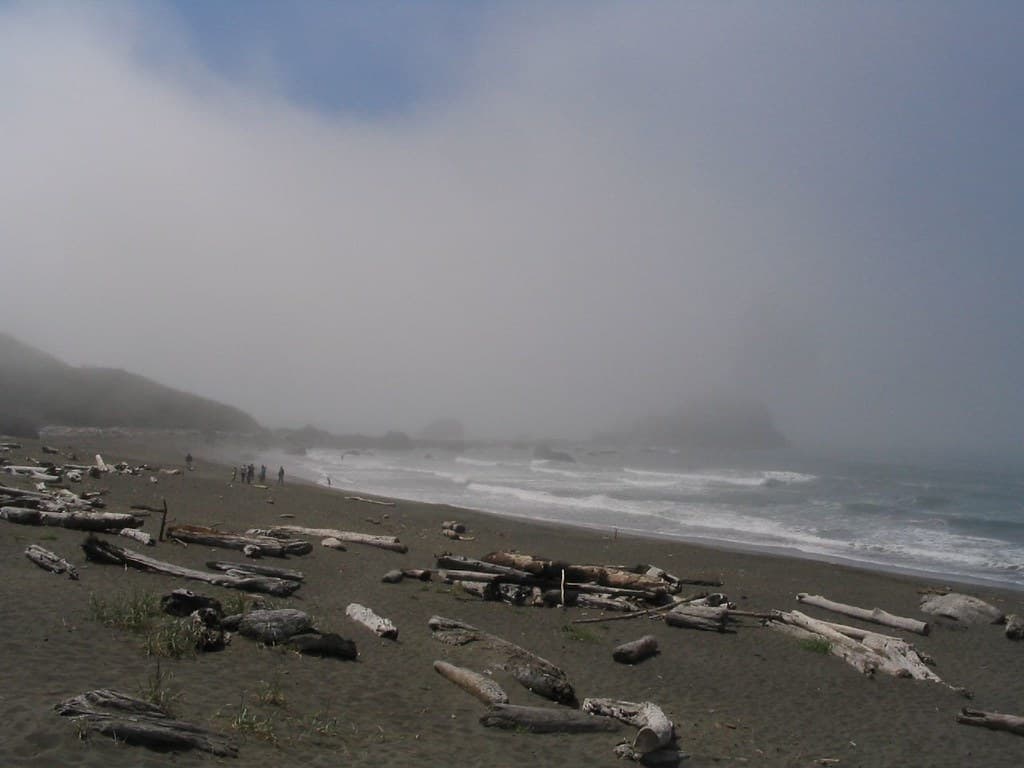
Crescent Beach sweeps north from Point St. George in a long, gentle curve that feels less like a postcard and more like the edge of the continent. Driftwood logs—bleached silver by salt and sun—line the high-tide mark, some thick as telephone poles, testament to the storms that rake this coast each winter. You'll share the sand with beachcombers hunting for agate, families launching kites in the steady onshore wind, and the occasional surfer braving the cold swells. The water temperature hovers in the low fifties year-round, so most visitors content themselves with tide-pooling at the southern end, where purple urchins and ochre stars cling to basalt shelves. At dusk, the offshore Battery Point Lighthouse catches the last light while fog begins its nightly crawl over the headlands. The sunsets here don't blaze—they smolder, all rust and pewter and charcoal. What sets this beach apart is its role as staging ground: you're six miles from Jedediah Smith Redwoods, fifteen from the towering grove at Del Norte Coast. After a morning among trees that were saplings when Rome fell, the open horizon and salt wind feel like a necessary counterpoint—proof that California contains multitudes within a single day's drive.
Places, rentals, tours and events within walking and driving distance of Crescent Beach.
Photos
Swimming at Crescent Beach requires caution due to cold Pacific waters (typically 50-55°F year-round), strong currents, and sneaker waves common along Northern California's coast. Most visitors wade in shallow areas or beachcomb rather than swim. There are no lifeguards on duty. The beach is better suited for surfing (with proper wetsuit and experience), tidepooling, and beach walks. Always supervise children closely, never turn your back to the ocean, and stay aware of rapidly changing tide conditions.
Crescent Beach is accessible year-round, with each season offering different experiences. Summer (June-August) provides the warmest weather and calmest seas, though fog is common. Fall offers clearer skies and stunning sunsets with fewer crowds. Winter brings dramatic storm-watching opportunities but colder, wetter conditions. Spring features whale migration viewing (March-April). Mornings typically have less fog than afternoons. The beach's protected crescent shape makes it more enjoyable than exposed coastlines during windier months.
Crescent Beach is located along Enderts Beach Road, just south of Crescent City off Highway 101. Take the Enderts Beach Road exit and follow signs toward the beach. Free parking is available at the beach's parking area, which accommodates standard vehicles. The lot provides direct beach access via a short trail. During summer weekends, arrive early for best parking availability. The beach is approximately 3 miles south of downtown Crescent City and easily accessible as a stop when visiting Redwood National and State Parks.
Crescent Beach itself has no on-site amenities, but downtown Crescent City (3 miles north) offers numerous dining options ranging from seafood restaurants to casual cafes, plus grocery stores for picnic supplies. Accommodations include oceanfront hotels, motels, and vacation rentals throughout Crescent City. Several lodging options provide beach views. For immediate needs, pack food, water, and supplies before visiting the beach. Nearby Redwood National Park has additional visitor facilities. Public restrooms are available at some trailheads in the area.
Crescent Beach serves as an excellent gateway to Redwood National and State Parks. The beach connects to coastal trails within the park system, including routes to Enderts Beach and tidepools. Visitors often combine beach time with redwood forest hikes, as ancient groves are just minutes inland via Highway 101. The proximity makes it ideal for experiencing both coastal and forest ecosystems in one day. Popular nearby trails include the Coastal Drive scenic route and Stout Grove, showcasing old-growth redwoods within 30 minutes of the beach.