Counting the waves…
Counting the waves…
A refined fusion of water purity, environmental stability, and communal vibrancy for Shell Beach.
View MethodologyAnalyzed via live sensors and environmental data.
Wave height, wind, and atmospheric stability.
Live footfall and crowd balance metrics.
Community reviews and curated sentiment.
“You'll scramble down weathered wooden stairs to a crescent of coarse sand made almost entirely of broken shells—razor clams, limpets, turban snails—that crunch underfoot. Harbor seals bark from offshore boulders while…”
Limited recent visitor reports — live OBI telemetry is your best guide for current conditions.
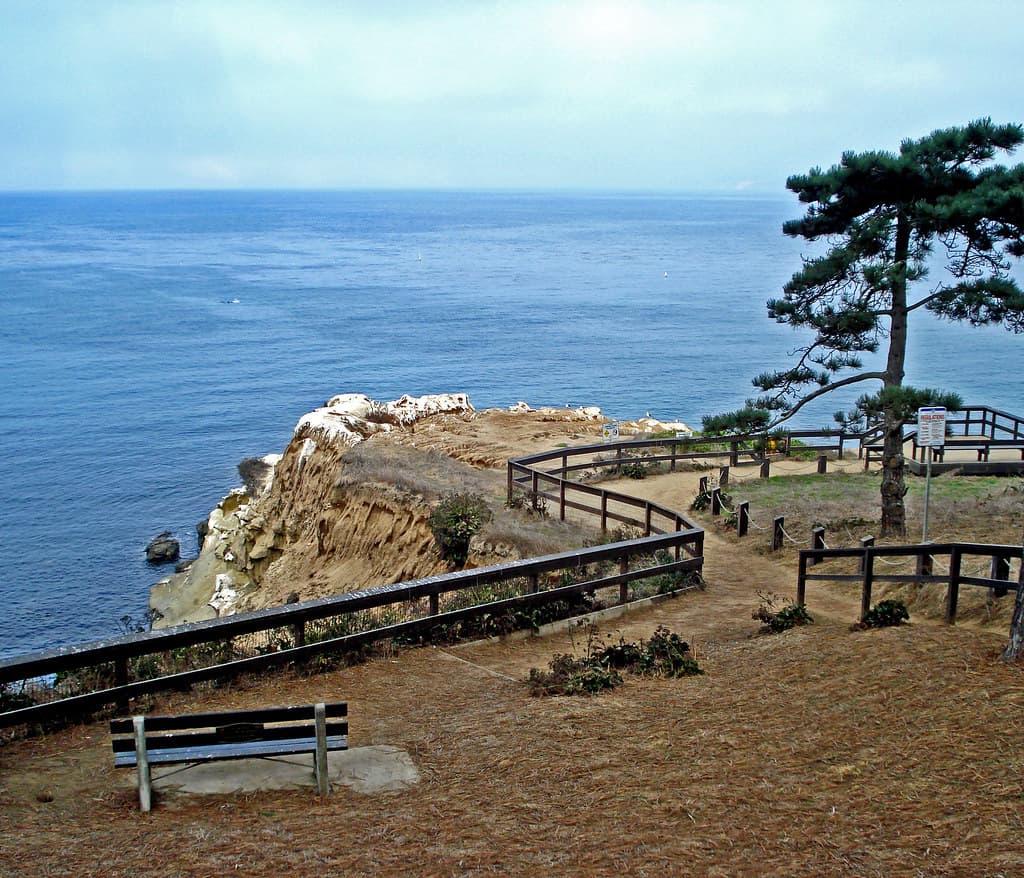
The descent announces itself with salt air and the barking chorus of harbor seals lounging on La Jolla's offshore rocks. You navigate wooden steps worn smooth by decades of beachgoers, emerging onto a twenty-yard strip where the "sand" is actually a mosaic of shell fragments—pink scallop shards, spiraled turban snails, ivory clam halves—that shift and rattle with every incoming wave.
Wade in with a mask and the underwater topography reveals its true character: sandstone ledges draped in rust-colored kelp, urchins bristling in shadowed crevices, and the occasional leopard shark ghosting over the sandy bottom. California's state marine fish, the brilliant orange Garibaldi, patrol the rocks with territorial defiance. The seals, unimpressed by human visitors, continue their sunbathing routines mere yards offshore, occasionally slipping into the water with startling grace.
 Credit: Unsplash
brown rocky mountain beside body of water during daytime
 Credit: Unsplash
gray and brown mountain beside body of water
Follow Garibaldi through kelp forests
Sea stars cling at low water
Rocks host sunbathing colonies
Where it is
Shell Beach
La Jolla, California, USA
32.849000°, -117.276700°
Weather
Loading…
Swell
—
Temp
Warm · Restorative
UV Index
Moderate
Wind
—
Tidal State
Last known
Max Sunlight
—
Ideal Shade
—
May - Sep (Peak)
Jan - Dec (Off-season)
Historical data suggests peak visibility and stable sea temperatures occur during the prime visitation window.
Select a category to load nearby places.
Unlock restaurants, luxury stays and curated maritime experiences within 2km
Shell Beach is not ideal for swimming due to rocky terrain, shallow tidepools, and occasional strong currents. However, it's excellent for snorkeling during calm conditions, particularly at high tide when visibility improves. The protected cove attracts colorful fish, sea stars, and sometimes leopard sharks. Wear water shoes to protect your feet from sharp rocks and shells. Always check tide schedules and ocean conditions before entering the water. The beach is part of a marine protected area, so observe wildlife respectfully without touching or removing anything.
Shell Beach is accessible year-round, with each season offering different advantages. Summer (June-August) provides the warmest water temperatures and calmest ocean conditions, ideal for snorkeling. Spring and fall offer fewer crowds while maintaining pleasant weather. Winter brings dramatic waves and excellent tidepooling opportunities during low tides, though water activities are limited. Visit during low tide for the best tidepool exploration. Early mornings typically offer the calmest conditions and better parking availability, especially on weekends when La Jolla attracts many visitors.
Shell Beach is located off Coast Boulevard in La Jolla. From downtown San Diego, take I-5 north to La Jolla Village Drive, then follow Torrey Pines Road to Prospect Street. The beach access is near the intersection of Coast Boulevard and Cuvier Street. Parking is extremely limited with only metered street parking available on Coast Boulevard and nearby residential streets. Arrive early, especially on weekends, as spots fill quickly. Alternatively, park in paid lots near La Jolla Cove and walk south along the coastal path for approximately 5-10 minutes.
Shell Beach itself has no facilities—no restrooms, showers, or lifeguards. However, La Jolla Village is just a short walk away, offering numerous dining options ranging from casual cafés to upscale restaurants along Prospect Street and Girard Avenue. Public restrooms are available at nearby La Jolla Cove. For accommodations, La Jolla features several hotels and vacation rentals within walking distance. Bring your own water, snacks, and beach supplies, as there are no vendors directly at Shell Beach. The nearest full-service beach with amenities is La Jolla Shores, about one mile north.
Shell Beach's tidepools and rocky coves host diverse marine life including colorful sea stars (ochre, bat, and brittle stars), sea anemones, hermit crabs, sea cucumbers, and various mollusks. Snorkelers frequently spot garibaldi (California's state fish), opaleye, and kelp fish. During summer months, leopard sharks often gather in the shallow waters. The area is part of the San Diego-La Jolla Underwater Park Ecological Reserve, ensuring protection for these species. Remember this is a look-but-don't-touch area—removing shells, rocks, or marine life is prohibited and can result in fines.
Photos