Counting the waves…
Counting the waves…

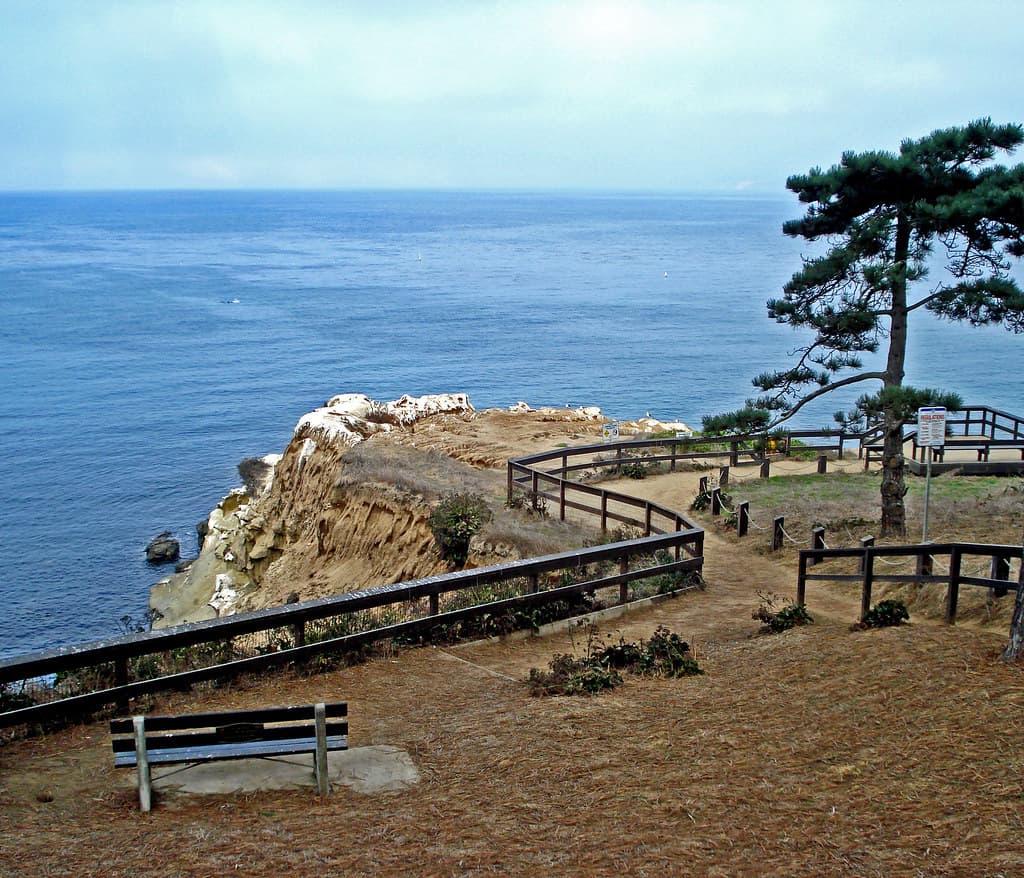
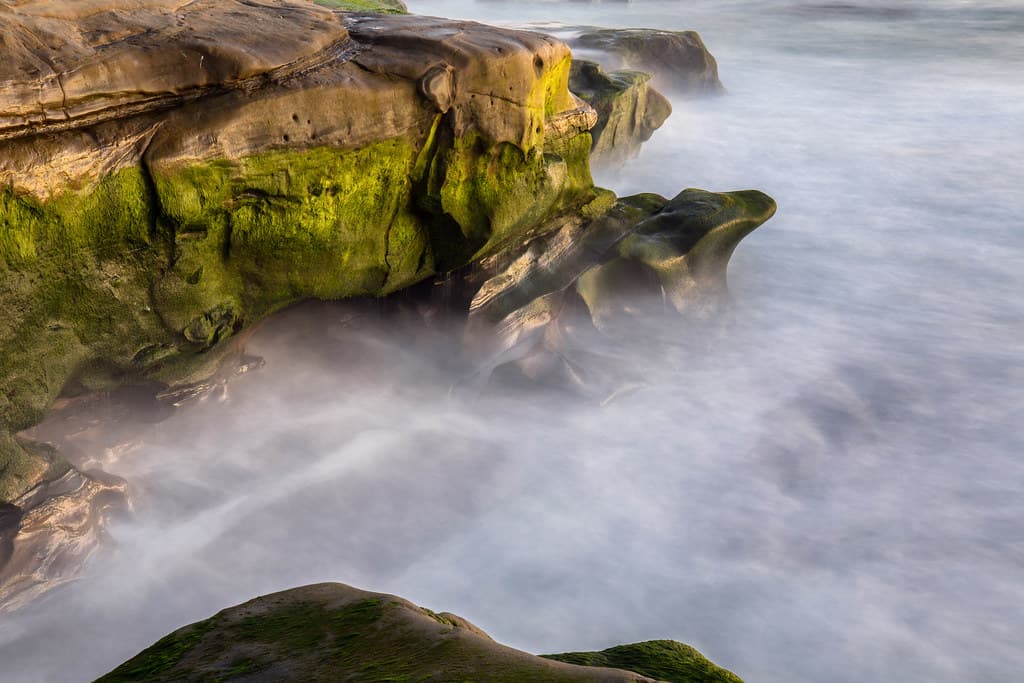
Windansea announces itself not with soft sand but with sculptural sandstone outcroppings that jut from the shore like the vertebrae of some ancient sea creature. The Shack—a palm-frond shelter built in 1946—sits sentinel above the beach, its bleached wood now worn smooth by salt and time. This isn't a place for inflatable rafts or umbrella clusters; it's a working surf break where the reef focuses Southern Hemisphere swells into fast, hollow waves that have humbled professionals and weekend warriors alike. The shoreline here curves in a shallow crescent, backed by modest bungalows where wetsuit-clad figures pad barefoot across Neptune Place at dawn. At low tide, tide pools bloom in the pitted reef, harboring anemones and purple urchins. Kelp strands drape the rocks like discarded rigging. The water shifts from steel gray to bottle green depending on cloud cover and swell direction. You'll find no concession stands or lifeguard towers cluttering the view—just raw coastline and the unspoken hierarchy of the lineup. Sunset draws photographers and couples to the rocks, where the offshore wind often holds the marine layer at bay long enough for the sky to bleed orange behind the shack's silhouette. This is La Jolla stripped of its boutique polish, a pocket of old California where the ocean still dictates the day's rhythm.
Places, rentals, tours and events within walking and driving distance of Windansea Beach.
Photos
Windansea Beach is primarily a surf spot with challenging conditions that make it less ideal for casual swimming. The beach features rocky outcroppings, strong currents, and powerful waves that attract experienced surfers but can be dangerous for swimmers. There are no lifeguards stationed year-round. If you're not an experienced ocean swimmer or surfer, it's safer to enjoy the beach for sunbathing and tide pooling. Families with children should consider nearby La Jolla Shores, which offers calmer waters and lifeguard supervision.
Windansea Beach is beautiful year-round, with San Diego's mild coastal climate providing pleasant conditions in every season. For surfing, winter months (November-March) bring larger swells and the best waves. Summer offers smaller surf but warmer water temperatures and sunny skies ideal for sunbathing. Sunset viewing is spectacular throughout the year. Mornings tend to be less crowded and offer glassy surf conditions. Weekdays are quieter than weekends. The beach can be enjoyed in any season, though marine layer fog sometimes affects visibility during May and June.
Parking at Windansea Beach is limited to street parking in the surrounding residential neighborhood. Look for spots along Neptune Place and nearby side streets like Bonair Street and Palomar Avenue. Parking is free but competitive, especially on weekends and during good surf conditions. Arrive early for the best chance of finding a spot close to the beach access points. Be mindful of posted restrictions and residential driveways. The main beach access is at the end of Nautilus Street, marked by the iconic Windansea surf shack.
Windansea Beach itself has no facilities—no restrooms, showers, or food vendors. It's a natural beach in a residential area. However, the nearby Bird Rock neighborhood (about a mile north) offers cafes, restaurants, and shops along La Jolla Boulevard. Downtown La Jolla, approximately two miles away, provides extensive dining and lodging options. For beach amenities like restrooms and outdoor showers, head to La Jolla Shores Beach. Most visitors bring their own food, water, and beach supplies when spending time at Windansea.
The Windansea surf shack is an iconic palm-thatched structure overlooking the beach at Nautilus Street, built in 1946 and now a local landmark. It symbolizes La Jolla's surf culture and was famously associated with the Windansea Surf Club, featured in Tom Wolfe's 1960s essay 'The Pump House Gang.' While the shack itself is small and primarily decorative, it's a popular photo spot and represents the beach's rich surfing heritage. The structure has been rebuilt several times after storm damage but remains a beloved symbol of California surf culture.