Counting the waves…
Counting the waves…
A refined fusion of water purity, environmental stability, and communal vibrancy for Fletcher Cove Beach Park.
View MethodologyAnalyzed via live sensors and environmental data.
Wave height, wind, and atmospheric stability.
Live footfall and crowd balance metrics.
Community reviews and curated sentiment.
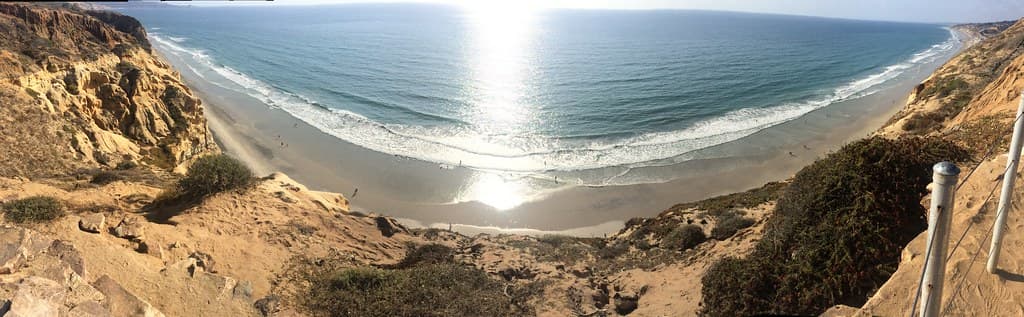
“You'll descend worn wooden stairs past ice plants clinging to bluffs, then land on honey-colored sand barely 200 yards wide. Surfers paddle out beside tide-poolers crouched at the reef's edge, while families claim the…”
Limited recent visitor reports — live OBI telemetry is your best guide for current conditions.
Fletcher Cove operates on neighborhood time. Arrive mid-morning and you'll share the compact crescent with dog walkers (before 9 a.m. and after 6 p.m., leashes optional on the sand), wetsuit-clad regulars checking the shoulder-high sets, and parents settling toddlers into the shallows where the reef creates a natural buffer. The beach proper is narrow—high tide swallows much of it—but the blufftop park above delivers picnic tables, barbecue grills, and unobstructed Pacific views that make the cramped sand irrelevant.
The south end rocky shelf emerges at low tide, revealing anemones in magenta and jade-green urchins tucked into crevices. You'll want water shoes; the cobbles are unforgiving. Surfers favor the north break, a right-hander that holds form on southwest swells and tolerates longboards and learners without the aggression you'll find three miles south in Cardiff. The vibe remains decidedly un-commercial—no rentals, no snack bar, just a small parking lot that fills by 10 on weekends.
 Credit: Unsplash
brown rocky mountain beside body of water during daytime
 Credit: Unsplash
gray and brown mountain beside body of water
Forgiving break for intermediates
Grills and tables above sand
South reef at low water
Where it is
Fletcher Cove Beach Park
Solana Beach, California, USA
32.991200°, -117.272700°
Weather
Loading…
Swell
—
Temp
Warm · Restorative
UV Index
Moderate
Wind
—
Tidal State
Last known
Max Sunlight
—
Ideal Shade
—
May - Sep (Peak)
Jan - Dec (Off-season)
Historical data suggests peak visibility and stable sea temperatures occur during the prime visitation window.
Select a category to load nearby places.
Unlock restaurants, luxury stays and curated maritime experiences within 2km
Fletcher Cove Beach has moderate surf conditions suitable for experienced swimmers, though conditions vary seasonally. The beach features a rocky reef area that can create strong currents and uneven ocean floor, making it challenging for beginners. Lifeguards are typically on duty during summer months and weekends. The steep stairway access (111 steps) requires good mobility. Families with small children often prefer the tidepools for exploring rather than swimming. Always check current ocean conditions and posted warnings before entering the water, and swim near the lifeguard tower when staffed.
Fletcher Cove Beach is enjoyable year-round due to Southern California's mild climate, with average temperatures ranging from 60-75°F. Summer (June-August) offers warmest water and consistent lifeguard coverage but larger crowds. Spring and fall provide excellent conditions with fewer visitors, ideal for sunset viewing and tidepooling. Winter months bring occasional storms and cooler temperatures but dramatic waves for watching. Locals recommend visiting during weekday mornings or late afternoons for a more peaceful experience. Sunset visits are particularly popular, as the beach faces west with unobstructed Pacific Ocean views.
Fletcher Cove Beach offers a free public parking lot directly adjacent to the beach access at 111 South Sierra Avenue in Solana Beach. The lot accommodates approximately 100 vehicles but fills quickly on summer weekends and holidays, often by mid-morning. Additional metered street parking is available along Pacific Avenue and surrounding residential streets. The beach is also accessible via the Coaster commuter train; the Solana Beach station is roughly a 15-minute walk away. Arrive before 9 AM on peak days to secure parking, or consider visiting during weekday afternoons.
Fletcher Cove Beach has basic amenities including restrooms, outdoor showers, and picnic tables at the park area above the beach. The Cedros Design District, located about half a mile inland, features dozens of restaurants, cafes, and shops within a 10-15 minute walk. Popular nearby options include casual beachside eateries and upscale dining in downtown Solana Beach. The beach itself has no food vendors or equipment rentals. For accommodations, several hotels and vacation rentals are available in Solana Beach and neighboring Del Mar. A small playground is located in the park area.
Fletcher Cove features accessible tidepools at its north end, best explored during low tide when rocky reef areas become exposed. These tidepools host sea anemones, crabs, small fish, and occasionally octopuses. Check tide charts before visiting—minus tides provide optimal viewing. The tidepools are popular with families for educational exploration, though visitors should wear sturdy water shoes due to slippery rocks and uneven surfaces. California law prohibits removing any marine life or disturbing habitats. Morning low tides typically offer calmer conditions than afternoon. The rocky areas also attract experienced surfers and bodyboarders.
Photos