
The drive ends at a gravel lot where wild roses tangle through split-rail fencing, and beyond lies a beach that refuses to perform. No lifeguard stands, no rental shacks—just a narrow ribbon of sand that gives way to pebbled shore, then marsh. The bay water laps gently here, stained amber from tannins, reflecting the wide Delaware sky in shades of pewter and pearl.
“One of the Atlantic Flyway's most important shorebird stopover sites, where migratory spectacle trumps traditional beach recreation.”
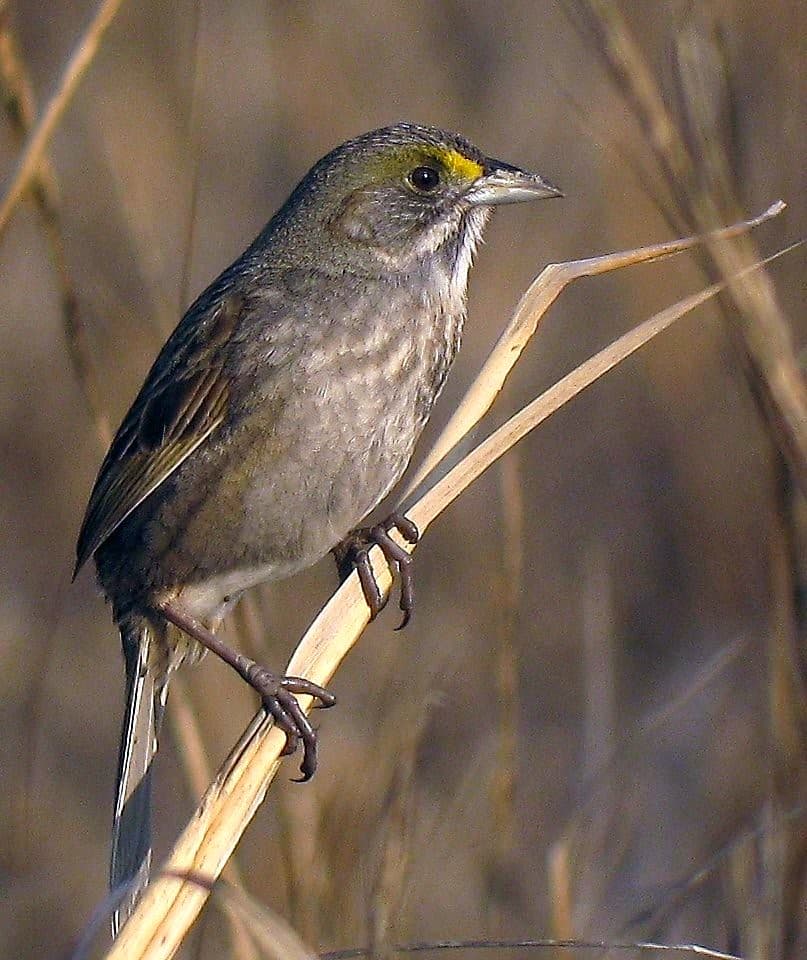 Credit: Flickr
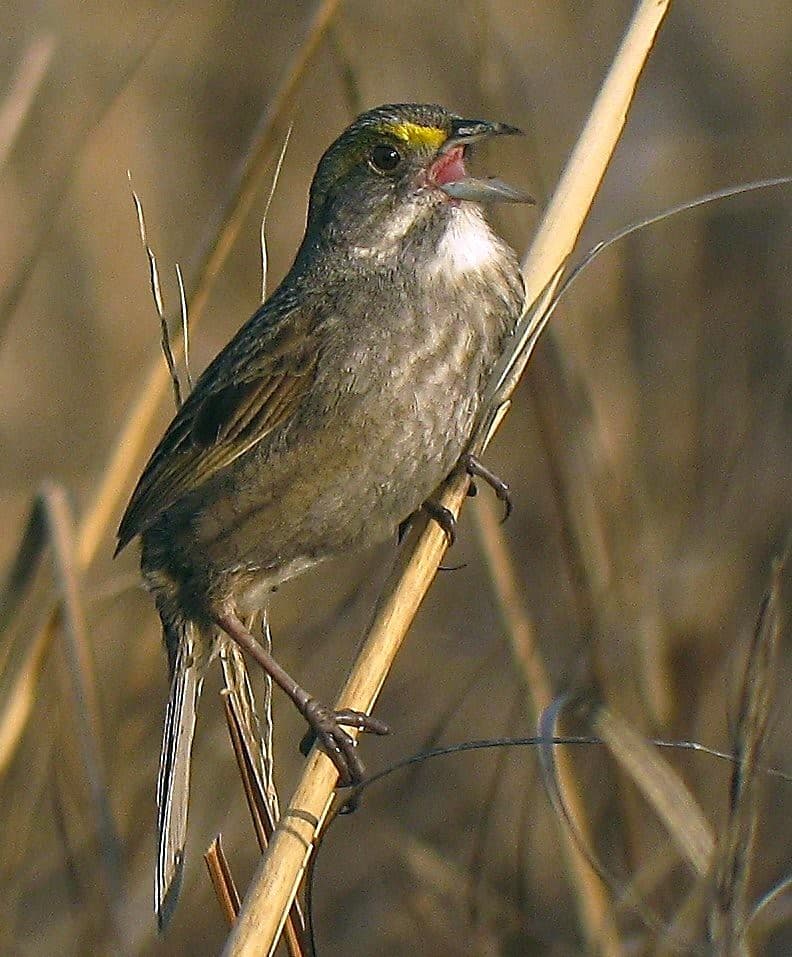
Seaside Sparrow (Ammodramus maritimus)
You'll notice the wrack line first: dried seaweed braided with driftwood, blue crab molts, and the occasional horseshoe crab carapace bleached white by sun. In May and June, the real show begins when thousands of horseshoe crabs haul themselves ashore to spawn, and the beach becomes a refueling station for red knots and ruddy turnstones flying north from South America. Bring binoculars.
The scenic pull here isn't dramatic—no cliffs, no crashing surf. Instead, Fowler offers the slow beauty of tidal rhythms and salt meadows, the kind of place where you measure time by the heron's patient stalking through shallows. A wooden observation platform overlooks the marsh, ideal for watching sunrise paint the cordgrass gold. Pack out what you pack in; this beach belongs more to the ospreys than to us.


