
Bombay Hook Beach sits at the edge of a 16,000-acre wildlife refuge, a place where the Delaware Bay's brackish water meets shell-strewn sand under vast, uninterrupted sky. You won't find beach umbrellas or concession stands here—just pickleweed, phragmites, and the occasional great blue heron stalking through shallows the color of weak tea. The beach itself is a thin, windswept strip where horseshoe crab shells bleach white in the sun and broken oyster fragments crunch underfoot.
“This beach serves as critical habitat along the Atlantic Flyway, where half a million migratory shorebirds stop to refuel each spring.”
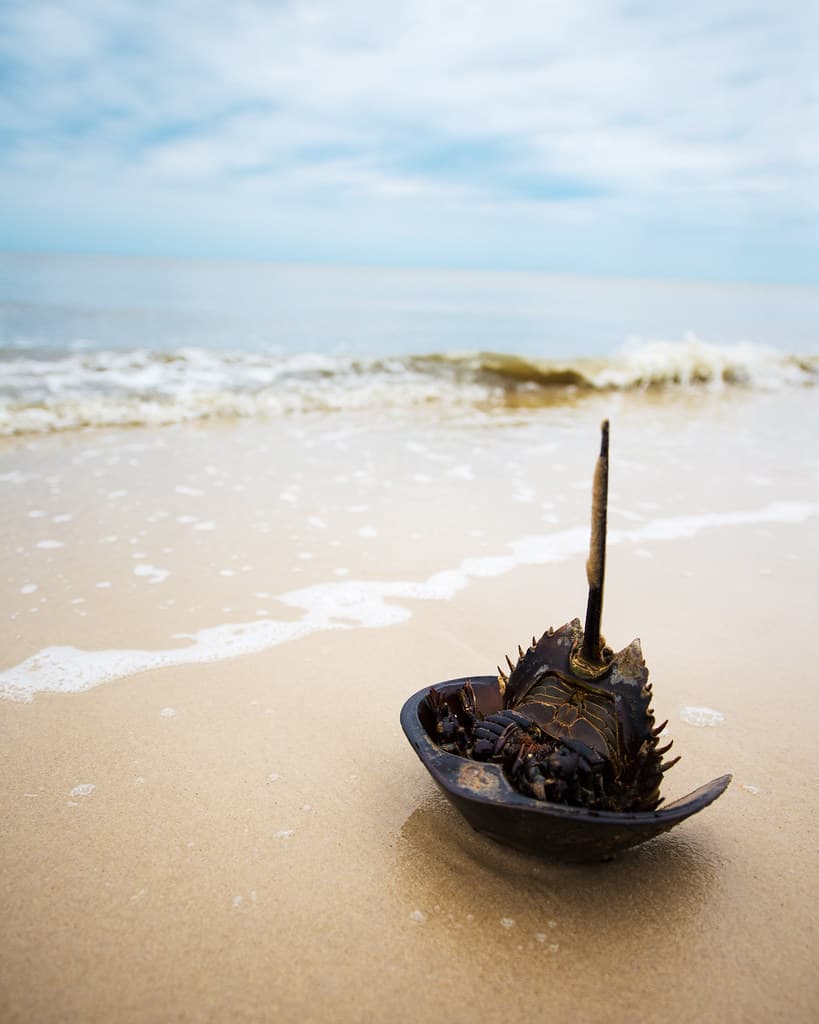 Credit: Flickr
Stranded
Come in May and you'll witness one of North America's most important migratory stopovers: red knots, ruddy turnstones, and sanderlings arriving from South America to feast on horseshoe crab eggs, doubling their body weight before continuing to Arctic breeding grounds. The spectacle draws birders with telephoto lenses and field guides, all scanning the mudflats where thousands of shorebirds probe and pivot in synchronized feeding frenzies. Even outside migration season, the refuge delivers bald eagles, snow geese in winter, and nesting herons in summer.
The swimming is shallow and murky, better suited to wading than diving, but that's precisely the point. This beach belongs to the birds first, visitors second. You'll leave with sand in your shoes, salt on your skin, and the strange, prehistoric sight of horseshoe crabs—unchanged for 450 million years—scuttling through tide pools at your feet.


