Counting the waves…
Counting the waves…
A refined fusion of water purity, environmental stability, and communal vibrancy for Jensen Sea Turtle Beach.
View MethodologyAnalyzed via live sensors and environmental data.
Wave height, wind, and atmospheric stability.
Live footfall and crowd balance metrics.
Community reviews and curated sentiment.
“You'll wake before sunrise here—not because your hotel alarm failed, but because nesting sea turtles follow the moon, and you've come to witness something older than the coastline itself. The sand between your toes is…”
Limited recent visitor reports — live OBI telemetry is your best guide for current conditions.
Jensen Sea Turtle Beach earns its name during May through October, when loggerheads, greens, and the occasional leatherback drag themselves onto this stretch of Hutchinson Island to dig flask-shaped chambers and deposit clutches of ping-pong-ball eggs. You'll join permitted turtle walks led by volunteers who scan the tideline with red-filtered flashlights, voices hushed, because artificial light disorients hatchlings that navigate by starlight. The beach itself runs wide and unmanicured, backed by dunes stabilized with railroad vine and sea grape rather than concrete seawalls.
Outside nesting season, you'll have long, unhurried mornings here. The shoreline curves gently northward toward the St. Lucie Inlet, and at low tide the hard-packed sand near the waterline becomes a corridor for joggers and shell collectors who pocket lightning whelks and Atlantic cockles. Families spread blankets near the pavilion, where Australian pines offer dappled shade and the parking lot never quite fills.
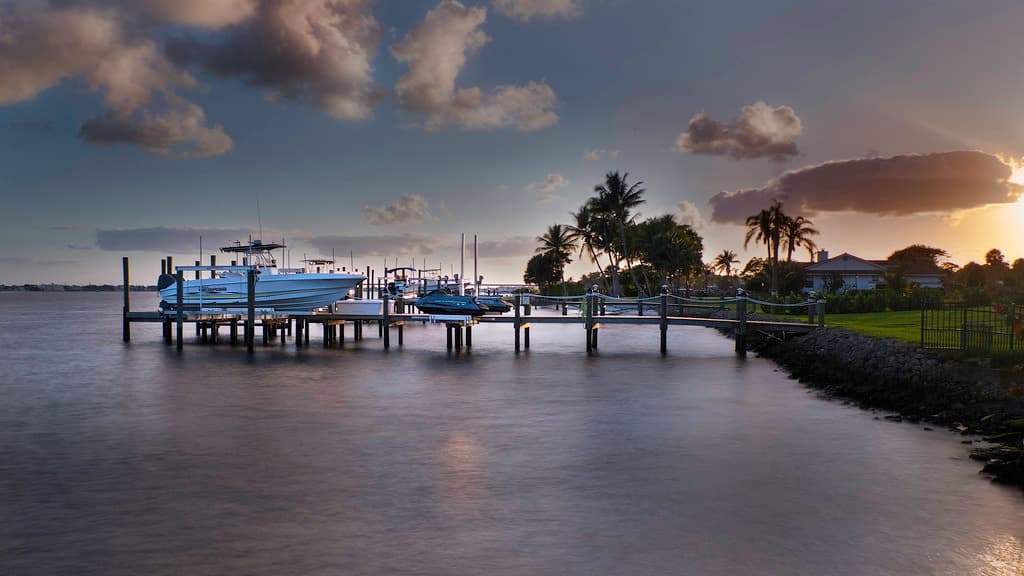
 Credit: Unsplash
inside Port Barna restaurant
 Credit: Unsplash
two long beak birds on wooden pillar near bridge
Join permitted dawn patrols May–October
Gentle waves, gradual sandy bottom
Picnic tables under Australian pines
Where it is
Jensen Sea Turtle Beach
Jensen Beach, Florida, USA
27.246300°, -80.196000°
Weather
Loading…
Swell
—
Temp
Warm · Restorative
UV Index
Moderate
Wind
—
Tidal State
Last known
Max Sunlight
—
Ideal Shade
—
May - Sep (Peak)
Jan - Dec (Off-season)
Historical data suggests peak visibility and stable sea temperatures occur during the prime visitation window.
Select a category to load nearby places.
Unlock restaurants, luxury stays and curated maritime experiences within 2km
Jensen Sea Turtle Beach generally offers safe swimming conditions with lifeguards present during peak season. The Atlantic waters here can experience moderate waves and occasional rip currents, so check local flags and advisories before entering. The beach has a gentle slope, making it relatively family-friendly. During summer months, jellyfish may be present. The beach is well-maintained and patrolled, but always swim near lifeguard stations when available and avoid swimming alone or during rough surf conditions.
Jensen Sea Turtle Beach is enjoyable year-round thanks to Florida's subtropical climate. Winter months (December-March) offer comfortable temperatures in the 70s°F with less humidity and fewer crowds. Spring and fall provide warm weather ideal for beach activities. Summer (June-August) brings hot, humid conditions but is peak turtle nesting season. For sea turtle viewing, visit May through October. Early mornings offer the calmest seas and best chances for wildlife spotting, while late afternoons provide stunning sunset views over the Indian River Lagoon side.
Jensen Sea Turtle Beach is located on Hutchinson Island, accessible via the Jensen Beach Causeway (State Road 732) from Jensen Beach. Cross the Indian River and turn north on Highway A1A. Public beach access points with parking are available along A1A, including dedicated lots near sea turtle conservation areas. Parking is typically free at most public access points, though spaces can fill quickly on weekends and during peak season. Street parking is also available along A1A in designated areas.
The Jensen Beach area and Hutchinson Island offer various dining and lodging options within minutes of the beach. You'll find beachfront resorts, vacation rentals, and smaller hotels along A1A. For dining, casual seafood restaurants and beachside cafes are scattered throughout the area, with more options across the causeway in downtown Jensen Beach. The beach itself has limited on-site amenities, so plan to bring supplies or drive a few minutes to nearby establishments. Several shops and convenience stores are available along A1A.
Jensen Sea Turtle Beach is an important nesting site for loggerhead, green, and leatherback sea turtles from May through October. While nesting typically occurs at night, you may spot marked nests and tracks in early morning. Never disturb nests or approach turtles—it's illegal and harmful. Several local organizations offer guided turtle walks during nesting season (reservations required). If you encounter a nesting turtle, observe from a distance, avoid lights and flash photography, and report sightings to local sea turtle conservation programs.
Photos