
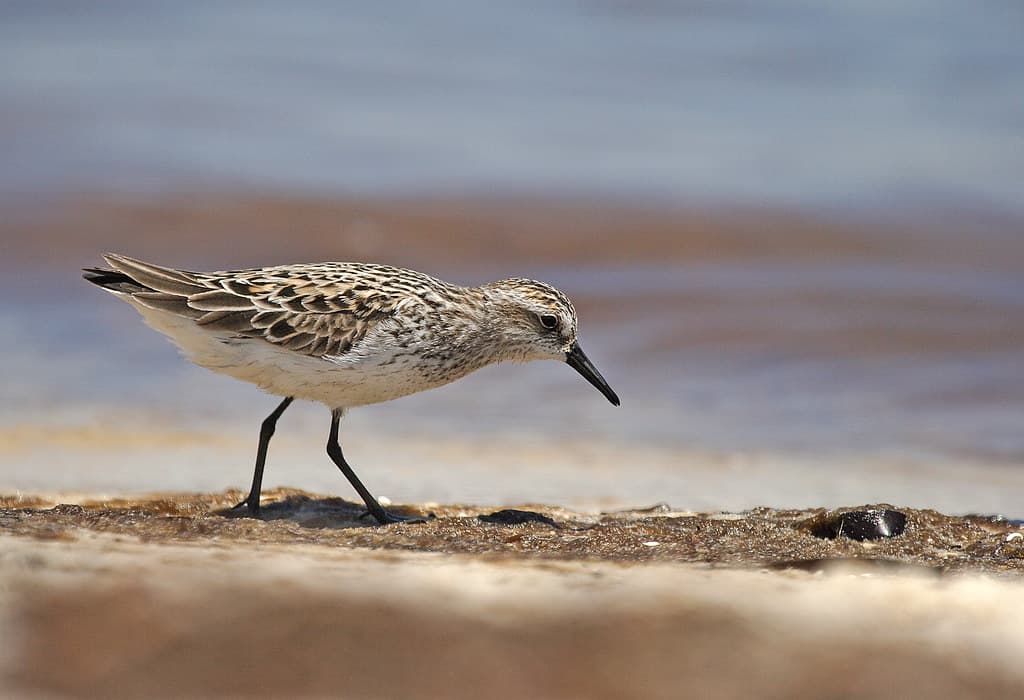
The drive alone tells you this beach operates by different rules. Highway 370 threads through longleaf pine and palmetto scrub before dead-ending at a state park where the shoreline splits into three distinct faces: Gulf beach to the south, bay shore to the north, and a wild marsh edge where wading birds stalk the shallows. You'll walk barefoot across hard-packed sand still ridged from the last high tide, dodging ghost crab burrows and the occasional horseshoe crab shell bleached white by sun.
“One of the rare Florida beaches where three distinct ecosystems—Gulf shore, tidal marsh, and bay edge—converge in a single walking loop.”
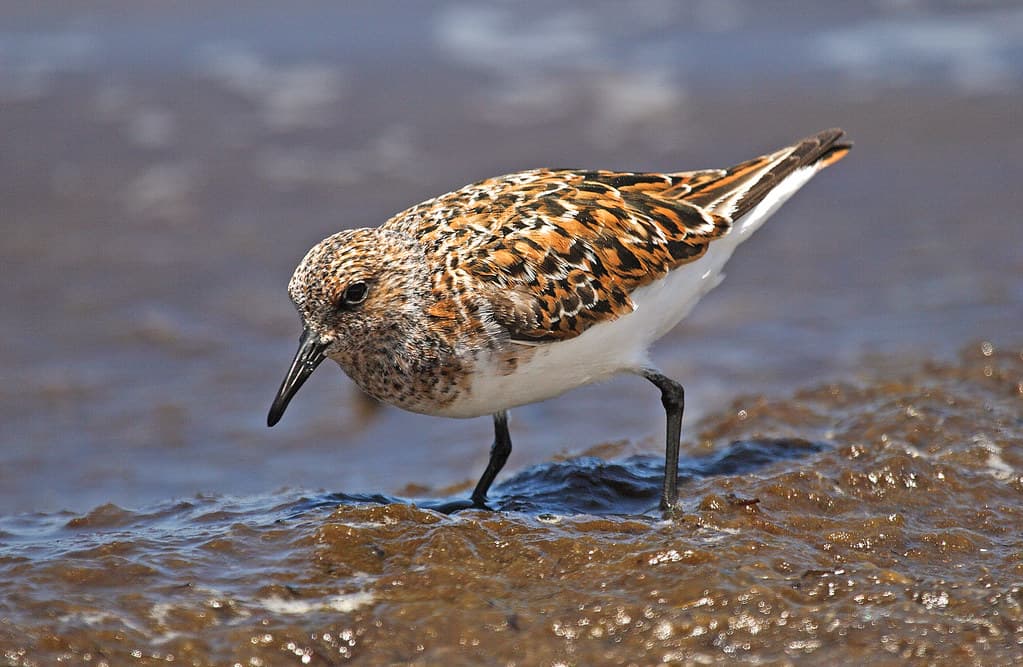 Credit: Flickr
Sanderling
The water here runs shallow for a hundred yards, warm as bathwater by midday, the color of sweet tea over sand bars that shift with every nor'easter. Families wade out to sandbars that appear at low tide, temporary islands where you can stand waist-deep and watch mullet dimple the surface. The beach curves gently, framed by saw palmettos and stunted oaks shaped by Gulf wind into permanent lean.
What you won't find: beach bars, jet ski rentals, or volleyball nets. What you will: the rhythmic chuck of a brown pelican hitting the water, the sulfur smell of marsh at low tide, and enough solitude to hear your own footsteps in wet sand. The lighthouse at nearby Alligator Point blinks white across the water after dark, a slow metronome marking time in a place that refuses to hurry.


