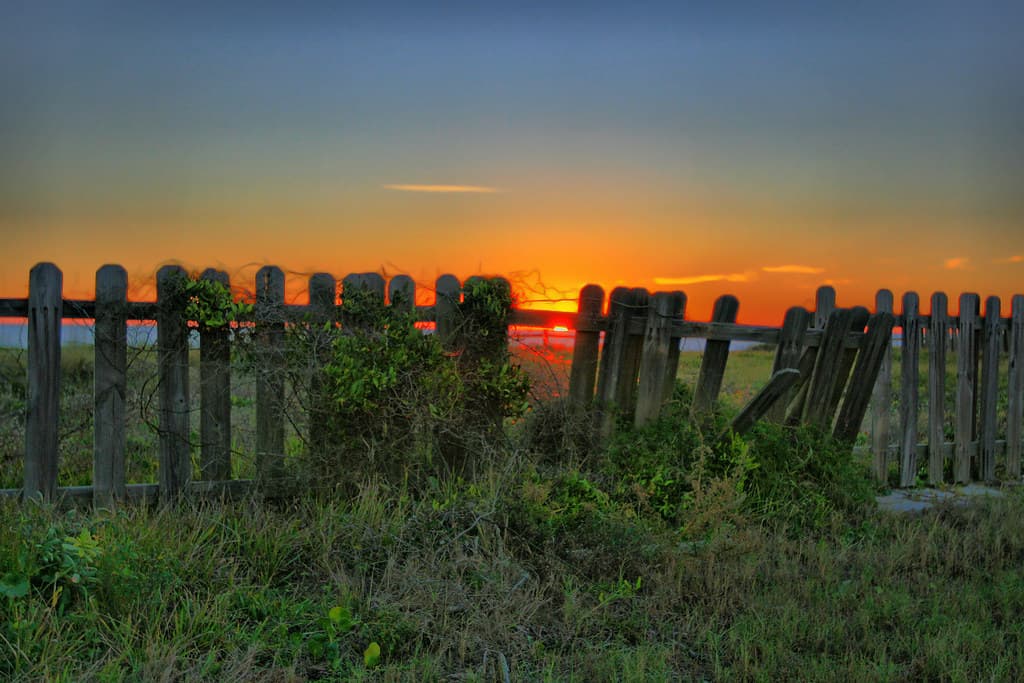
Counting the waves…
Counting the waves…

Mickler's Landing refuses to announce itself. No boardwalk, no vendors, no lifeguard towers punctuating the horizon—just a small wooden pavilion and a pathway that spills you onto a strand where the sand itself tells the story. The pink hue comes from millions of tiny coquina shells, ground fine by tides and time, creating a beach that photographs like a watercolor and feels softer than anything you've walked on along Florida's northeast coast. You'll share the shoreline with families who spread blankets near the dune line, surfers checking the break where sandbars shift with each nor'easter, and solitary walkers who come at dawn to scan the wrack line for olive shells and sand dollars. The waves here roll in with enough muscle to body-surf but stay forgiving enough for wading toddlers. When the tide pulls out, it leaves tidal pools dimpled with hermit crabs and the occasional stranded starfish. Come late afternoon and the light does something elemental: it turns the wet sand into a mirror, doubles the sky, and makes every footprint a temporary sculpture. The sunset faces west over the Intracoastal, so you won't catch the sun dropping into the ocean—but the afterglow paints the entire beach in shades of apricot and rose, and the coquina sand glows as if lit from within.
Places, rentals, tours and events within walking and driving distance of Mickler's Landing Beach.
Photos
Mickler's Landing Beach is generally safe for swimming, though conditions vary with weather and season. The beach has no lifeguards on duty, so swimmers should exercise caution and monitor ocean conditions independently. Rip currents can occur, particularly during storms or high surf. The beach features gentle slopes ideal for families, but always check local surf reports before entering the water. During summer months, waters are typically calmer. Jellyfish may be present seasonally. Since there's no lifeguard supervision, swimming with others and staying near shore is recommended for safety.
Mickler's Landing Beach is enjoyable year-round, with each season offering distinct advantages. Late spring through early fall (May-September) provides warmest water temperatures for swimming, averaging 75-82°F. However, summer brings larger crowds and occasional afternoon thunderstorms. Fall and winter offer fewer visitors, comfortable air temperatures, and excellent beachcombing conditions when the distinctive pink coquina shells are most visible. For sunset viewing, the beach faces east, so sunrise is actually spectacular here. Weekdays are generally less crowded than weekends throughout the year. Water temperature remains swimmable even into October for most visitors.
Mickler's Landing Beach is located off Ponte Vedra Boulevard (A1A) in Ponte Vedra Beach, approximately 20 miles southeast of Jacksonville. The beach has a dedicated parking lot at Mickler's Landing Beachfront Park, accessible from Ponte Vedra Boulevard. Parking is free and includes approximately 120 spaces, though the lot fills quickly on weekends and summer days—arrive before 10am for best availability. The park entrance features a clearly marked sign. From the parking area, a wooden boardwalk leads directly over the dunes to the beach. No street parking is available in the surrounding residential area.
Mickler's Landing Beach itself is undeveloped with minimal amenities—there are restrooms and outdoor showers at the parking area, but no food vendors, concessions, or equipment rentals on-site. Visitors should bring their own food, water, and beach supplies. The nearest restaurants and shops are located along A1A, approximately 2-4 miles north toward Jacksonville Beach or south in Ponte Vedra Beach, where you'll find grocery stores, casual dining, and upscale restaurants. Several resort hotels and vacation rentals are available within a few miles. The beach's natural, uncommercialized setting is part of its appeal for those seeking a quieter experience.
The distinctive pink-hued sand at Mickler's Landing Beach comes from coquina shell fragments. Coquina are small, colorful bivalve mollusks whose shells wash ashore and break down into tiny particles that mix with regular quartz sand, creating the beach's characteristic pinkish tint. The color is most noticeable during certain times of year, particularly after storms when fresh shells are deposited, and in specific lighting conditions. The pink color varies in intensity along different sections of the beach and isn't uniformly pink year-round. This natural phenomenon makes Mickler's Landing unique among Florida's Atlantic Coast beaches.