Counting the waves…
Counting the waves…
A refined fusion of water purity, environmental stability, and communal vibrancy for Indian Pass Beach.
View MethodologyAnalyzed via live sensors and environmental data.
Wave height, wind, and atmospheric stability.
Live footfall and crowd balance metrics.
Community reviews and curated sentiment.
“You'll drive a two-lane road past fishing shacks and salt marshes before Indian Pass Beach reveals itself—a scruffy stretch of sand where pelicans dive, scallop boats idle offshore, and the only footprints might be…”
Limited recent visitor reports — live OBI telemetry is your best guide for current conditions.
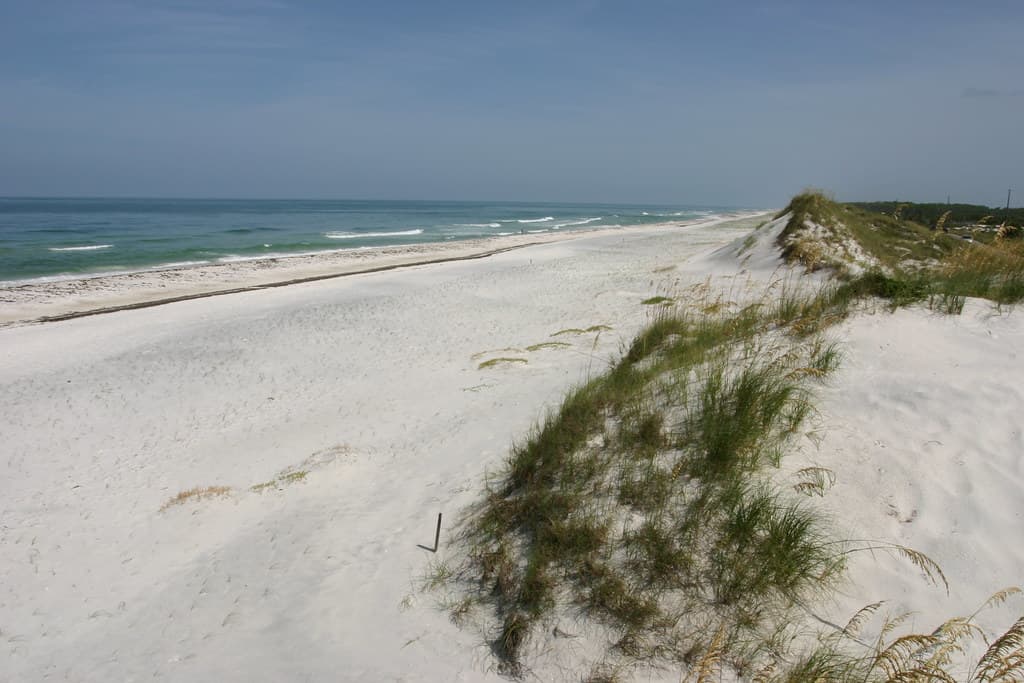
Indian Pass Beach sits at the raw, unpolished edge of the Forgotten Coast, where Cape San Blas tapers into a narrow peninsula and the Gulf meets St. Vincent Sound. No boardwalks or concessions interrupt the view—just low dunes threaded with sea oats, scattered driftwood weathered silver by salt, and a shoreline littered with whelk shells and the occasional sand dollar. The water runs shallow for yards, warm and tea-colored from the estuaries, perfect for wading but too murky for postcard photographers. Offshore, St. Vincent Island forms a green smudge on the horizon, a national wildlife refuge accessible only by boat.
This is old Florida, the version that survives in fading postcards and fish-camp stories. Stilted cottages with tin roofs lean into the breeze, their screened porches strung with crab traps and fishing nets. Local families arrive with coolers and cast nets, more interested in mullet than in Instagram angles. The road dead-ends at a public access point with gravel parking and a single picnic table—no lifeguard tower, no shower house, no pretense.
 Credit: Unsplash
people walking on beach shore during daytime
 Credit: Unsplash
people on beach during daytime
Orange sky meets tidal channel
Tea-tinted water, soft sand bottom
St. Vincent Island launching point
Where it is
Indian Pass Beach
Port St. Joe, Florida, USA
29.696800°, -85.238900°
Weather
Loading…
Swell
—
Temp
Warm · Restorative
UV Index
Moderate
Wind
—
Tidal State
Last known
Max Sunlight
—
Ideal Shade
—
May - Sep (Peak)
Jan - Dec (Off-season)
Historical data suggests peak visibility and stable sea temperatures occur during the prime visitation window.
Select a category to load nearby places.
Unlock restaurants, luxury stays and curated maritime experiences within 2km
Indian Pass Beach is generally safe for swimming, though conditions vary. The Gulf waters here are typically calmer than Atlantic beaches, but always check for red flags indicating unsafe conditions. The beach has minimal lifeguard coverage, so swim at your own risk and stay alert to currents. The area is known for shallow sandbars extending far offshore, making it family-friendly in calm weather. Be aware of stingrays in shallow water—shuffle your feet when entering. During red tide events, swimming may be uncomfortable due to respiratory irritation.
Indian Pass Beach is enjoyable year-round, with each season offering distinct advantages. Spring (March-May) and fall (September-November) provide comfortable temperatures, fewer crowds, and excellent shelling conditions. Summer brings warm Gulf waters ideal for swimming but higher humidity and afternoon thunderstorms. Winter offers solitude and mild days perfect for beachcombing, though water temperatures drop. Sunset viewing is spectacular throughout the year. For the most pleasant weather and uncrowded experience, visit during shoulder seasons. Hurricane season runs June through November, with peak activity August through October.
Indian Pass Beach is located about 10 miles west of Port St. Joe along County Road 30A/Cape San Blas Road. From Highway 98, turn south onto CR 30 and follow signs toward Indian Pass. Parking is available at the Indian Pass Raw Bar or in small roadside pull-offs along CR 30. This is an undeveloped beach with very limited designated parking areas, so arrive early during peak season. The beach access is informal compared to state parks. A vehicle is necessary as public transportation doesn't serve this remote area.
Amenities near Indian Pass Beach are intentionally limited, preserving its rustic character. The iconic Indian Pass Raw Bar is the main dining option, serving fresh Gulf seafood in a casual waterfront setting—cash only. Accommodation options include vacation rental homes and cottages scattered along Cape San Blas; no hotels or resorts are directly beachfront here. For more dining and shopping choices, drive to nearby Port St. Joe (10 miles) or Mexico Beach. Bring food, water, and beach supplies as there are no stores or facilities on-site.
Indian Pass Beach is considered one of Florida's premier shelling destinations due to its unique geographic position where St. Vincent Sound meets the Gulf of Mexico. The convergence of currents deposits an exceptional variety of shells, including sand dollars, scallops, whelks, and conchs. Low tide exposes extensive sandbars perfect for shell hunting. The beach's undeveloped nature means less competition from crowds. Early morning after storms yields the best finds. The nearby St. Vincent Island National Wildlife Refuge further contributes to the area's pristine conditions and diverse shell deposits.
Photos