
Forget umbrella rentals and volleyball nets. Driftwood Beach is where erosion has become art installation, centuries-old live oaks and pines toppled and stripped by tides into sculptural forms that sprawl across the sand. You'll thread between trunks wider than your armspan, their bark long gone, the wood beneath polished to pewter. The roots splay upward like frozen lightning. Some trees lie horizontal for fifty feet; others lean at impossible angles, still clinging to eroding dunes.
“This is the only Atlantic beach where you walk through a monumental sculpture garden carved by erosion, not human hands.”
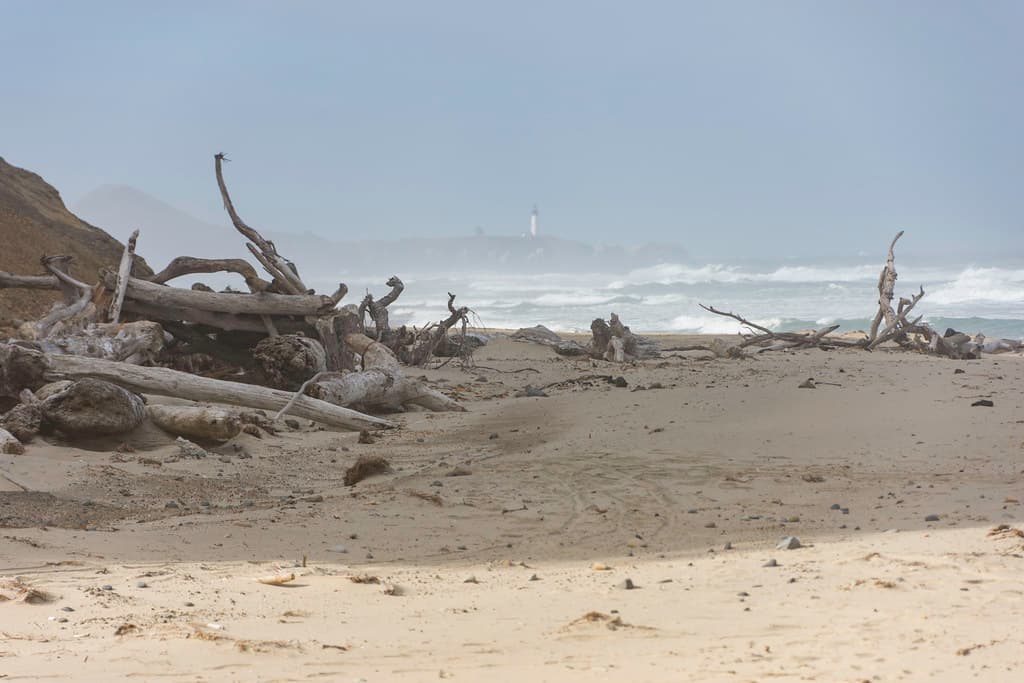 Credit: Flickr
Oregon Coast Highway, Oregon
The beach is best at dawn, when fog clings to the Intracoastal Waterway behind you and the low light carves shadows into every knot and crevice. Photographers camp here with tripods. Families clamber over the larger trunks. The sand itself is firm and gray-brown, scattered with oyster shells and the occasional whelk. Waves are gentle—this is barrier island coastline, protected and shallow.
You'll find Driftwood Beach at the island's northwest corner, accessible via a short path from a small parking area. There are no facilities, no lifeguards, no concessions. Just you, the bones of a forest, and the ocean that claimed them. The scene shifts with every storm, every tide—what you see today may be half-buried tomorrow, or swept away entirely.


