
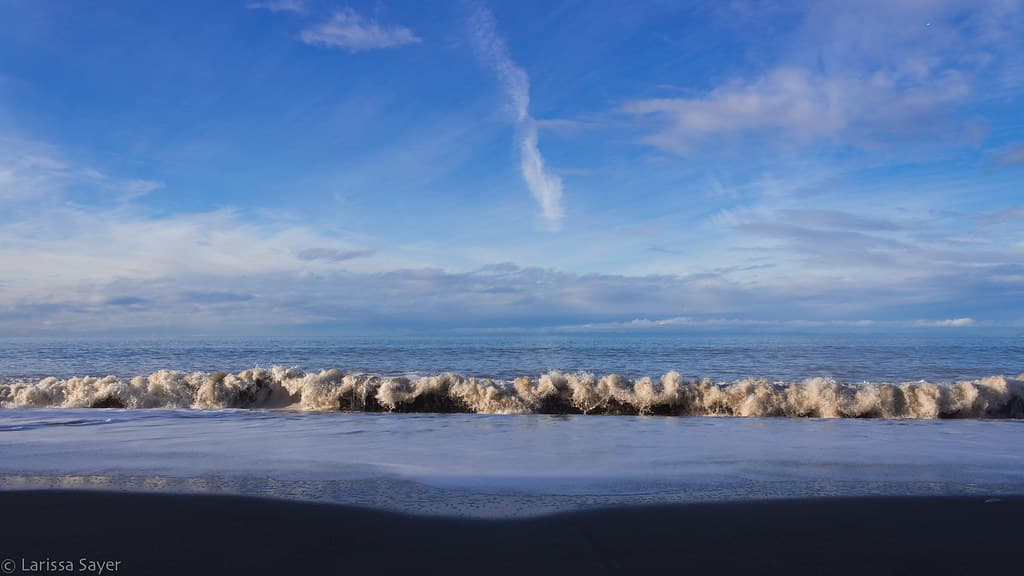
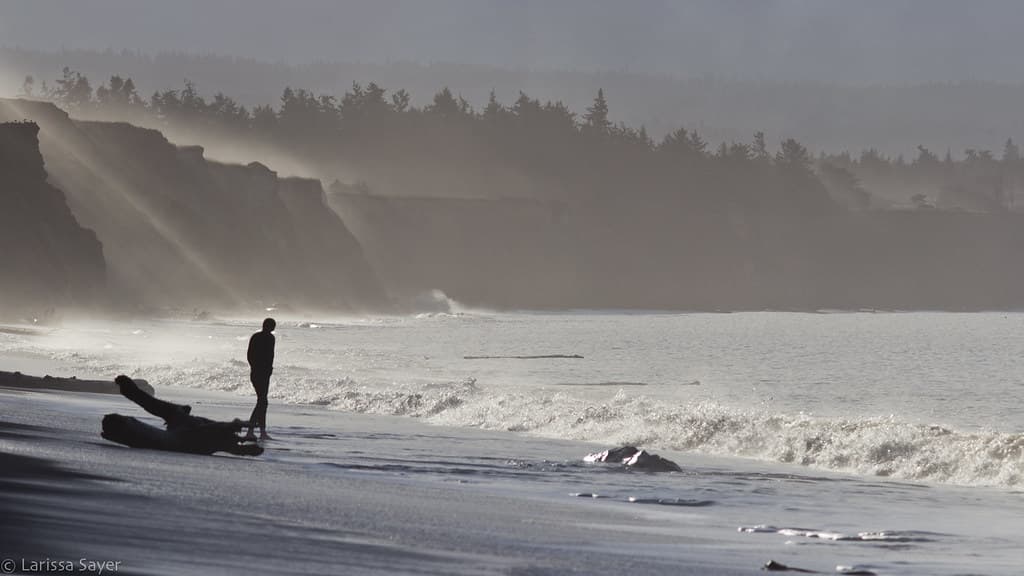
Counting the waves…
Counting the waves…

The ferry from St. Marys delivers you to a barrier island frozen somewhere between 1884 and now. Dungeness Beach unfolds south of the dock, a five-mile ribbon of packed sand the color of wet cardboard, edged by water that shifts from jade green to slate depending on the pull of the tide. Behind the dunes, the ruins of Thomas Carnegie's winter estate stand open to the sky—tabby walls blackened by the 1959 fire, chimneys pointing at nothing, staircases climbing toward absent floors. Wild horses descended from Carnegie-era herds nose through the oak hammocks and emerge onto the beach at dusk, unbothered by the handful of hikers shouldering overnight packs toward backcountry campsites. The island's remoteness—no cars, no vendors, no lifeguards—means you carry everything in and haul everything out. The Park Service limits daily visitors to three hundred, so even on a Saturday in May you might walk an hour without seeing another footprint. Dolphins surface just beyond the break. Loggerhead turtles nest here May through August, leaving tractor-width drag marks in the morning sand. You hike back through maritime forest thick with resurrection fern and Spanish moss, past armadillos rooting in the leaf litter, and catch the last ferry as the sun drops behind the mainland pines. The boat's wake spreads gold across St. Marys River, and you understand why the Carnegies chose isolation.
Places, rentals, tours and events within walking and driving distance of Dungeness Beach.
Photos
Swimming at Dungeness Beach requires caution due to strong currents, rapidly changing tides, and occasional jellyfish. The beach is remote with no lifeguards on duty. Many visitors prefer wading in shallow areas or simply beachcombing rather than swimming. Always check tide schedules before visiting, as high tides can significantly reduce beach access. The waters are part of Cumberland Sound, where currents can be unpredictable. If you choose to swim, stay close to shore and never swim alone.
Dungeness Beach is accessible year-round, with spring and fall offering the most comfortable conditions. March through May and September through November feature mild temperatures, fewer crowds, and excellent wildlife viewing opportunities. Summer brings heat and humidity but calm waters. Winter months are quieter and pleasant for beach walks, though water is too cold for swimming. Visit during low tide for the best beach exploration and to see exposed sandbars. Early morning or late afternoon provides optimal lighting for photography.
Dungeness Beach is located on Cumberland Island National Seashore, accessible only by passenger ferry from St. Marys, Georgia. Take the Cumberland Island Ferry from the St. Marys waterfront; reservations are strongly recommended. The ferry ride takes approximately 45 minutes. In St. Marys, park at the designated ferry terminal parking area. Once on the island, it's about a one-mile walk from the Sea Camp Dock to Dungeness ruins, then another half-mile to the beach. No vehicles are allowed on Cumberland Island.
There are no food services, restaurants, or amenities on Cumberland Island itself. Visitors must bring all food, water, and supplies they'll need for the day. The island has restrooms and drinking water at the Sea Camp dock area. For accommodations, lodging options are in St. Marys on the mainland, ranging from historic inns to chain hotels. Primitive camping is available on the island with advance reservations. Pack out all trash as there are limited facilities.
Yes, Cumberland Island is famous for its population of wild horses that freely roam the beaches and maritime forests. While horse sightings are common along Dungeness Beach and throughout the island, they're wild animals and encounters aren't guaranteed. The horses are descendants of Spanish mustangs and colonial-era livestock. Maintain at least 50 feet distance and never feed or touch them, as they can bite and kick. Early morning or late afternoon beach walks often provide the best opportunities for spotting horses.