
The moment you slip into Kealakekua Bay, the volcanic rock walls rising 600 feet above seem to fold the ocean into stillness. This marine life conservation district forbids fishing and anchoring, so the reef thrives in shades of rust, violet, and lime—butterflyfish weave through staghorn coral while octopuses pulse across lava ledges. The bay earned its somber footnote in 1779 when Captain James Cook fell here during a skirmish; a white obelisk now marks the spot on the northern shore, accessible only by water or a rugged four-mile trail.
“It's the Big Island's most pristine snorkeling reef, protected by isolation and conservation laws that keep the coral untouched.”
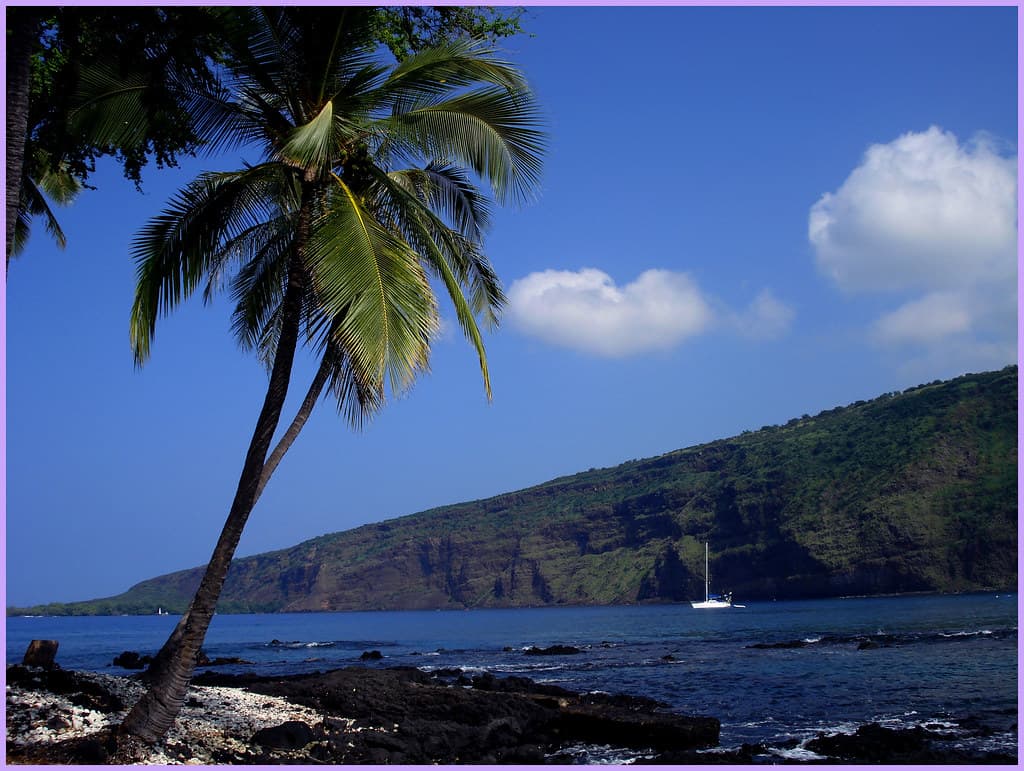 Credit: Flickr
Kealakekua Bay, Big Island Hawaii- A gorgeous water day
You'll earn your swim. Most visitors launch kayaks from Napoopoo Beach Park at dawn, paddling across the bay's cobalt expanse before the trade winds chop the surface. Others descend the Captain Cook Monument Trail, a shadeless, ankle-twisting scramble that drops 1,300 feet in two miles—bring twice the water you think you need. Once you arrive, the reward is immediate: schools of manini graze algae inches from your mask, and if you time it right, pods of spinner dolphins rest in the shallows after their nocturnal hunt offshore.
The bay's geography creates a natural amphitheater. Lava flows from Mauna Loa built these cliffs over millennia, and the same forces carved underwater caves and arches that now shelter green sea turtles. You won't find vendors, showers, or lifeguards—just the hum of your breath through a snorkel and the occasional splash of a dolphin breaking the surface.


