
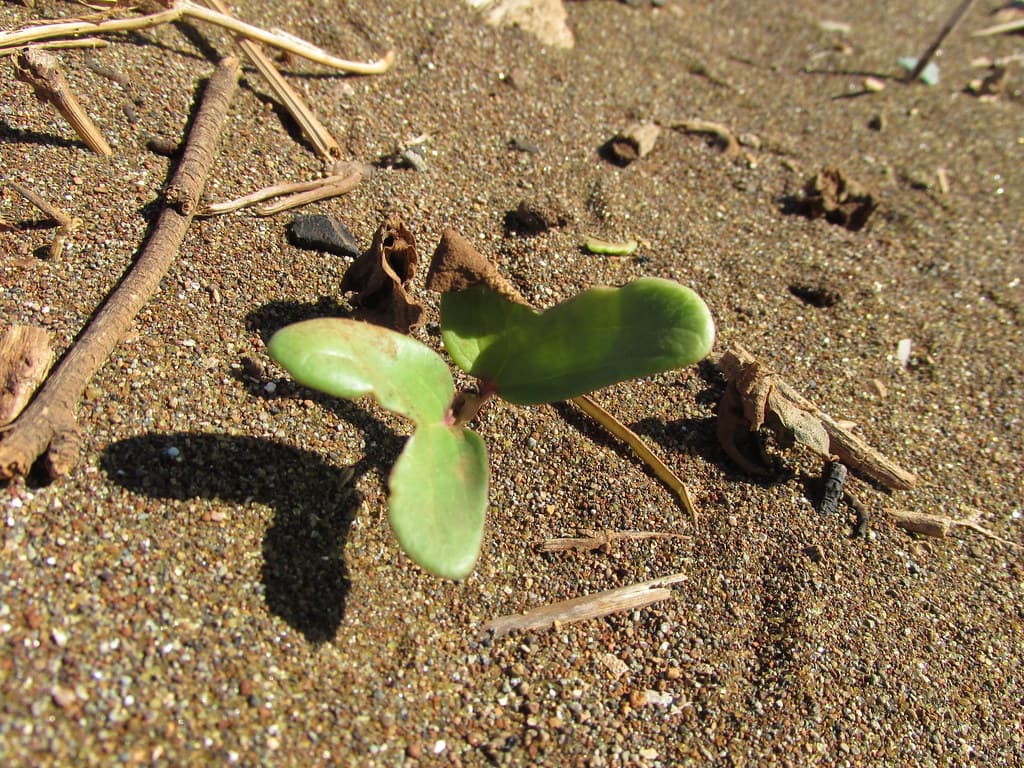
Hakioawa Beach stretches along Kaho'olawe's southeastern shore, a ribbon of ochre sand derived from centuries of weathered lava meeting the open Pacific. The island itself has been off-limits since World War II, when the U.S. Navy claimed it for bombing practice. Decades of explosions left the land pocked and barren, but since 1994, the Kaho'olawe Island Reserve Commission has overseen its slow rehabilitation. Only volunteers participating in restoration programs and educational access trips set foot here now, clearing unexploded ordnance, replanting native grasses, and rekindling ceremonial protocols that predate colonization.
“Hakioawa is the only beach in Hawaii where access depends not on payment but on commitment to cultural and ecological restoration.”
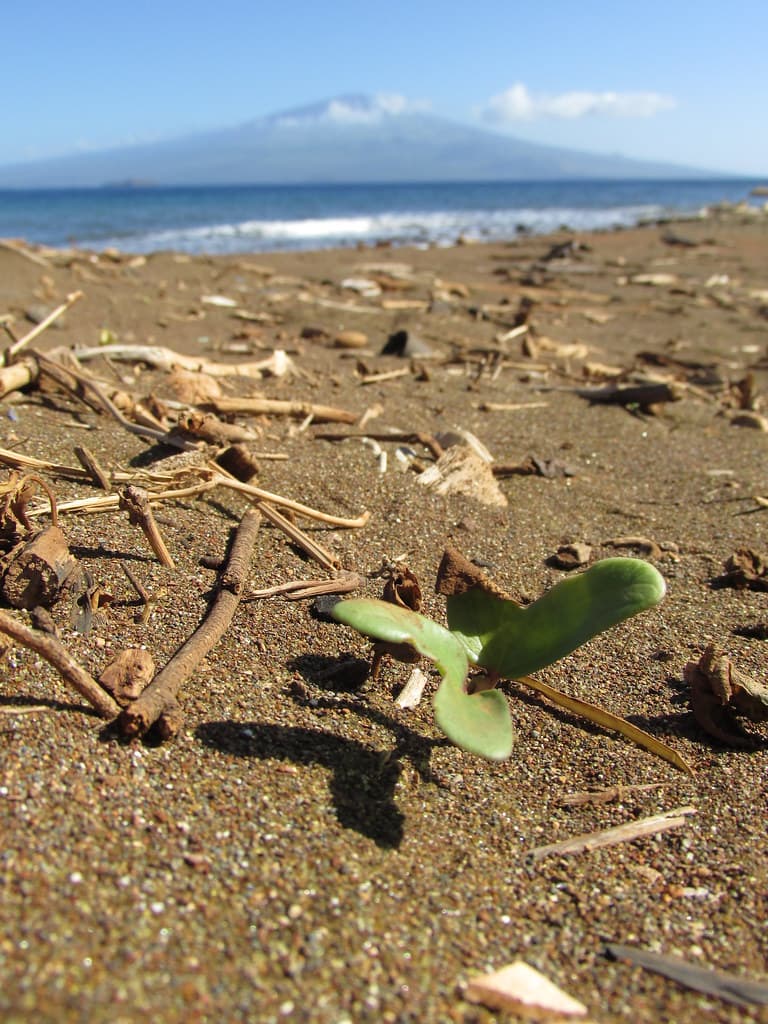 Credit: Flickr
starr-151213-3185-Ipomoea_pes_caprae_subsp_brasiliensis-seedling_cotyledons_ocean_splash_zone-Hakioawa-Kahoolawe
When you do earn passage—through documented cultural work or educational permit—the beach greets you with an eerie quiet. No rental cars idle in parking lots. No coolers dot the tideline. Instead, spinner dolphins arc offshore, monk seals haul out on empty sand, and the wind carries only the hiss of surf and the calls of seabirds reclaiming nesting grounds. The water runs deep sapphire, visibility stretching thirty feet on calm mornings.
Standing at Hakioawa, you feel the weight of absence and the fragile promise of return. This is not a beach for selfies or swim-up bars. It is a place where the land itself is still learning to breathe again, where every footprint is both privilege and responsibility.


