
Counting the waves…
Counting the waves…
A refined fusion of water purity, environmental stability, and communal vibrancy for Hakioawa Beach.
View MethodologyAnalyzed via live sensors and environmental data.
Wave height, wind, and atmospheric stability.
Live footfall and crowd balance metrics.
Community reviews and curated sentiment.
“You cannot visit Hakioawa Beach on a whim. Kaho'olawe remains closed to casual tourism, accessible only through sanctioned cultural restoration voyages. Yet this remote strand—where rust-colored sand meets cobalt…”
Limited recent visitor reports — live OBI telemetry is your best guide for current conditions.
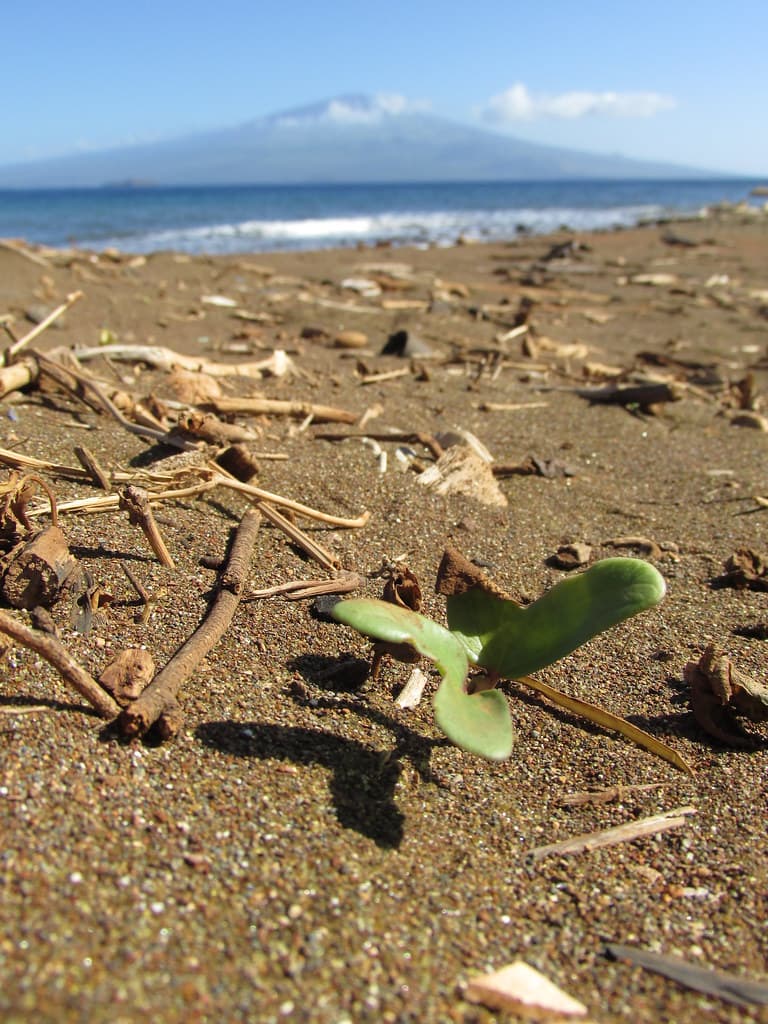
Hakioawa Beach stretches along Kaho'olawe's southeastern shore, a ribbon of ochre sand derived from centuries of weathered lava meeting the open Pacific. The island itself has been off-limits since World War II, when the U.S. Navy claimed it for bombing practice. Decades of explosions left the land pocked and barren, but since 1994, the Kaho'olawe Island Reserve Commission has overseen its slow rehabilitation. Only volunteers participating in restoration programs and educational access trips set foot here now, clearing unexploded ordnance, replanting native grasses, and rekindling ceremonial protocols that predate colonization.
When you do earn passage—through documented cultural work or educational permit—the beach greets you with an eerie quiet. No rental cars idle in parking lots. No coolers dot the tideline. Instead, spinner dolphins arc offshore, monk seals haul out on empty sand, and the wind carries only the hiss of surf and the calls of seabirds reclaiming nesting grounds. The water runs deep sapphire, visibility stretching thirty feet on calm mornings.
Credit: FlickrSurvey Coastal Trails
Map unexploded ordnance clearance zones
Photograph replanted 'ilima and kaunaoa
Experience Hawaii without tourism infrastructure
Where it is
Hakioawa Beach
Kaho?olawe, Hawaii, USA
20.553500°, -156.603000°
Weather
Loading…
Swell
—
Temp
Warm · Restorative
UV Index
Moderate
Wind
—
Tidal State
Last known
Max Sunlight
—
Ideal Shade
—
Jan - Dec (Peak)
May - Nov (Off-season)
Historical data suggests peak visibility and stable sea temperatures occur during the prime visitation window.
Select a category to load nearby places.
Unlock restaurants, luxury stays and curated maritime experiences within 2km
Swimming at Hakioawa Beach is not accessible to the general public. Kaho'olawe island is uninhabited and off-limits to visitors without special authorization. The island was used as a military training ground for decades, and unexploded ordnance remains a serious safety hazard. Access is restricted to authorized personnel participating in restoration efforts and Native Hawaiian cultural practitioners with permits. If you're interested in Hawaii's remote beaches, consider visiting other islands with public beach access instead.
Hakioawa Beach and all of Kaho'olawe island are currently closed to public access, so there is no appropriate time for general visitors. The island is managed by the Kaho'olawe Island Reserve Commission and access requires special permission, typically granted only for cultural, educational, or restoration purposes. The island experiences Hawaii's typical warm climate year-round, but visiting remains restricted regardless of season. Those interested in Hawaii's beaches should explore the publicly accessible islands of Maui, O'ahu, Kaua'i, or the Big Island.
There is no public access to Hakioawa Beach or Kaho'olawe island. The island lies about seven miles southwest of Maui but has no commercial ferry service, airport, or public landing facilities. Access is strictly controlled and requires advance permission from the Kaho'olawe Island Reserve Commission, granted only for authorized cultural, educational, or restoration activities. Participants in approved programs typically reach the island via chartered boats. For accessible Hawaiian beach experiences, visitors should plan trips to neighboring islands with established tourism infrastructure.
Kaho'olawe has no tourist facilities, restaurants, hotels, or amenities whatsoever. The island is completely uninhabited and lacks running water, electricity, or commercial infrastructure. Even authorized visitors must bring all necessary supplies, food, and equipment. The nearest services are on Maui, approximately seven miles away across the 'Alalākeiki Channel. For accommodations and dining, visitors to Hawaii should stay on Maui or other populated islands, where full tourism facilities are available. Kaho'olawe remains a protected reserve focused on ecological and cultural restoration.
Kaho'olawe was used as a U.S. military bombing range from 1941 to 1990, leaving unexploded ordnance across the island that makes it extremely dangerous. In 1994, the island was returned to the State of Hawaii for eventual restoration and Native Hawaiian cultural use. The Kaho'olawe Island Reserve Commission now manages ongoing cleanup and restoration efforts. Access is restricted to protect public safety and preserve the island's cultural significance. Only authorized cultural practitioners, researchers, and restoration workers may visit with proper permits and safety protocols.
Photos