Counting the waves…
Counting the waves…
A refined fusion of water purity, environmental stability, and communal vibrancy for Honokanai?a Beach.
View MethodologyAnalyzed via live sensors and environmental data.
Wave height, wind, and atmospheric stability.
Live footfall and crowd balance metrics.
Community reviews and curated sentiment.
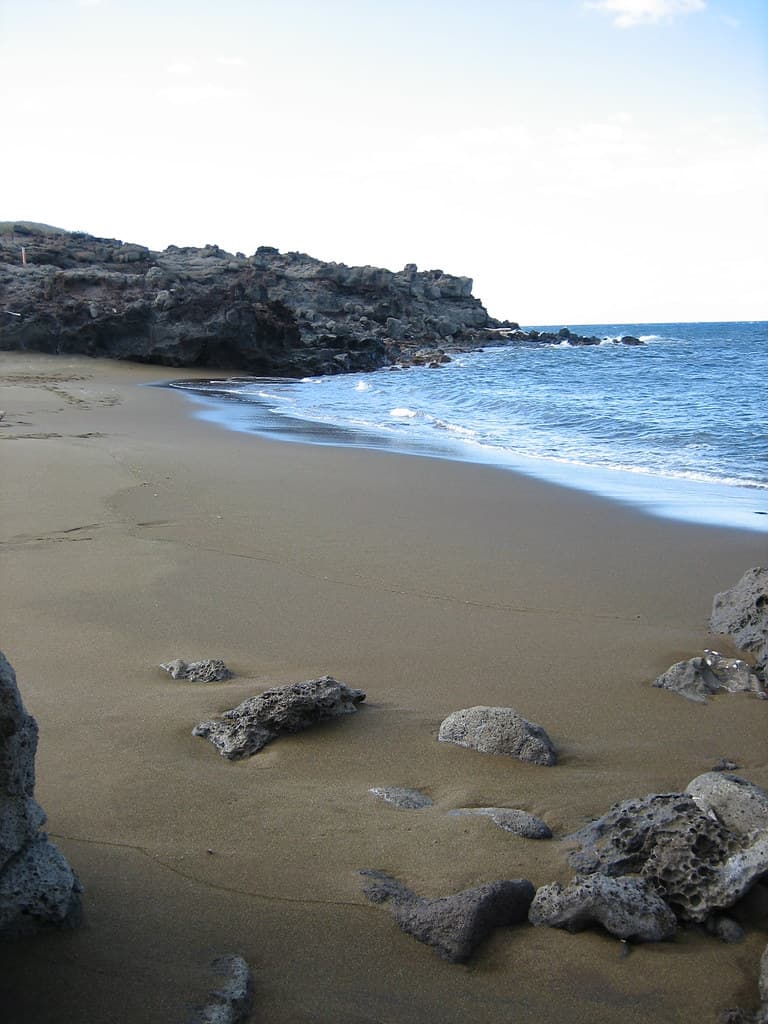
“Honokanai'a Beach curves along Kaho'olawe's southern shore, where volcanic dust stains the sand russet and the only footprints belong to restoration workers. The island remains off-limits to casual visitors, a ghost…”
Limited recent visitor reports — live OBI telemetry is your best guide for current conditions.
You cannot come here—not yet, perhaps not ever in the casual sense. Kaho'olawe sleeps in quarantine, the smallest of Hawaii's eight main islands, scarred by half a century of Navy target practice and now locked in a slow, sacred process of restoration. Honokanai'a Beach stretches along the island's leeward edge, where tawny sand the color of burnt sienna meets water that shifts from jade to indigo within a single breath.
The cliffs behind the beach rise in layers of oxidized basalt, their faces streaked with mineral weep stains that glow copper in late afternoon light. Native pili grass clings to crevices above the tide line. When the wind drops, you'd hear nothing but the hiss of waves dragging over coarse coral fragments, the occasional cry of a 'iwa bird tilting overhead. No beach umbrellas, no sunscreen slicks on the water, no voices.
 Credit: Unsplash
an aerial view of a beach and a forested area
 Credit: Unsplash
a beach with boats and trees
Photograph native plant recovery efforts
Map erosion with volunteer teams
Join permitted educational access trips
Where it is
Honokanai?a Beach
Kaho?olawe, Hawaii, USA
20.558700°, -156.566300°
Weather
Loading…
Swell
—
Temp
Warm · Restorative
UV Index
Moderate
Wind
—
Tidal State
Last known
Max Sunlight
—
Ideal Shade
—
Jan - Dec (Peak)
May - Nov (Off-season)
Historical data suggests peak visibility and stable sea temperatures occur during the prime visitation window.
Select a category to load nearby places.
Unlock restaurants, luxury stays and curated maritime experiences within 2km
Honokanai'a Beach is located on Kaho'olawe, an uninhabited island that is currently off-limits to the public without special authorization. The island was formerly a U.S. military bombing range and ongoing cleanup efforts make it inaccessible for recreational activities including swimming. Even if access were possible, the surrounding waters can have strong currents and limited emergency services. The island is considered sacred in Hawaiian culture and access is restricted to authorized cultural, environmental, and restoration activities only.
Honokanai'a Beach cannot be visited by general tourists as Kaho'olawe island is closed to public access. The island is managed by the Kaho'olawe Island Reserve Commission and only those with special permits for cultural practices, restoration work, or educational purposes may visit. If you're interested in experiencing remote Hawaiian beaches, consider alternatives on neighboring islands like Maui, where you can find secluded beaches that are legally accessible. Always check current access regulations before planning any Hawaiian island visits.
There is no public access to Honokanai'a Beach or Kaho'olawe island. The island has no regular ferry service, airport, or public transportation. Access is strictly controlled by the Kaho'olawe Island Reserve Commission and limited to authorized groups participating in restoration projects or cultural activities. Those granted access typically arrive by boat from Maui with proper permits. There are no parking facilities, roads, or tourist infrastructure on the island. For beach access in this region, visitors should explore the many accessible beaches on nearby Maui instead.
Kaho'olawe is completely uninhabited with no amenities, restaurants, restrooms, hotels, or any tourist facilities whatsoever. The island has no running water, electricity, or infrastructure. It remains largely undeveloped due to its history as a military bombing range and ongoing environmental restoration efforts. Even authorized visitors must bring all necessary supplies, water, food, and equipment. For accommodations and dining, travelers would need to stay on neighboring Maui, which offers full tourist services and its own beautiful, accessible beaches along its southern and western coasts.
Kaho'olawe was used as a U.S. Navy bombing range from 1941 to 1990, leaving the island contaminated with unexploded ordnance. The island was returned to the State of Hawai'i in 1994 and is now a cultural reserve dedicated to Native Hawaiian practices and environmental restoration. Access is restricted for safety reasons due to ongoing cleanup efforts and to protect the island's cultural and ecological significance. The Kaho'olawe Island Reserve Commission oversees limited authorized access for restoration volunteers and cultural practitioners, but tourism remains prohibited indefinitely.
Photos