
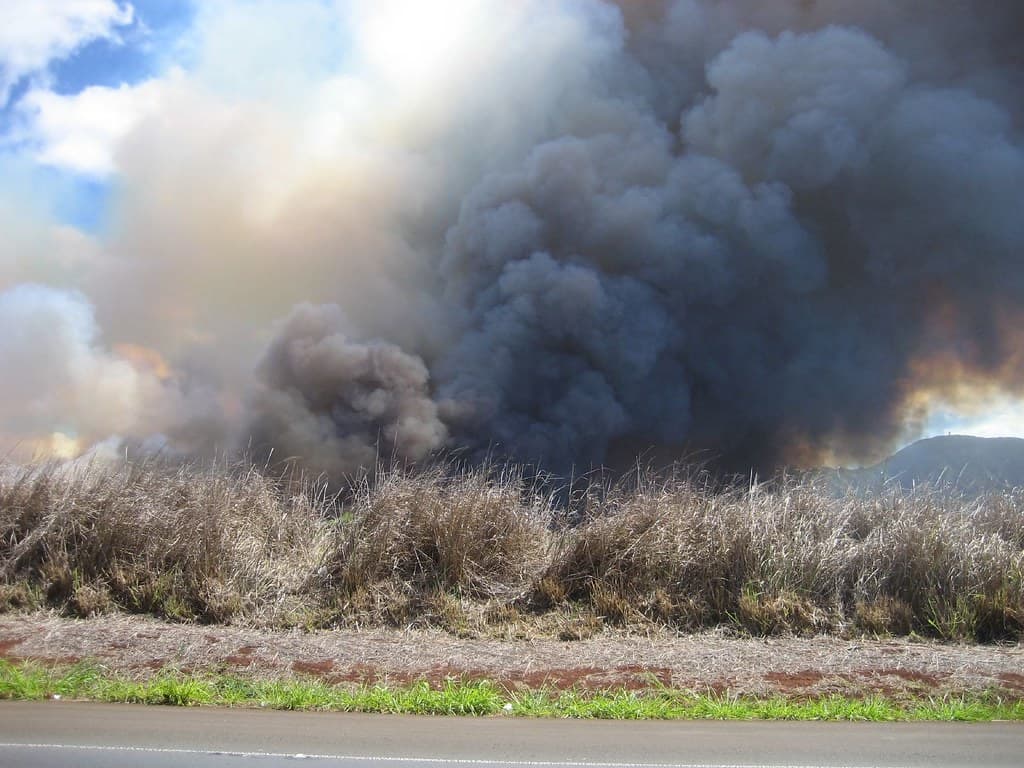
Waialua Beach curves along Moloka'i's southern coastline like a rumpled ribbon, its sand neither blinding white nor volcanic black but a toasted almond hue that glows warm in the slanted afternoon light. Ironwood trees lean over the shore, their feathery branches casting lace patterns across picnic tables where local families gather on weekends with coolers and ukuleles. The water here is shallow—ankle-deep for what feels like a football field—making it less a swimmer's paradise and more a wading pool where toddlers chase hermit crabs and fishermen scan the horizon for ripples.
“This is one of the last Hawaiian beaches where subsistence fishing still dictates the daily rhythm more than tourism ever will.”
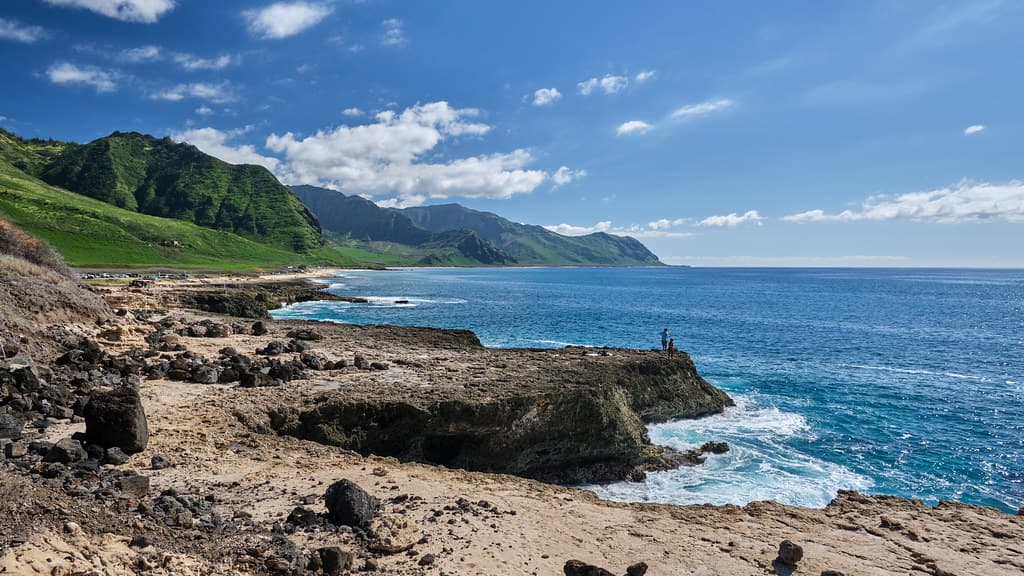 Credit: Flickr
Rocky coastline, with Keawaula Beach in the distance
This is Moloka'i at its most unvarnished: no resort towers, no jet-ski rentals, no mai tais delivered poolside. You'll drive past grazing horses and tin-roofed houses to reach the turnoff, where a narrow road threads between kiawe trees toward the shore. The reef protects the beach from serious surf, so the waves arrive as gentle slaps rather than thunderous breaks, and the tide pools teem with opelu and tiny pufferfish.
Come at dusk when the light turns honeyed and the Lāna'i coastline across the channel goes purple-gray. Fishermen stake their rods in the sand, and the smell of grilling teriyaki chicken drifts from someone's tailgate. You'll feel the island's unhurried pulse here—the Moloka'i that doesn't need to sell itself, that simply exists as it has for generations.


