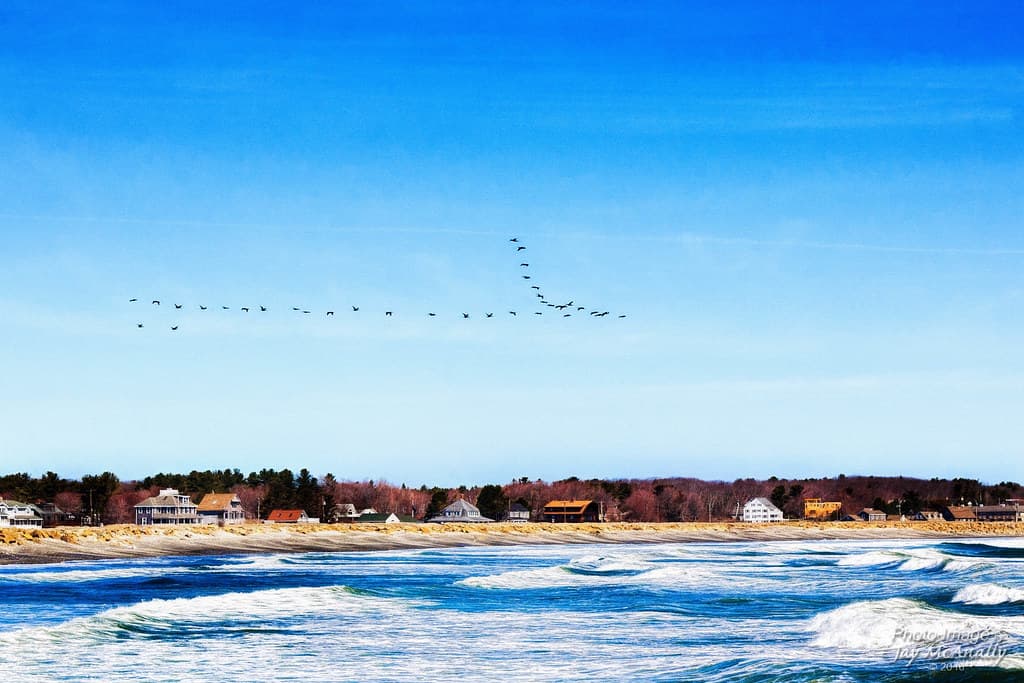
Counting the waves…
Counting the waves…

Great Island Common sits at the mouth of the Piscataqua River, where New Hampshire meets Maine across a channel barely wider than a city block. The beach itself is modest—a crescent of sand and pebbles bookended by granite outcrops draped in rockweed. You'll notice the water temperature first: bracingly cold, fed by river currents that sweep down from inland forests. The beach faces southeast, so mornings bring soft light across the waves, and by noon the sand warms enough for bare feet. At low tide, the waterline retreats to expose tide pools dimpled into the rocks. You'll find periwinkles clinging to stone, mussels clustered in blue-black colonies, and the occasional starfish pressed flat against granite. The beach empties out by late afternoon, when the light turns amber and the smell of salt marsh drifts in from the marshes edging the island. This isn't a beach for long swims or beach volleyball. It's a place to let children explore tidal ecosystems, to sit on sun-warmed rocks with a thermos of coffee, to watch lobster boats chug past Fort Constitution across the inlet. The town maintains the beach as public space, kept simple: no snack shacks, no umbrella rentals. Just sand, stone, and the twice-daily rhythm of the tide.
Places, rentals, tours and events within walking and driving distance of Great Island Common Beach.
Photos
Great Island Common Beach is generally calm and family-friendly due to its location along the Piscataqua River rather than the open ocean. The protected waters typically have minimal waves, making it suitable for young swimmers. However, be aware of tidal currents, especially during tide changes, and always supervise children closely. The beach has a gradual slope and rocky areas, so water shoes are recommended. There are no lifeguards on duty, so parents must remain vigilant and assess conditions before allowing children to swim.
Summer months (June through August) offer the warmest weather for swimming and sunbathing, with temperatures reaching the 70s-80s°F. However, the beach is accessible year-round and offers beautiful scenery in all seasons. Spring and fall provide quieter visits with pleasant temperatures for beachcombing and photography, while winter offers serene coastal walks. For optimal swimming conditions, visit during July and August when water temperatures are warmest. Arrive during low tide to maximize beach space and explore tide pools with children.
Great Island Common Beach is located on Great Island in New Castle, accessible via Route 1B from Portsmouth. The beach has a small public parking area on Wentworth Road, but spaces are very limited—typically only 10-15 spots. Parking is free but fills quickly on summer weekends and holidays. Arrive early in the day, especially during peak season, to secure a spot. Street parking nearby is restricted to residents only. The beach is within walking distance from other parts of New Castle if you park elsewhere in town.
Great Island Common Beach has minimal on-site amenities—no restrooms, showers, or food concessions. Pack everything you need, including food, drinks, and beach equipment. The nearby town of New Castle has limited dining options, but you'll find more restaurants and convenience stores just minutes away in Portsmouth, including waterfront seafood restaurants and cafes. For accommodations, Portsmouth offers numerous hotels and inns within a 10-minute drive. Wentworth by the Sea, a historic resort, is located nearby in New Castle for upscale lodging options.
Yes, Great Island Common Beach offers excellent views of nearby Fort Constitution (Fort William and Mary), a historic Revolutionary War-era fortification located at the harbor entrance. The fort is just a short walk from the beach and makes an excellent addition to your beach visit. This combination of beach relaxation and historical exploration is unique to Great Island Common Beach. You can easily visit both locations in one trip, and the fort grounds are free to explore, offering harbor views and interpretive signs about its colonial history.