
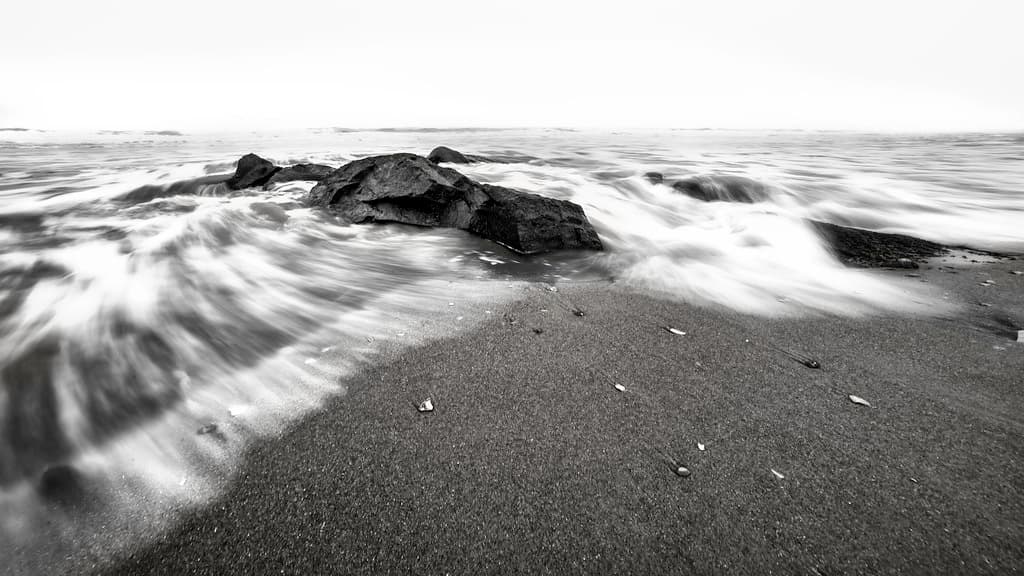
Counting the waves…
Counting the waves…

Holgate occupies the last mile of Long Beach Island, where Beach Haven's Victorian boardwalk charm dissolves into the Edwin B. Forsythe National Wildlife Refuge. You'll walk or bike past the final beach house, leaving behind the rental cottages and tackle shops, entering a landscape ruled by cordgrass and tide. The beach here feels wider, the horizon uninterrupted except for the occasional fishing boat working the inlet. The refuge boundary means no development, no concession stands, no lifeguard whistles—just shorebirds picking through wrack lines and the percussion of waves on hard-packed sand. Autumn brings the best conditions: cooler air, thinner crowds, and light that turns the dune grass to copper. Winter storms reshape the shoreline overnight, carving new channels through the sand. You'll notice the locals who walk this beach regularly, carrying binoculars and field guides, timing their visits to the tide charts. The parking lot fills early on summer weekends, but even then, a ten-minute walk south finds you alone with oystercatchers and the steady Atlantic wind. Pack out what you pack in; the nearest trash can is a mile north, back where civilization resumes.
Places, rentals, tours and events within walking and driving distance of Holgate Beach.
Photos
Holgate Beach is generally safe for swimming, though conditions vary seasonally. The beach has no lifeguards, so swimmers must be cautious and assess conditions themselves. Currents can be strong, especially during storms or rough weather. The ocean bottom slopes gradually, making it relatively family-friendly in calm conditions. Check local surf reports before swimming. Wildlife, including nesting shorebirds in protected areas, may restrict access to certain sections seasonally. Always supervise children closely and avoid swimming alone at this unguarded beach.
Holgate Beach is accessible year-round, with each season offering different appeals. Summer (June-August) provides warm swimming weather but brings larger crowds. Spring and fall offer pleasant temperatures, fewer visitors, and excellent conditions for beachcombing and fishing. Winter attracts solitude-seekers and surf fishermen. Note that portions of the beach close April through August to protect nesting piping plovers and other shorebirds. September through March typically offers the most unrestricted access combined with comfortable weather for walking and nature observation.
Holgate Beach is located at the southern end of Long Beach Island in Beach Haven. Access requires a Beach Haven beach badge during summer season. Drive south on Long Beach Boulevard until it ends at the Holgate refuge entrance. Free parking is available at the end of the road near the wildlife refuge. A four-wheel-drive vehicle permit allows beach driving in designated areas during certain seasons. The nearest bridge access to Long Beach Island is via Route 72 from the mainland.
Holgate Beach itself has no facilities, restaurants, or lodging directly on-site. You'll need to travel north into Beach Haven proper, approximately 2-3 miles away, for amenities. Beach Haven offers numerous restaurants, cafes, ice cream shops, and grocery stores along Beach Avenue and Bay Avenue. Accommodation options include hotels, motels, vacation rentals, and beach houses throughout Beach Haven and neighboring Long Beach Island communities. Bring your own food, water, and beach supplies to Holgate, as there are no vendors or facilities at the beach.
Yes, Holgate Beach is part of the Edwin B. Forsythe National Wildlife Refuge's Holgate Unit. The refuge protects critical habitat for migratory birds and nesting shorebirds, including threatened piping plovers. Visitors can walk the beach and observe wildlife, but some areas close seasonally (typically April-August) for bird nesting. The refuge offers excellent birdwatching, especially during migration periods. Dogs must be leashed, and visitors should respect posted closures. There's no entrance fee, making it an excellent destination for nature enthusiasts seeking unspoiled coastal environments.