Counting the waves…
Counting the waves…

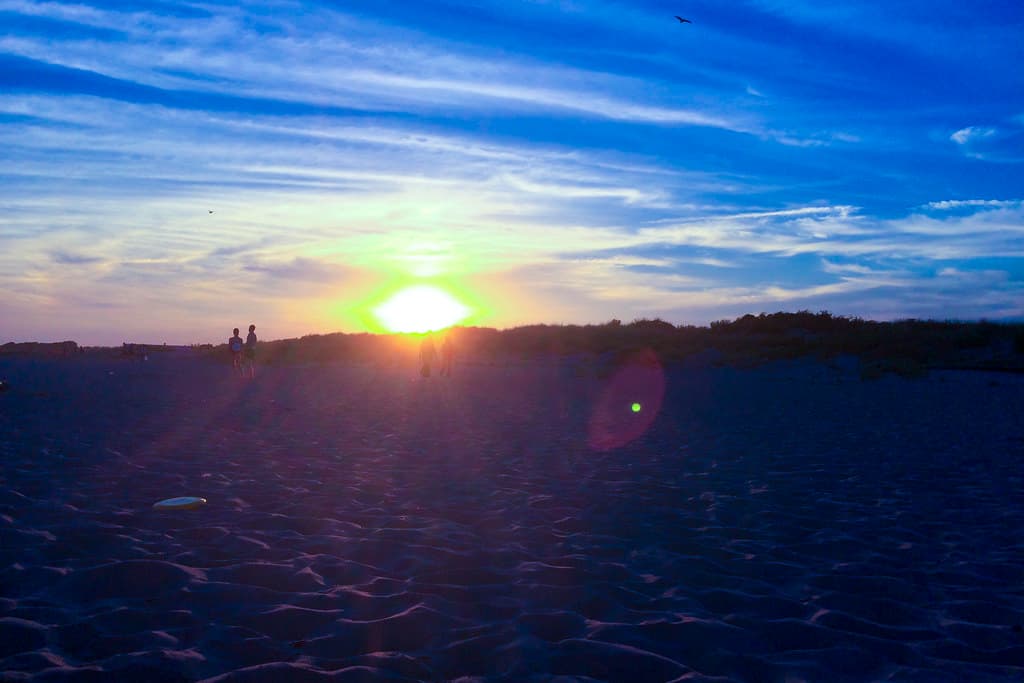
Riis Landing Beach occupies the quiet western terminus of Jacob Riis Park, tucked between the rock jetty marking Rockaway Inlet and the broader bay shoreline most visitors never reach. You'll find lifeguard stands and concession pavilions a quarter-mile east; here, the scene skews toward neighborhood regulars spreading towels on sand studded with smooth pebbles, watching evening light gild the Verrazzano-Narrows Bridge. The jetty itself—dark, barnacle-crusted boulders stacked shoulder-high—draws teenagers who balance along its spine and anglers casting for striped bass. Waves are muted, softened by the inlet's pull and the sandbars that form each summer. On weekday mornings you'll share the shoreline with power-walkers completing loops on the adjacent bike path and retirees reading newspapers in folding chairs they've hauled from nearby Neponsit. Sunset pulls the largest crowd. Couples stake out the west-facing stretch where the jetty meets sand, watching tankers and tugs silhouette against copper sky. The roar of JFK departures overhead mixes with gulls and the rhythmic slap of small waves. No boardwalk carnival, no pier restaurant—just city beach stripped to its essentials, still serving the same working-class Queens families who've claimed this pocket since the 1930s.
Places, rentals, tours and events within walking and driving distance of Riis Landing Beach.
Photos
Riis Landing Beach is part of Gateway National Recreation Area and has lifeguards on duty during summer months, typically late June through early September. The beach offers generally calm waters suitable for swimming when lifeguards are present. Outside guarded hours and off-season, swim at your own risk and check local advisories. Water quality can vary after heavy rain due to urban runoff. The beach is patrolled by the National Park Service, making it relatively safe for daytime visits. Always observe posted flags and warnings before entering the water.
Summer weekdays from June through August offer the best combination of warm weather and smaller crowds, with lifeguards on duty and full amenities operating. The beach can get crowded on summer weekends. Late spring (May) and early fall (September) provide pleasant temperatures with fewer visitors, though water may be cooler and some facilities reduced. Sunset visits are popular year-round, particularly in fall when the western sky creates dramatic colors over Jamaica Bay. Avoid visiting immediately after storms when water quality may be compromised.
Riis Landing Beach is located at the western end of the Rockaway Peninsula in Queens. By car, take the Belt Parkway to the Marine Parkway Bridge, then follow signs to Riis Park. Parking lots are available along the beach (fees apply in summer, typically $10-20 per day). By public transit, take the A train to Broad Channel, then transfer to the S shuttle to Beach 90th Street; it's about a 15-minute walk from there. The NYC Ferry Rockaway route operates seasonally, stopping at nearby Beach 108th Street.
The Riis Park Beach Bazaar, a seasonal beachfront food hall, operates from Memorial Day through September offering diverse food vendors, bars, and live entertainment within walking distance. The historic bathhouse building houses changing facilities and restrooms. Food trucks often park in the lot during peak season. For year-round options, head to nearby Rockaway Beach Boulevard where you'll find local eateries, cafes, and the growing Rockaway Beach dining scene. Bring cash as some vendors don't accept cards. No hotels directly on-site; accommodations are found in nearby Rockaway Beach or broader Queens.
Riis Landing sits at the quieter western tip of the Rockaways, attracting fewer crowds than the main Jacob Riis Park beach to the east or the surf-focused Rockaway Beach areas. Its position offers excellent sunset views over Jamaica Bay and the Marine Parkway Bridge, making it particularly popular with photographers. The beach has a more local, laid-back atmosphere compared to busier Rockaway stretches. It's also adjacent to preserved natural areas managed by the National Park Service, giving it a less commercialized feel while still offering essential amenities during peak season.