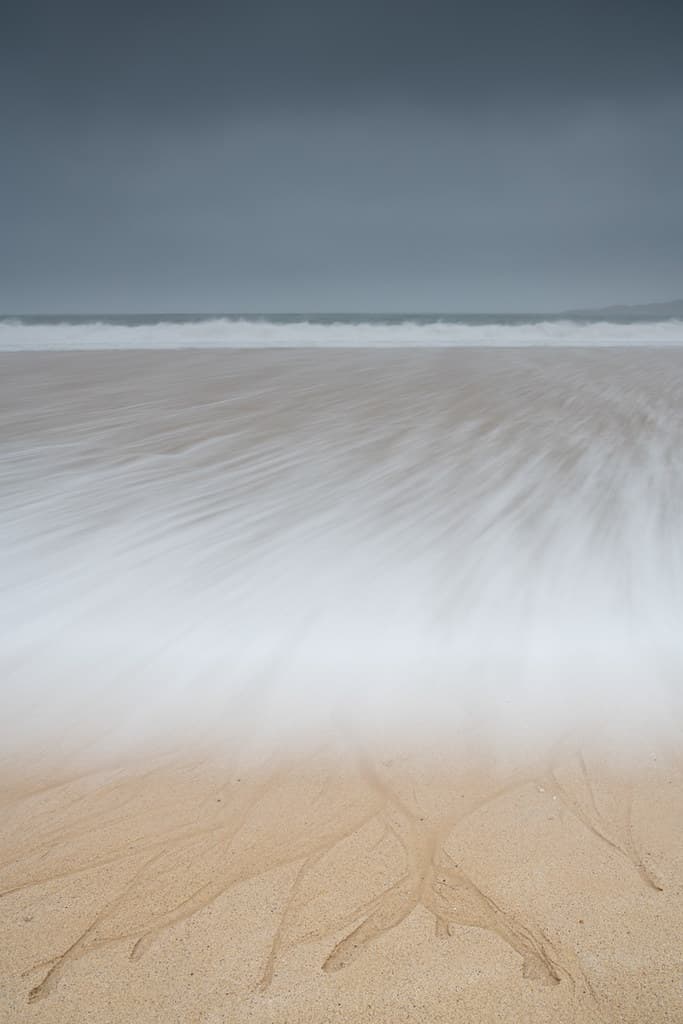
Counting the waves…
Counting the waves…

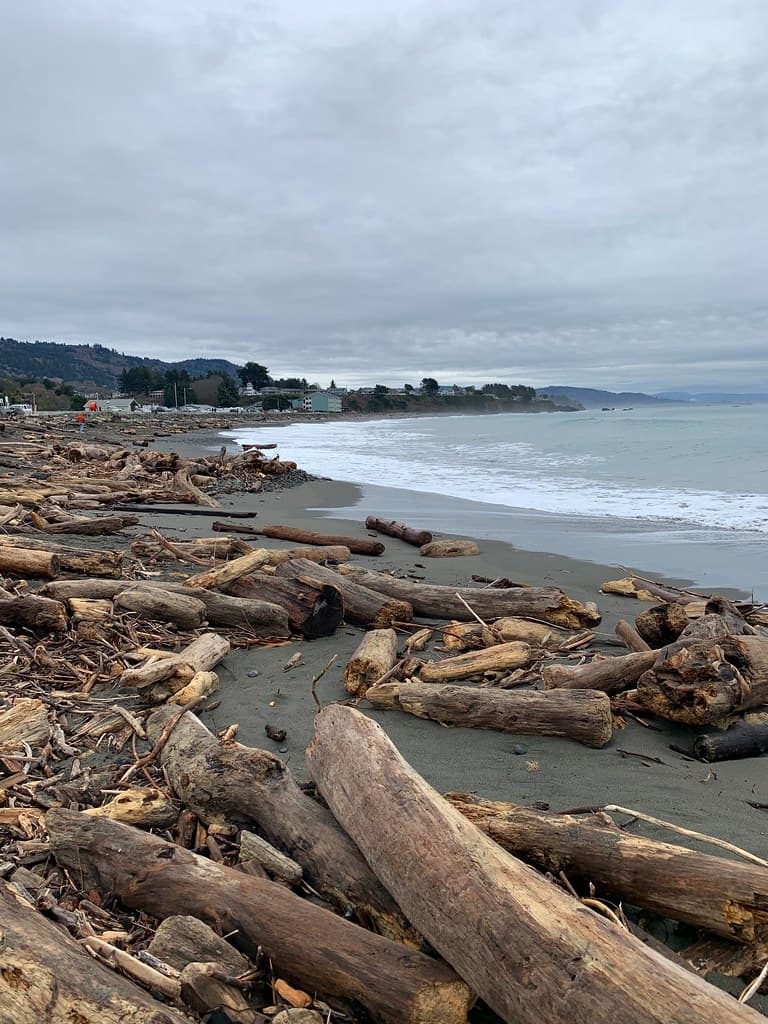
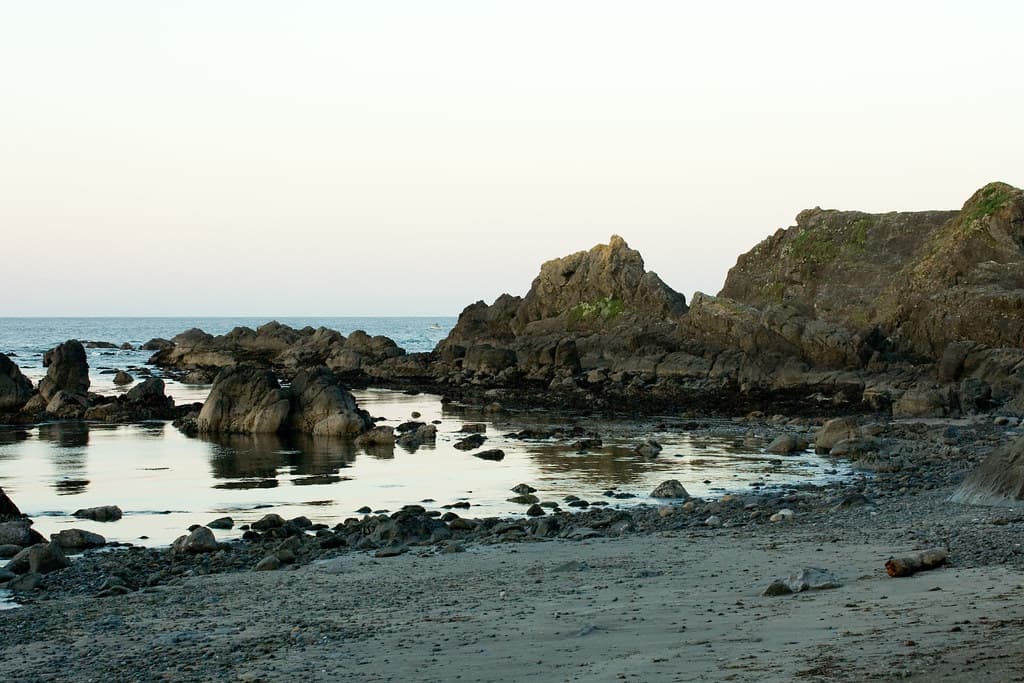
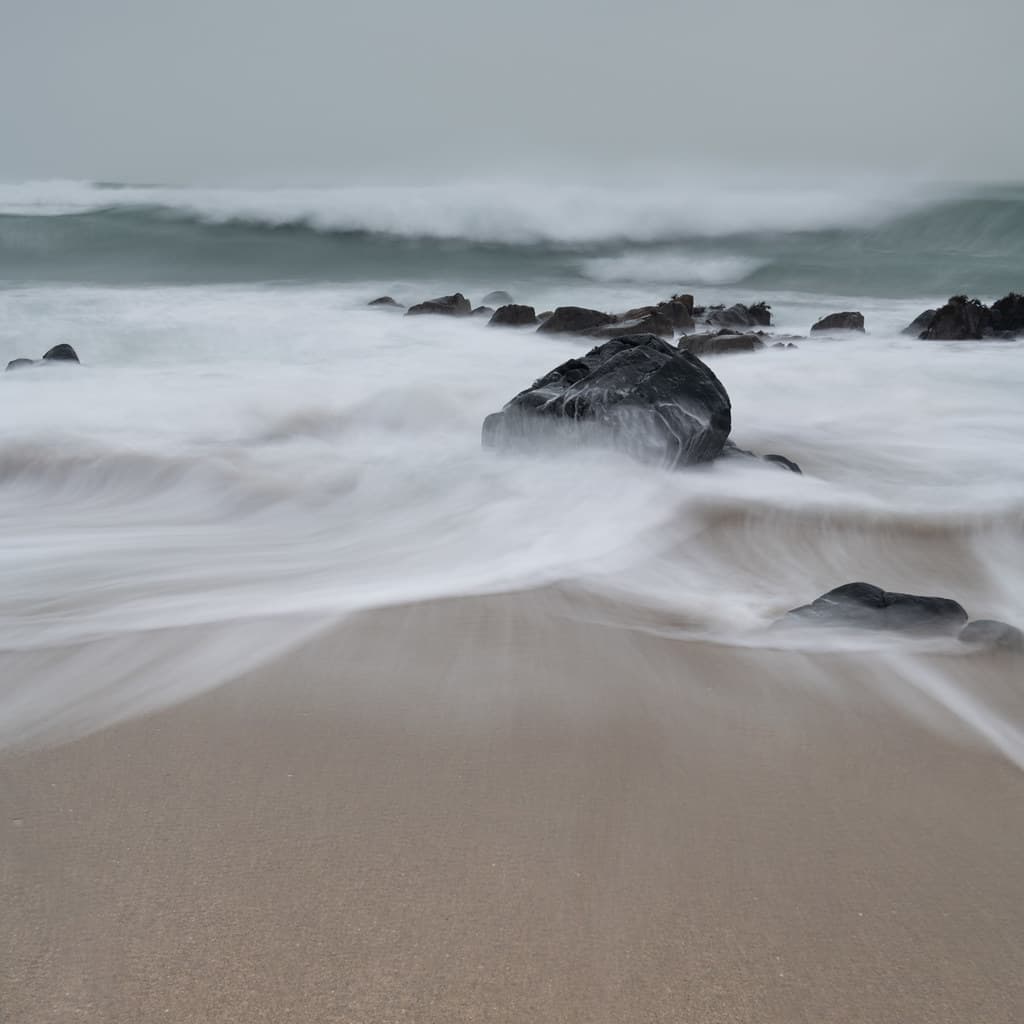
Harris Beach sprawls along Brookings' northern edge, where the coastline fractures into a maze of seastacks and tide pools. Goat Island—Oregon's largest offshore island—rises just beyond the breakers, a rookery for harbor seals and cormorants that wheel overhead in ragged formations. At low tide, you can walk among shallow basins where ochre stars and purple urchins cling to dark volcanic rock, the barnacles clicking as wavelets retreat. The beach itself runs from coarse sand to cobbles worn smooth by centuries of surf. Driftwood logs stripe the upper beach, bleached white and strewn like discarded matchsticks. To the north, Bird Island juts from the water, guano-streaked and noisy with nesting seabirds in spring. The headlands frame every view, their slopes thick with shore pine and wind-pruned spruce that lean away from the relentless ocean winds. Brookings sits in Oregon's "Chetco Effect" microclimate, where offshore winds sometimes push temperatures twenty degrees warmer than beaches a few miles north. You'll notice the difference in the vegetation: Monterey cypress and even the occasional palm tree thrive in Samuel H. Boardman State Scenic Corridor just up the coast. Come winter, storm-watchers park in the upper lot to watch forty-foot swells detonate against the seastacks, sending plumes of spray high enough to taste the salt from your car.
Places, rentals, tours and events within walking and driving distance of Harris Beach.
Photos
Swimming at Harris Beach is generally not recommended due to cold water temperatures year-round (typically 50-60°F), strong currents, and unpredictable waves. The beach is better suited for tidepooling, beachcombing, and photography. If you do wade, stay close to shore and never turn your back on the ocean, as sneaker waves are common along the Oregon coast. Always supervise children closely near the water. The beach is excellent for walking and exploring tide pools during low tide.
Harris Beach is accessible and beautiful year-round. Summer (June-September) offers the warmest and driest weather, ideal for tidepooling and beach walks, though mornings can be foggy. Spring brings wildflowers and migrating gray whales (March-May). Fall offers fewer crowds and dramatic storms to watch from a safe distance. Winter is excellent for storm watching and spotting resident sea lions on offshore rocks. Low tide periods, regardless of season, are best for exploring tide pools. Check tide tables before visiting.
Harris Beach State Park is located just off Highway 101 in Brookings, clearly marked with signs. The park has a dedicated parking area with ample spaces, accessible directly from the highway. A day-use fee applies ($5 per vehicle as of recent rates). From the parking lot, paved paths and stairs lead down to the beach. The park is approximately 6 miles north of the California-Oregon border, making it easily accessible for road trippers along the Pacific Coast Highway.
Harris Beach is adjacent to Brookings, offering numerous dining and lodging options within minutes. The beach itself has a state park campground with tent and RV sites. Nearby hotels and vacation rentals line the coastline along Highway 101. Downtown Brookings, less than 2 miles away, features restaurants ranging from seafood and American fare to Mexican and Asian cuisine. Several grocery stores are available for picnic supplies. The beach has restrooms and picnic areas but no food concessions on-site.
Harris Beach is famous for its dramatic offshore sea stacks and rock formations, including Bird Island (Goat Island), Oregon's largest island. These volcanic rock formations create stunning photographic opportunities, especially at sunset. The rocks serve as wildlife sanctuaries, home to seabirds, harbor seals, and California sea lions—you can often hear sea lions barking from shore. During low tide, you can explore smaller rock formations and tide pools teeming with starfish, anemones, and crabs. Bring binoculars for wildlife viewing.