
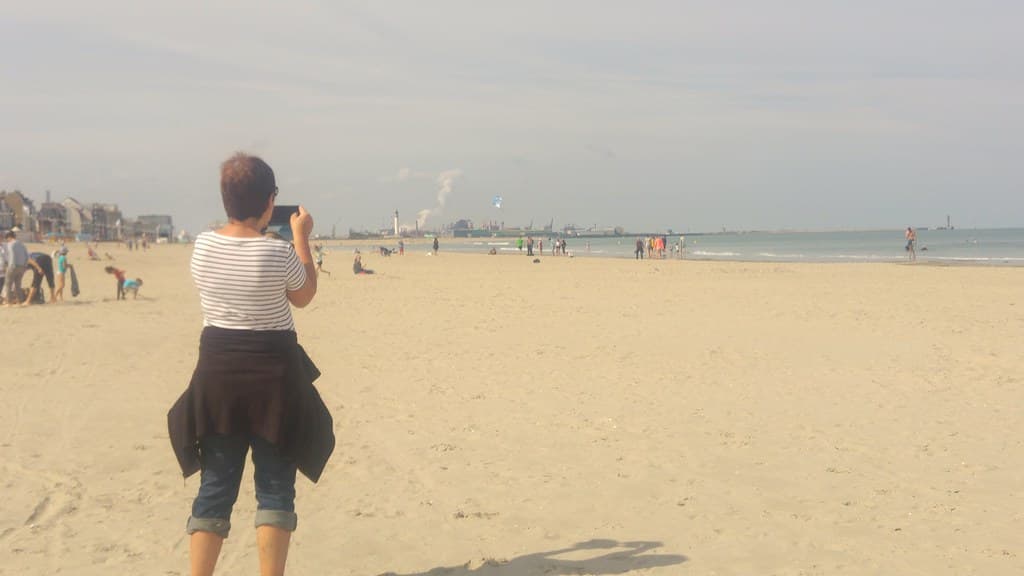
The wooden staircase deposits you onto dark sand flanked by jagged basalt formations that look like ancient fortifications against the Pacific. Smelt Creek spills across the beach's northern end, shallow enough for children to wade but insistent enough to remind you this coast doesn't soften itself for visitors. The compact crescent stretches only a few hundred yards, hemmed in by tide-sculpted rock that glows amber when winter light breaks through the marine layer.
“Basalt shelves create protected tide pool galleries that change completely with every six-hour tidal shift.”
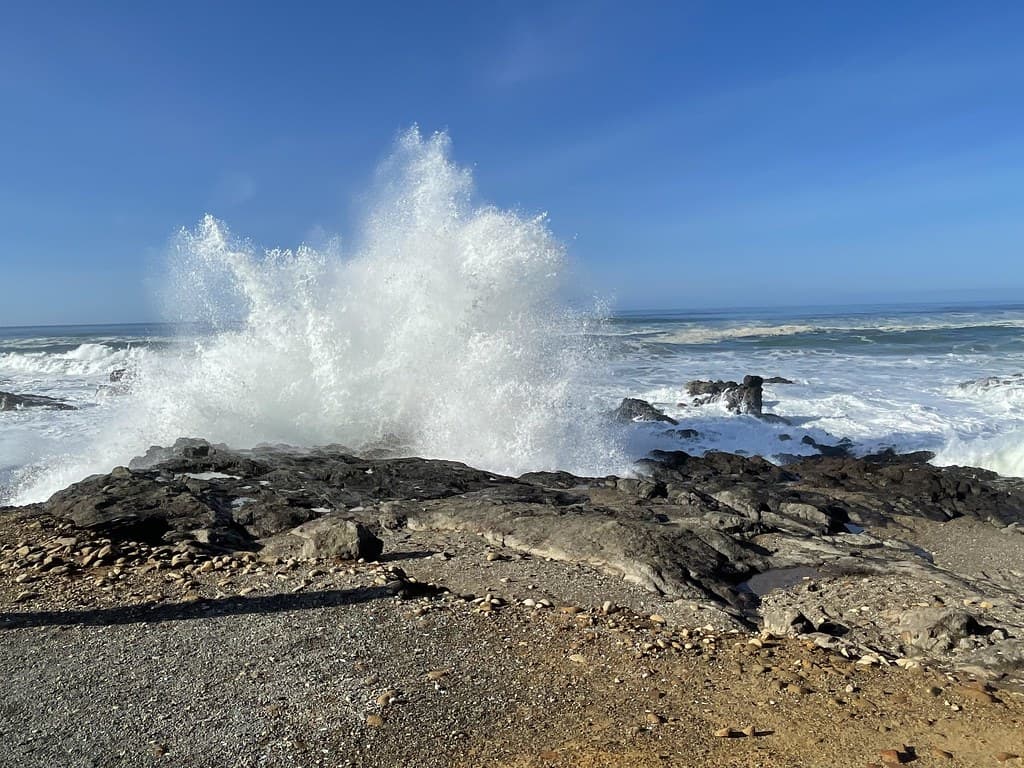 Credit: Flickr
Smelt Sands beach inaccesible due to the King Tide
Low tide transforms the southern reaches into a marine biology lesson written in salt water and stone. You'll find ochre sea stars gripping basalt ledges, purple urchins tucked into crevices, and hermit crabs scuttling through pools warmed by afternoon sun. The rocks form natural viewing platforms where you can watch waves funnel through narrow channels, sending spray fifteen feet into the air. Bring boots with grip—the basalt grows slick with kelp and algae.
Yachats' village center sits less than a mile north, close enough to grab chowder after beach time but far enough that the shoreline never feels crowded. Winter storms draw photographers and wave-watchers who bundle in Gore-Tex and thermos coffee; summer evenings bring families with tide pool guides and buckets. The beach lacks amenities beyond a small parking area and those stairs, which is precisely why the locals come back season after season.


