Counting the waves…
Counting the waves…

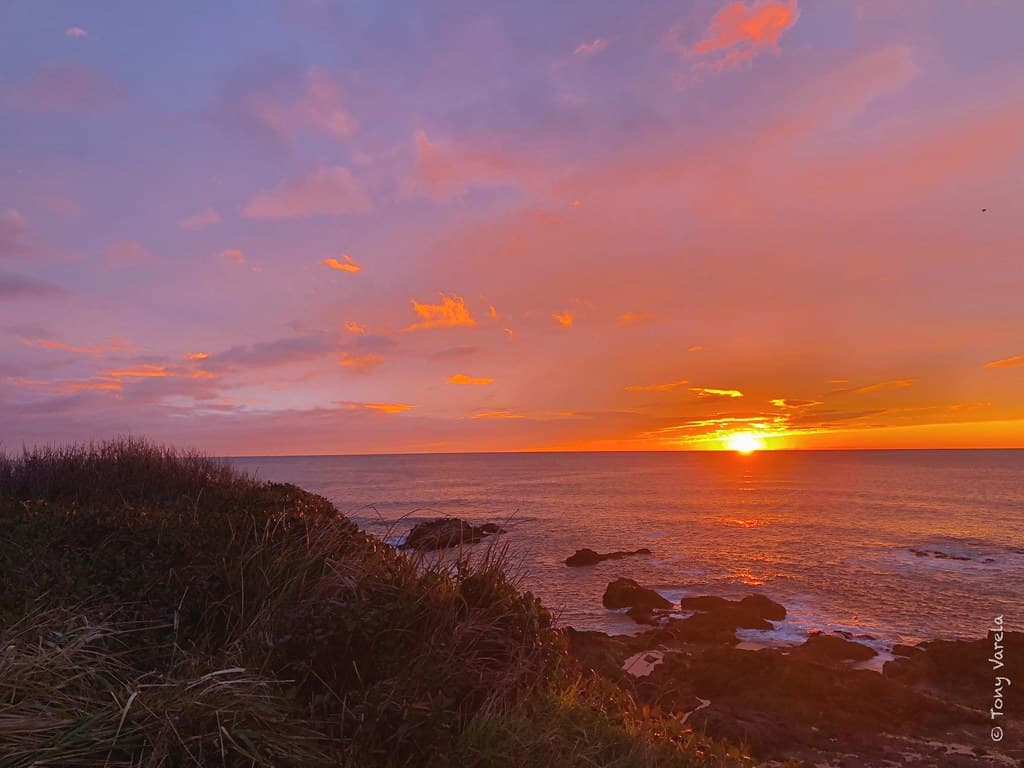
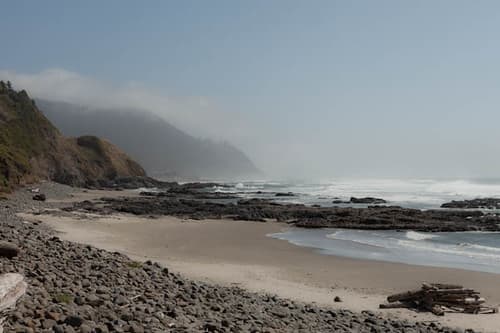
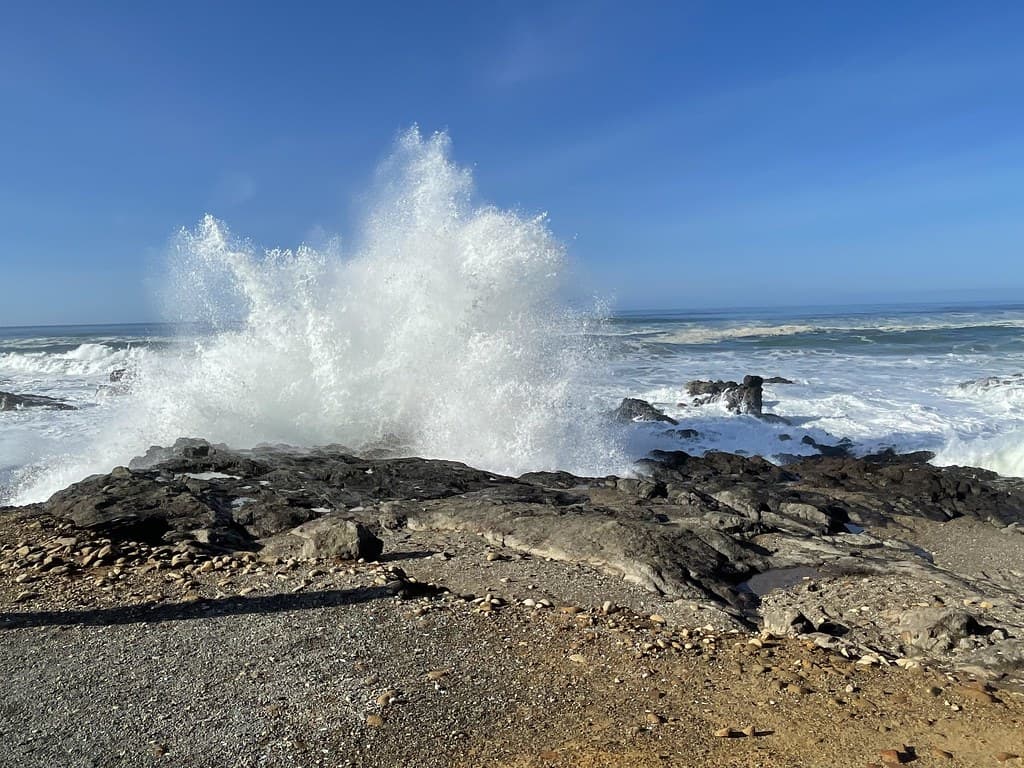
The wooden staircase deposits you onto dark sand flanked by jagged basalt formations that look like ancient fortifications against the Pacific. Smelt Creek spills across the beach's northern end, shallow enough for children to wade but insistent enough to remind you this coast doesn't soften itself for visitors. The compact crescent stretches only a few hundred yards, hemmed in by tide-sculpted rock that glows amber when winter light breaks through the marine layer. Low tide transforms the southern reaches into a marine biology lesson written in salt water and stone. You'll find ochre sea stars gripping basalt ledges, purple urchins tucked into crevices, and hermit crabs scuttling through pools warmed by afternoon sun. The rocks form natural viewing platforms where you can watch waves funnel through narrow channels, sending spray fifteen feet into the air. Bring boots with grip—the basalt grows slick with kelp and algae. Yachats' village center sits less than a mile north, close enough to grab chowder after beach time but far enough that the shoreline never feels crowded. Winter storms draw photographers and wave-watchers who bundle in Gore-Tex and thermos coffee; summer evenings bring families with tide pool guides and buckets. The beach lacks amenities beyond a small parking area and those stairs, which is precisely why the locals come back season after season.
Places, rentals, tours and events within walking and driving distance of Smelt Sands Beach.
Photos
Swimming is generally not recommended at Smelt Sands Beach due to strong currents, cold Pacific waters, and unpredictable waves typical of the Oregon coast. The beach is better suited for tidepooling, beachcombing, and wading in shallow areas while closely supervising children. Sneaker waves—unexpectedly large waves that can sweep people off rocks and logs—are a serious hazard year-round. Always keep a safe distance from the surf, never turn your back on the ocean, and stay off logs near the waterline for family safety.
Smelt Sands Beach is accessible year-round, with each season offering different experiences. Summer (June-September) provides the mildest weather and lowest tides for tidepooling, though mornings can be foggy. Winter brings dramatic storm watching opportunities with crashing waves. Spring and fall offer fewer crowds and good conditions for beachcombing. For tidepooling, visit during low tides—check local tide tables in advance. Mornings typically have calmer winds. The beach's sheltered location makes it more pleasant than exposed Oregon beaches during windy conditions.
Smelt Sands Beach has a small parking area accessed from Smelt Sands Wayside on Highway 101, just north of Yachats. Look for signs on the ocean side of the highway. The parking lot accommodates approximately 10-15 vehicles and can fill quickly during summer and weekends. A short, paved trail leads from the parking area down to the beach. Overflow parking may be available along the highway shoulder. The beach is also accessible via walking trails from nearby Yachats if you're staying in town.
Smelt Sands Beach is located just north of Yachats, a small coastal town with numerous dining and lodging options within a mile. Yachats offers restaurants ranging from casual cafes to seafood establishments, plus grocery stores for picnic supplies. Lodging includes oceanfront hotels, vacation rentals, and bed-and-breakfasts. The beach itself has no facilities—no restrooms, picnic tables, or amenities—so plan accordingly. Public restrooms are available at Yachats State Recreation Area nearby. Most visitors use Yachats as their base for exploring this area of the Oregon coast.
Smelt Sands Beach features exceptional tidepools formed by basalt rock formations, making it one of Yachats' best spots for observing marine life. During low tide, visitors can explore pools teeming with sea anemones, hermit crabs, sea stars, mussels, and small fish. The rocky shelves create numerous pools at varying depths. Always check tide tables before visiting—the best tidepooling occurs during minus tides. Practice responsible tidepooling by observing without touching, watching your step to avoid crushing organisms, and never removing creatures from their habitat.