Counting the waves…
Counting the waves…

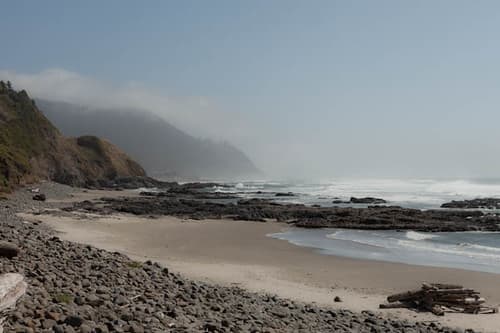
The smell of salt and kelp hits you first, then the roar—not the gentle hush of sand beaches, but the percussion of waves slamming basalt shelves that jut into the surf like broken vertebrae. Yachats Beach sprawls north and south of the village, its dark volcanic platforms slick with algae and alive with tide pool galaxies: purple urchins wedged in crevices, hermit crabs scuttling between rockweed fronds, anemones retracting their tentacles at your shadow. You can walk for miles when the tide retreats, hopping between shelves and scrambling over sea stacks smoothed by millennia of winter gales. The 804 Trail hugs the coastline south toward Cape Perpetua, offering front-row seats to the Spouting Horn—a blowhole that sends plumes of seawater thirty feet skyward when swells align. During king tides and January storms, locals and visitors alike gather on the seawall, braced against wind, cameras ready for the moment waves detonate against rock in walls of white. The beach refuses to conform to postcards. No palm trees, no soft sand underfoot—just the honest meeting of land and ocean, where Sitka spruce lean landward from decades of onshore wind, and harbor seals haul out on offshore rocks at dawn. You'll leave with sand dollars and chiton shells in your pockets, brine on your jacket, and the rhythm of the Pacific still drumming in your chest.
Places, rentals, tours and events within walking and driving distance of Yachats Beach.
Photos
Swimming at Yachats Beach is generally not recommended due to strong currents, cold water temperatures (typically 48-55°F year-round), and unpredictable waves. The Oregon coast is known for sneaker waves that can suddenly surge much higher than preceding waves, posing serious danger. Wading in shallow tide pools during low tide is safer, but always keep a safe distance from the surf and never turn your back on the ocean. The beach is better suited for tide pooling, beachcombing, and scenic walks rather than swimming.
Yachats Beach is beautiful year-round, with each season offering unique experiences. Summer (June-September) provides the most pleasant weather with temperatures in the 60s°F and less rain, ideal for tide pooling and beach walks. Winter storms (November-February) create dramatic wave-watching opportunities, though expect rain and wind. Spring brings migrating gray whales visible from shore. For smaller crowds and mild weather, visit during shoulder seasons (May or September-October). Low tide times are ideal for exploring tide pools regardless of season.
Yachats Beach is easily accessible via Highway 101, which runs directly through the town of Yachats. The main beach access is at Yachats State Recreation Area, located at the north end of town with free parking available. Additional parking can be found at Yachats Ocean Road State Natural Site and along Ocean View Drive. Street parking is also available in downtown Yachats, just steps from beach access points. The beach area is compact and walkable, with multiple access trails connecting to the shoreline.
Yachats offers numerous dining options within walking distance of the beach, ranging from casual cafes to seafood restaurants featuring local catches. The small downtown area includes coffee shops, bakeries, and markets for provisions. Lodging options include oceanfront hotels, cozy inns, vacation rentals, and bed-and-breakfasts, many with spectacular ocean views. Several properties sit directly adjacent to the beach. Basic amenities like restrooms are available at Yachats State Recreation Area. The town caters well to tourists while maintaining its charming, small-town character.
Yachats Beach is renowned for exceptionally rich tide pools among Oregon's best. The rocky intertidal zone reveals diverse marine life during low tide, including colorful sea stars, anemones, hermit crabs, sculpins, and sea urchins. The basalt rock formations create numerous pools of varying depths and ecosystems. Yachats sits within a marine garden, offering protected viewing of these delicate habitats. Visit during minus tides for optimal exploration, but practice responsible tide pooling: never remove creatures, step carefully to avoid crushing organisms, and check tide tables before exploring.